ar
ar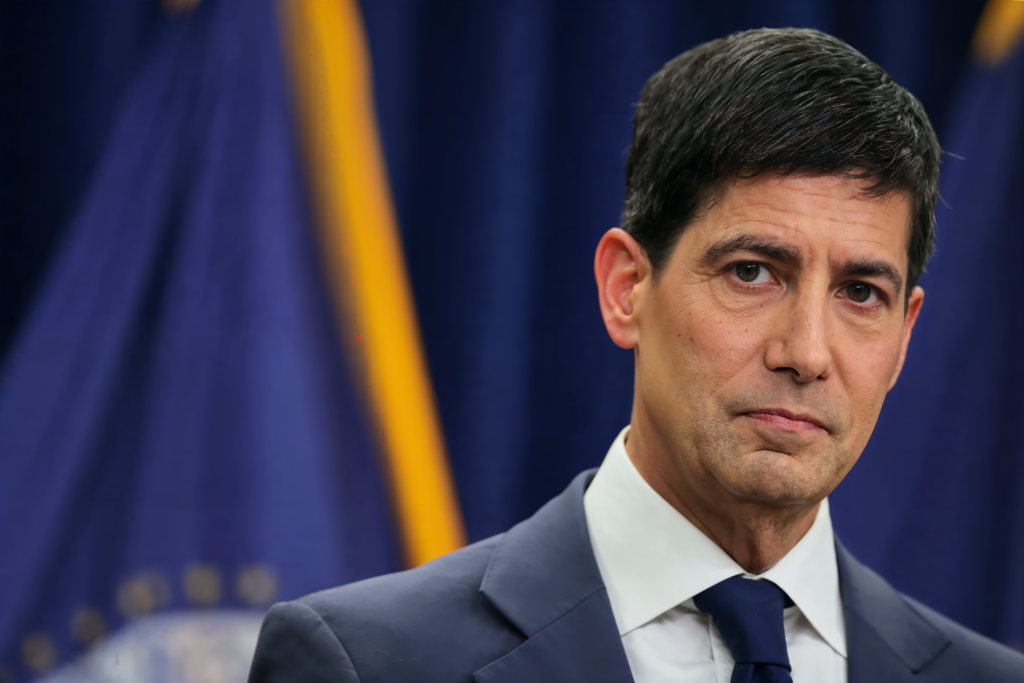
- Kevin Warsh held rates at his first FOMC meeting, but the Fed’s latest forecasts suggest a hike could still be on the table this year.
- Warsh reshaped how the Fed communicates, shortening the policy statement, dropping its easing bias, and declining to submit his own dot-plot projection.
- The Fed raised its inflation forecasts as energy prices added pressure, while Warsh offered no clear guidance on what comes next.
The Federal Reserve kept interest rates unchanged at 3.75% yesterday, but the rate decision wasn’t really the story.
Under its new chairman, Kevin Warsh, the meeting and press conference showed a clear shift in tone and style.
What drew the most attention wasn’t what the Fed decided, but how it now plans to communicate going forward.
A Shorter Statement, A Cleaner Message
The most immediate signal of Warsh’s influence came in the form of the post-meeting policy statement, which shrank dramatically from its recent length.
The June release showed only 130 words, compared to 341 words from the April meeting. The easing bias that the Fed previously implemented had been completely removed. ⁽¹⁾
In its place was a stripped-down summary of economic conditions and a single, firm commitment that the Fed will deliver price stability.
“It’s a bit shorter, a bit simpler and it dispenses with some older language,” Warsh said at the post-meeting press conference. “That statement just gives you the facts, as best we can judge it.” ⁽²⁾

The format drew comparisons to the era of former Fed Chairman Alan Greenspan, when policy statements were brief and deliberately opaque. The new statement was approved unanimously by all 12 voting members of the FOMC. ⁽³⁾
The Missing Dot
One major development that also came as a shock was Warsh’s own missing rate projection from the Fed’s “dot plot”, with the other 18 participants submitting their forecasts. ⁽⁴⁾
“I did not submit a dot for me,” he said. “It’s not helpful in the conduct of policy.”
Warsh has been criticizing the dot plot for a while now, alongside other forms of forward guidance, stating that the Fed often communicates too much and overpromises its ability to forecast the future. ⁽⁵⁾
He noted that a broader review of the Fed’s communications practices, including press conferences, meeting schedules, transcripts, and the dot plot itself, would take place by year-end.
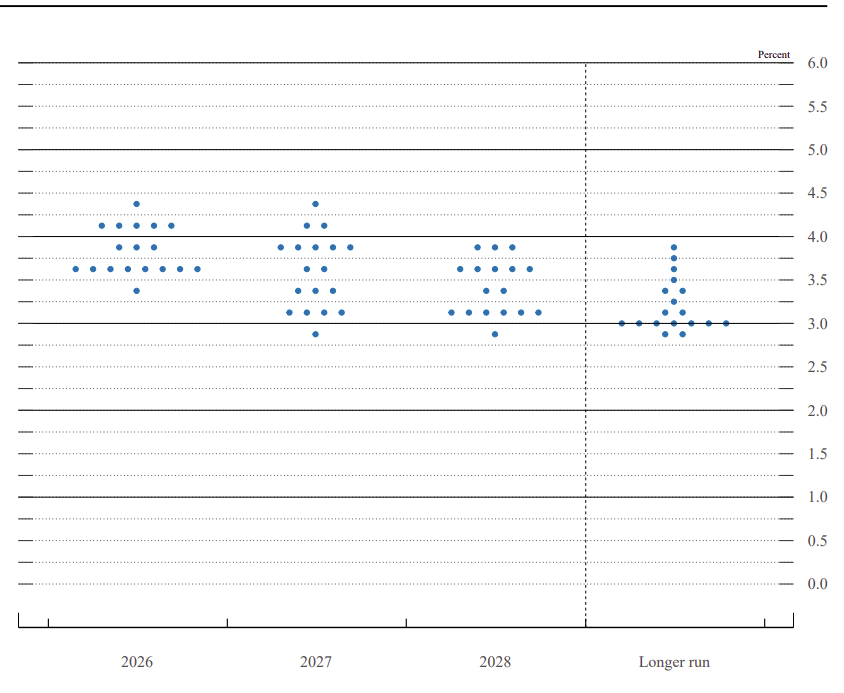
Among the 18 officials who did submit projections, the median estimate for the federal funds rate at the end of 2026 now stands at 3.8%, up from 3.4% in the March projections. ⁽⁶⁾
Nine officials expect at least one rate hike this year, eight see no change, and only one anticipates a cut.
Inflation and the Iran War
Policymakers have made major revisions to economic projections at this meeting, indicating that inflationary pressures were driven by higher oil prices.
The 2026 outlook for headline inflation was upgraded to 3.6%, up from the previous forecast of 2.7% in March, while core inflation was revised up to 3.3%. ⁽⁷⁾
The statement said inflation was partly driven by supply shocks, especially in energy.
This matches Warsh’s view that the Fed can sometimes look past supply-driven inflation when setting policy.
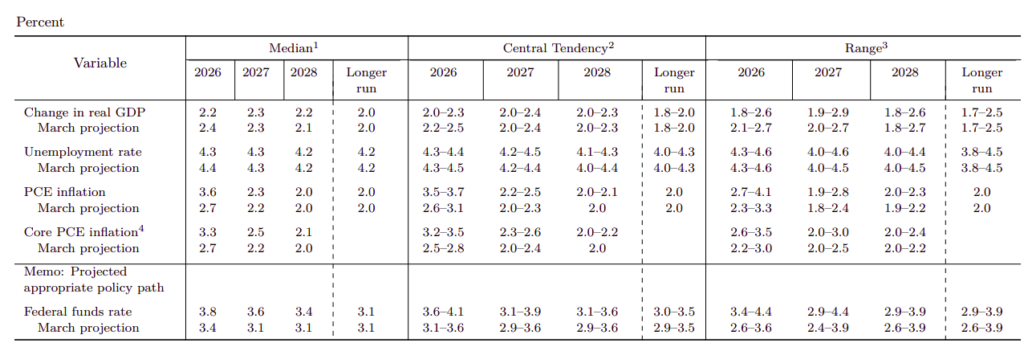
The GDP growth forecast was slightly lowered to 2.2%, while the unemployment rate projection was revised down to 4.3%, reflecting a labor market that performed better than expected in May. ⁽⁸⁾
What Comes Next?
Warsh offered no forward guidance on the path ahead, simply telling reporters, “The good news is we’ll be meeting in six weeks.”
Markets initially read the decision and projections as hawkish, with Treasury yields soaring and stocks falling modestly after the release.
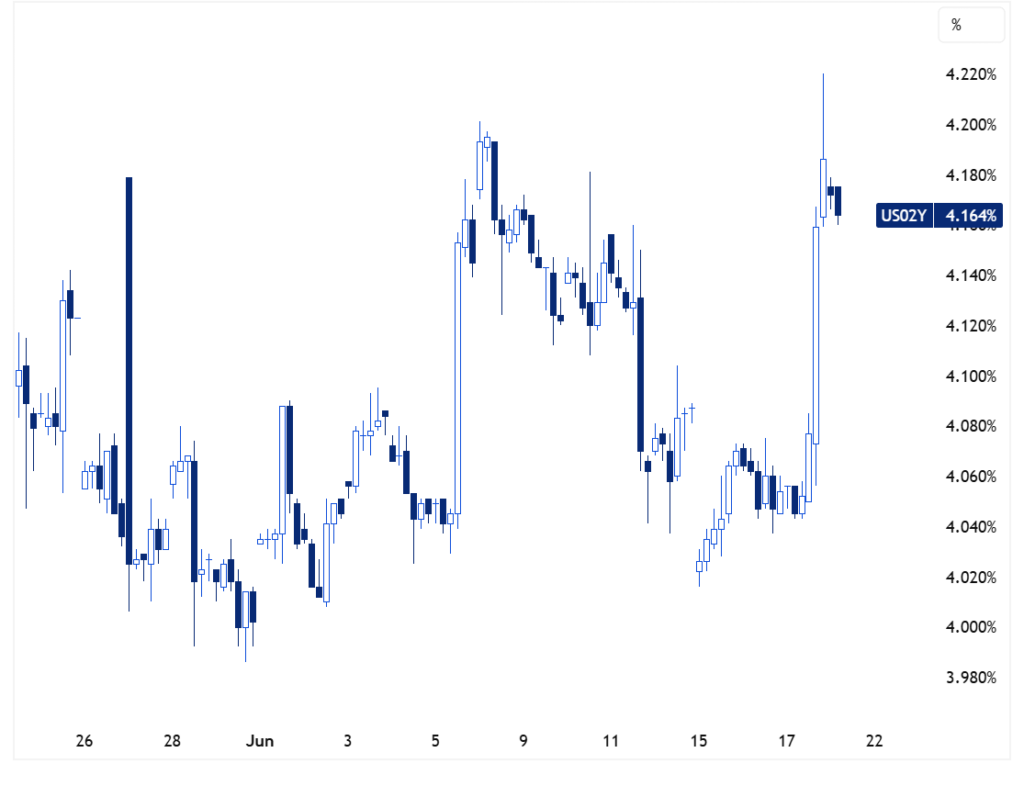
However, comments from Warsh during the press conference, particularly his framing of inflation as partly supply-driven, led traders to price in a possible rate hike as early as October.
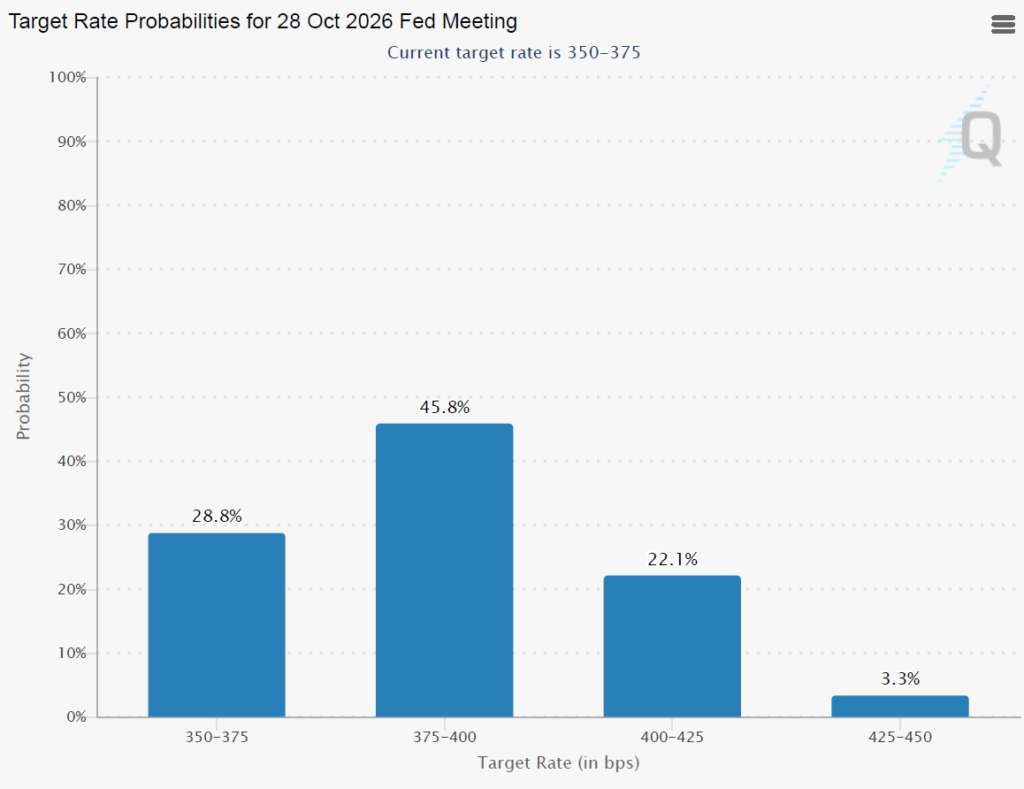
Warsh also announced the formation of task forces to review Fed operations broadly, covering everything from its balance sheet to its inflation framework.
With inflation still running at 4.2% and above the 2% target for five consecutive years, the new chairman faces a complicated first chapter, one he has chosen to navigate with fewer words and less guidance, not more.