ar
ar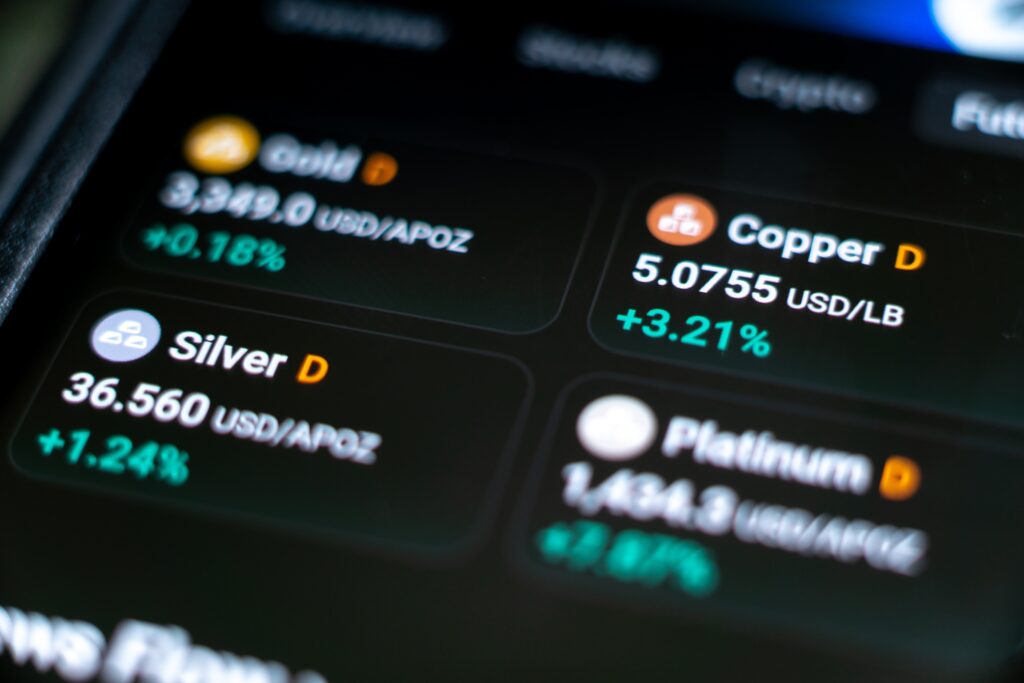
Investors who know how to trade commodities in theory often find that applying it in the UAE market is more difficult than they thought.
Gold and oil are part of the regional economic fabric, but carrying out informed and consistent commodities trading comes with challenges, including:
- Knowing which trading instrument fits their strategy and risk tolerance
- Finding a local broker who complies with local CMA regulations that affect how they trade
- Understanding the local drivers, from demand to geopolitics, that affect commodity markets
This article aims to help investors to overcome these doubts. Read on to find out how commodity trading works in practice in the UAE, including the factors that affect commodity prices and what to consider when choosing a trading platform.
Contents list
- What Is Commodity Trading for Experienced Investors?
- What Commodities Are Traded In the UAE?
- What Moves Commodity Prices In the UAE Market?
- How to Trade Commodities In the UAE: 6 Ways to Access the Market
- Commodity Trading in the UAE: What to Look Out for
- How to Trade Commodities in the UAE with the Right Platform
What is Commodity Trading for Experienced Investors?
Commodity trading is the buying and selling of raw materials, as anyone with an interest in trading would know.
These are the physical inputs that power the global economy, from crude oil and natural gas to gold and silver. As such, their value is tied to tangible natural resources and the forces of supply and demand, perhaps more so than other asset classes, which tend to correlate more with company earnings (stocks) or interest rates (bonds).
Yet experienced investors aren’t as concerned with what commodities are as with how they structure their exposure to them. When they trade a commodity, they’re looking at which financial instrument to use to track price movements, rather than actually owning a barrel of oil or a bar of gold.
It’s this difference that makes commodities a more flexible asset class than most. A trader can make or lose money from price movements in either direction (exposure), but they don’t need to worry about the storage or insurance costs that come with owning it.
What Commodities are Traded In the UAE?
While commodities trading in Dubai attracts much of the attention due to the city’s position as a regional financial hub, investors across the UAE have access to the same broad range of commodity markets.
UAE traders typically split commodities into two broad groups: hard commodities, those that are mined or extracted, and soft commodities, which are grown or farmed. UAE traders can access both, though hard commodities attract more interest because they are more closely tied to the regional economy.
Hard Commodities
Energy-related assets dominate the UAE market due to the region’s obvious focus on oil. Crude oil leads the way as the most closely watched commodity, and it is largely traded through the WTI and Brent benchmarks.
Alongside it, natural gas, heating oil, and gasoline also demand attention, and each comes with its own demand cycle.
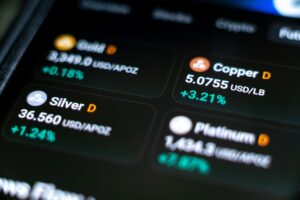
Elsewhere, metals are the other major hard-commodity group. This includes precious metals like gold, silver, platinum, and palladium, as well as industrial metals like copper. This last metal group closely tracks global manufacturing and construction demand.
Out of all the metal groups, gold is the one that carries cultural and financial weight in the UAE, which is why many local investors include a gold day trading strategy in their portfolios.
Soft Commodities
Soft commodities grab fewer headlines than their “harder” counterparts, but are still widely accessible in the UAE. Expect to see the following under this asset class:
- Agricultural products, including wheat, corn, cotton, and soybeans
- “Breakfast” commodities like coffee, sugar, and livestock.
Which Commodities Do Traders Typically Start With?
For many UAE-based traders, learning how to trade crude oil is a logical starting point, as long as they understand certain caveats.
Commodities differ from equities or indices in that they tend to trend and consolidate for longer than traders expect. Those who recognize this are more likely to fare better than those who don’t.
Understanding how trends develop in energy markets can help traders decide when to stay with an established move and when to wait for new opportunities before branching into other commodities such as gold, silver, and natural gas.
What Moves Commodity Prices?
Commodities, whether hard or soft, are all affected by common factors that can push prices up or down.
Supply and demand are perhaps the most important and also among the most volatile. Prices tend to rise when production tightens or consumption climbs, and they fall when supply outpaces demand. A single supply disruption or spike in demand can reprice an entire complex within hours.
Geopolitical events directly feed into this. Regional flashpoints, such as the recent tension around the Strait of Hormuz, can have a powerful effect on oil prices.
Production decisions, too, despite being a separate lever, can still move markets sharply, with OPEC+ output changes being a recent example in the UAE. Adjustments to production quotas feeding through to crude prices are felt across the Gulf.
Exchange rates also influence commodity prices because most commodities are priced in US dollars. A weaker dollar makes commodities cheaper for buyers holding other currencies and supports demand. US interest rate expectations and inflation data tend to cause a ripple through this same channel.
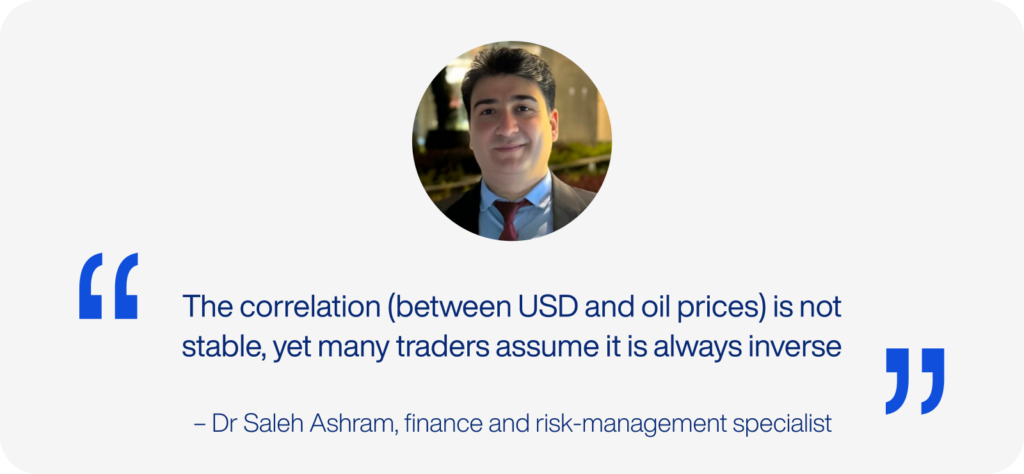
That link isn’t as fixed as it can appear, though, so traders may not want to treat it as a hard rule. “The correlation (between USD and oil prices) is not stable, yet many traders assume it is always inverse,” says Dr Saleh Ashram, a finance and risk-management specialist.
There are other caveats to consider. Gold is known as a “safe-haven asset” and a hedge against inflation because it tends to hold its value when currencies weaken or markets fall. This is why you will often see it spoken about during periods of uncertainty and currency weakness.
Gold can still, however, move in either price direction even during volatile times, and its past performance never guarantees what will happen in the future.
Soft commodities, too, respond to different forces than energy and metals. Harvest cycles, weather, and global consumption trends all play a much larger role in their fortunes.
Volatility: The Baseline Factor
Volatility is the thread that unites all commodities. They move faster and more sharply than many other asset classes during uncertain times, which is exactly what creates the opportunities that attract traders and risks that they should be cautious of.
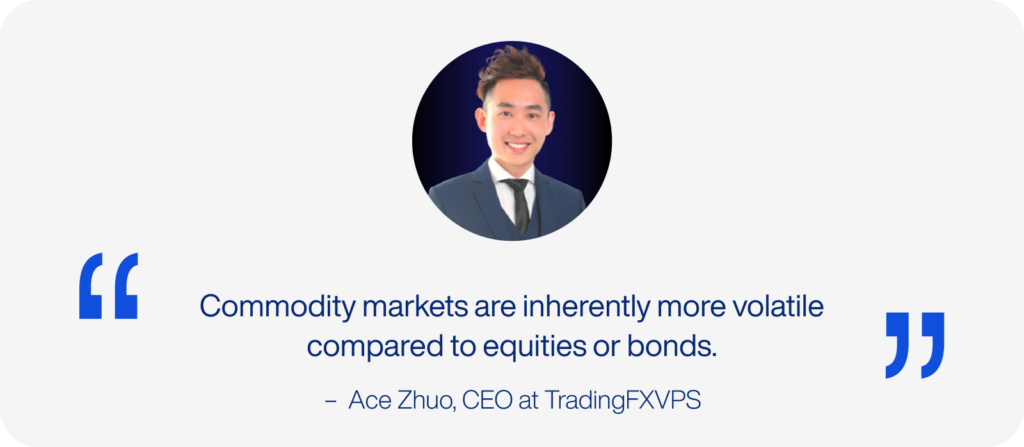
“Commodity markets are inherently more volatile compared to equities or bonds because they are closely tied to unpredictable variables like weather conditions, geopolitical risks, and supply chain disruptions, ” says Ace Zhuo, CEO of TradingFXVPS, a VPS trading solution.
“In April 2020, crude oil plunged into negative territory for the first time in history due to an unprecedented drop in demand coupled with overproduction.”
Such unpredictability calls for the right instrument when commodity trading online, and there are several options for UAE traders to choose from.
How to Trade Commodities In the UAE: 6 Ways to Access the Market
The instrument you choose doesn’t change how much the market moves: it decides your cost, expiry, and margin treatment, and how much capital you need to hold a position.
There is no “best” instrument to trade commodities, but rather the most suitable route for each trader’s situation. Here’s a look at five options that UAE traders use:
1. Futures Contracts
A futures contract is an agreement to buy or sell a commodity at a set price on a future date on a regulated exchange. The NYMEX (the New York Mercantile Exchange) for energy and the Commodity Exchange (COMEX) for metals are two of the most common exchanges.
Futures are typically standardized and liquid, but traders may be obliged to carry out a physical delivery, which makes these contracts more difficult to manage.
2. Exchange-Traded Funds (ETFs)
Commodity ETFs can track the price of a single commodity or a basket of them, and traders buy and sell them like shares.
ETFs are popular because they diversify exposure without the need to handle contracts directly. This takes out a lot of hassle for traders who just wish to trade simply and quickly.
3. Mutual Funds
Mutual funds pool capital into diversified commodity holdings, and traders hold them for a longer period of time than other instruments. This means they’re less flexible for active trading but are much lower maintenance.
4. Contracts for Difference (CFDs)
CFDs are leveraged products that let traders gain exposure to a commodity’s price movements without actually owning it. Traded in either direction, they are popular because they let you control a larger position with less capital, but this also magnifies potential losses and, thus, risk.
As a trader, you should look out for holding costs, which vary by instrument and can eat into gains if you leave them unchecked.
5. Perpetual Futures (Perps)
Perpetual futures (“perps”) work on a similar principle to CFDs, offering leveraged exposure with no expiry date. These are held open via periodic funding payments between long and short positions.
They’re most commonly found on crypto exchanges rather than through regulated brokers, which is a key consideration for UAE-based traders.
6. Physical Ownership
It is possible to physically own a commodity, but mainly for gold and silver. Both of these come with storage and insurance costs.
These five choices are what make commodities such a flexible asset class, yet they should also be held to high regulatory standards so that traders stay as safe as possible.
Commodity Trading In the UAE: Which Regulations to Look Out For
The CMA (previously SCA) logo is a familiar sight in the UAE trading world because it’s an agreed seal of approval that the broker or platform displaying it follows its strict regulatory framework.
Standing for the Capital Market Authority (formerly known as the Securities and Commodities Authority), the CMA oversees financial and commodity trading activity in the country and governs the following:
- The instruments a licensed broker or platform can offer
- The leverage limits they can offer
- The disclosures the firm must make to its customers about risk
A CMA stamp does not mean that there’s no risk involved. Commodity trading, particularly with leverage, is still dangerous when not done well.
What regulation does is set the rules brokers must operate under (conduct standards, leverage caps, and disclosure duties), and it reduces a trader’s exposure to unlicensed or unregulated operators. It doesn’t remove market risk or guarantee any particular outcome.
For this reason, it’s good practice to turn to what other traders believe to be the best online trading platforms in the UAE. These are more likely to hold CMA accreditation and also be designed to make informed trading as hassle-free as possible.
How to Trade Commodities In the UAE with the Right Platform
Let’s take a CMA-regulated platform as a given. What else should a trader expect from one?
Here’s a checklist that any commodity trader can bear in mind:
- Does the platform cover the commodities you’re interested in, such as energy, metals, and softs, through the structures you want to use, whether CFDs or others?
- Volatile commodity markets call for quick and stable trades. Does it offer speedy and consistent executions?
- Leveraged commodity trading is expensive enough due to commissions and overnight holding costs. Which fees does the platform charge?
- Speed and stability matter, particularly in volatile commodity markets where prices move quickly. Consistent execution is a core differentiator.
- Expert traders rely on useful tools like MetaTrader 5, which supports multi-asset trading and advanced charting. Is this feature, or something similar, available?
- Daman Markets has a growing user base because it ticks these boxes. Working alongside MetaTrader 5, it offers quick, reliable, and cost-effective trades in a wide range of asset classes, including the commodities mentioned in this article.
- Making sure you know how to trade commodities is an important first step. Choosing the right platform to support your strategy is just as crucial.
Trading commodities demands expertise and advanced trading tools. Sign up for Daman Markets to get both of these so you can trade with confidence.