ar
ar
- The Federal Reserve kept rates steady at 3.75% in its most divided vote since 1992, indicating deep disagreements over inflation risks and policy direction.
- Chair Powell announced that he will remain as a Fed governor after his term as chairman ends next month.
- Incoming Fed leader Kevin Warsh could face challenges as oil prices remain elevated from the Middle East conflict, alongside high inflation and new expectations of rate hikes instead of cuts through 2027.
The Federal Reserve kept interest rates unchanged yesterday, as markets expected. But, behind the curtains, the decision revealed something far more important, a growing divide among policymakers.
With inflation still elevated and a leadership transition just weeks away, the Fed is stepping deeper into an environment of uncertainty.
A Historic Split Decision
The FOMC voted 8-4 to keep the Fed Funds rate at 3.75%, with the four dissenting votes resulting in the most divided committee since October 1992, indicating deep uncertainty about the US economy among policymakers. ⁽¹⁾
Three regional bank presidents voted against the Fed’s easing cycle, including:
- Cleveland Fed President Hammack
- Minneapolis Fed President Kashkari
- Dallas Fed President Logan
They all argued that the tone on future rate cuts was no longer appropriate after seeing elevated inflation readings and the uncertainty surrounding the global energy market. ⁽²⁾
Even among dovish voices, the tone is changing. Stephen Miran, a member of the Federal Reserve Board of Governors, still supported a rate cut, but favoured a smaller 25-basis-point move over a larger 50-basis-point cut, an early sign that caution is spreading across the committee. ⁽³⁾
Inflation Concerns Mount
In its statement, the Fed discussed how inflation remains elevated, driven mostly by high energy prices. Oil is now trading above $110 per barrel amid stalled negotiations between the US and Iran.
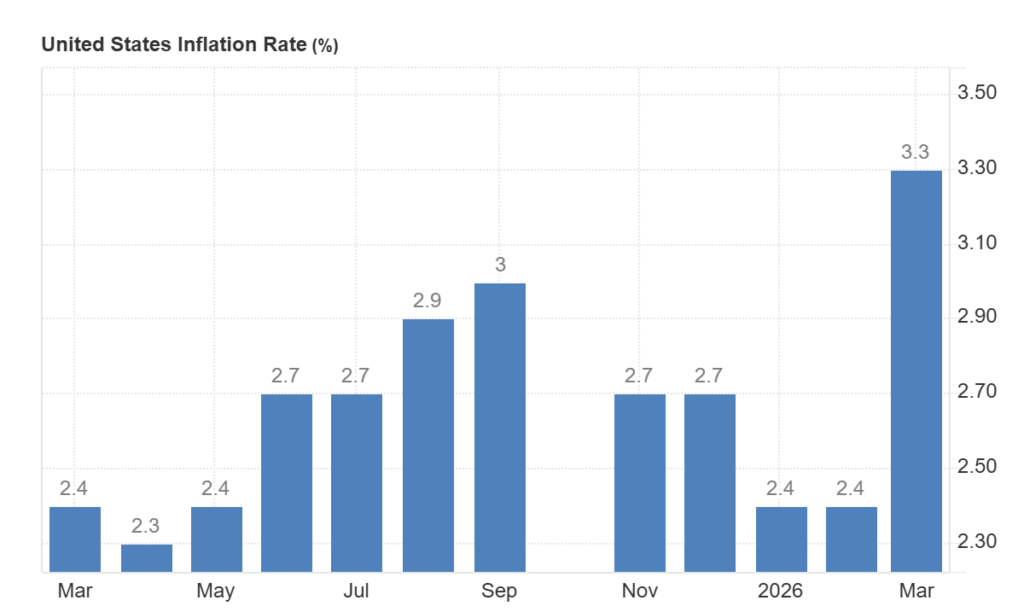
Upcoming PCE index data, regarded as the Fed’s preferred inflation measure, will be released today and is expected at 3.5% YoY, higher than the previous reading of 2.8%. ⁽⁴⁾
Powell warned that the combination of Trump’s import tariffs and high energy costs could further feed into core inflation, making the Fed’s fight to bring prices down even harder.
While policymakers were not ready to signal possible rate hikes at this meeting, Powell noted that the tone is moving toward a more neutral stance, meaning that rate hikes could be back on the table alongside rate cuts. ⁽⁵⁾
Powell to Stay on Governor as Warsh Takes the Reins
Powell announced he would remain on the Board of Governors after his term as chair ends on May 15. His term as a governor runs through January 2028, near the end of President Trump’s term. ⁽⁶⁾
Powell said ongoing legal threats against the Fed were a key reason for remaining in his role. The Trump administration has launched several actions targeting the central bank, including attempts to remove Fed Governor Lisa Cook and a criminal investigation into Powell himself.
Kevin Warsh’s nomination to succeed Powell as Fed chair cleared the Senate Banking Committee yesterday, where a full confirmation from the Senate is expected to come in two weeks’ time. ⁽⁷⁾
Trump expects Warsh to commit to interest rate cuts, but that might be difficult considering the current inflation question.
Warsh will inherit a divided central bank facing significant challenges. The combination of persistent inflation, geopolitical uncertainty from the Iran conflict, and ongoing political pressure creates a complex environment for monetary policymaking.
Market Reaction
US Treasury yields reached a one-month high following the policy announcement, while the US dollar rebounded against its peers. The dollar also climbed to 160.5 against the yen, reaching July 2024 highs, when Japanese authorities intervened to support the currency.
The CME FedWatch Tool showed that expectations for rate cuts have faded, with some market participants expecting rates to move higher instead in 2027. ⁽⁸⁾
The divided vote and shift in tone suggest the Fed’s rate-cutting cycle may be over for now, leaving the incoming chair with limited room to maneuver.