ar
ar
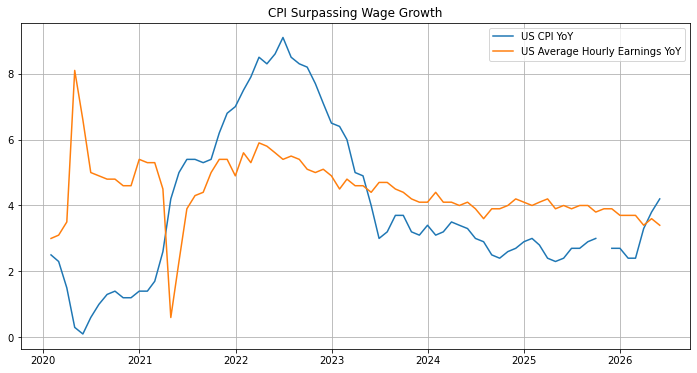
- US CPI rose to 4.2% in May, its highest level since 2023, driven almost entirely by a surge in energy prices.
- Inflation has now exceeded wage growth for two consecutive months, squeezing household purchasing power.
- Core inflation came in at 2.9% annually, suggesting price pressures remain concentrated in energy rather than spreading across the broader economy.
- The Fed is expected to hold rates steady at its June 17 meeting, though the data leaves little room for cuts anytime soon.
Three years of progress have been partly reversed, with US inflation rising to its highest point since 2023 as energy prices climbed again in May.
The latest Consumer Price Index (CPI) data adds to growing pressure on American households and gives the Federal Reserve more reason to hold interest rates steady well into next year.
Inflation Climbs Above 4% for the First Time Since 2023
CPI for May rose to 4.2% year-on-year, rising from April’s 3.8%. The monthly report came in at 0.5%, with both numbers matching forecasts.
The reading marks a third consecutive month of hot price increases, painting the picture of an economy where the cost of living continues to outpace earnings. ⁽¹⁾
Inflation exceeded wage growth for a second straight month, which economists warn could slow overall economic activity as consumers have less real purchasing power to spend.
Energy Prices Lead the Way Higher
The biggest driver behind the surge was energy. Gasoline prices jumped 7% last month, pushing the average gas price to $4.60 per gallon. The broader energy index jumped 3.9% on the month and was up 23.5% from a year ago. ⁽²⁾
Some economists previously expressed cautious optimism that May could represent the peak in headline inflation. A ceasefire agreement has since pulled gas prices back from their highs, but that might be short-lived as tensions continue in the Middle East. ⁽³⁾

Food prices rose slightly by 0.2%, while shelter costs increased 0.3%, slowing from April. Shelter remains 3.4% higher than a year ago and still carries the biggest weight in the CPI.
New vehicle prices fell 0.3%, used car prices were almost unchanged, while airline fares jumped 2.7% as higher fuel costs started to pass through. ⁽⁴⁾
Core Inflation Stays Relatively Calm
After breaking down the energy-driven headline, core CPI was more moderate, coming in at 0.2% MoM and 2.9% YoY.
The monthly figure came below its forecast of 0.3% and under April’s reading of 0.4%. This could offer some relief to policymakers watching for signs of broader inflationary pressures. ⁽⁵⁾
The Fed Holds Its Ground
Despite the surge, most economists are still debating whether the Fed will hike or remain on hold this year. The central bank is expected to keep rates unchanged at its upcoming meeting on June 17. ⁽⁶⁾
New Fed Chair Kevin Warsh has signaled that rates could eventually move lower, pointing to productivity gains from artificial intelligence as a potential disinflationary force in the economy over time.
A Political Headache for the White House
The inflation data arrives at an uncomfortable moment for President Donald Trump, who built much of his 2024 election campaign on a promise to bring prices down.
With midterm elections approaching in November, the persistent rise in the cost of living has weighed on his approval ratings and handed political opponents a clear line of attack.
The White House is expected to push back on the narrative of a cost-of-living crisis, but with gas prices high and inflation above 4%, that message may prove difficult to land. ⁽⁷⁾