ar
ar
- US inflation cooled down in June, with CPI falling 0.4% MoM and annual inflation easing to 3.5%, while core inflation and producer prices also came in below expectations.
- But renewed US-Iran tensions and rising oil prices could reverse that progress, keeping the Fed cautious and still leaning toward tighter policy.
After months of rising prices, June’s inflation report delivered a surprise. Consumer prices fell more than expected, marking the sharpest decline in years.
But the improvement leaned heavily on a temporary dip in energy prices, and just as the report landed, the US-Iran ceasefire collapsed.
With oil prices climbing again, it’s too early to say if June marks a real turning point or just a brief pause for inflation.
A Surprise Drop in Consumer Prices
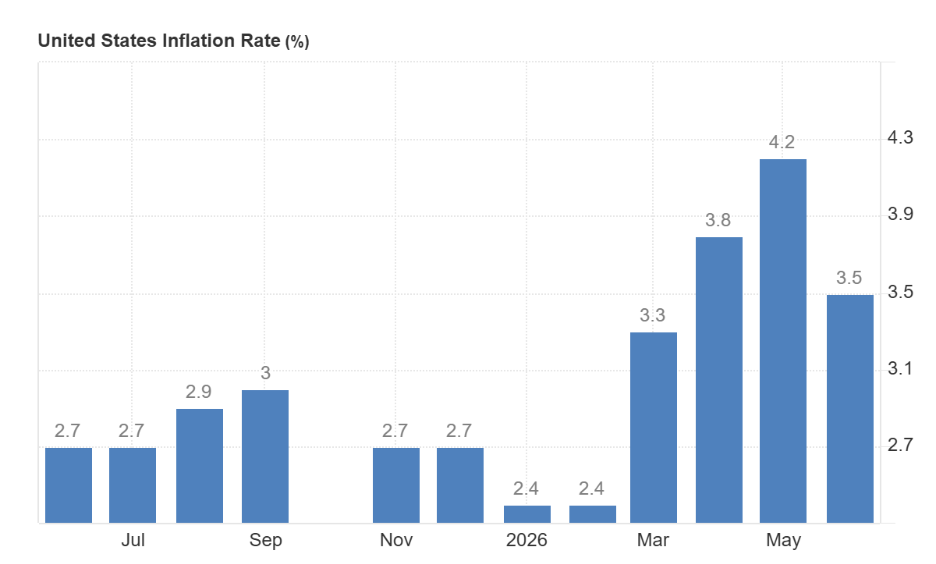
CPI fell 0.4% MoM in June, marking its sharpest decline since April 2020. The drop pushed annual inflation down to 3.5%, well below the 3.8% forecast and sharply lower than May’s 4.2% reading. ⁽¹⁾
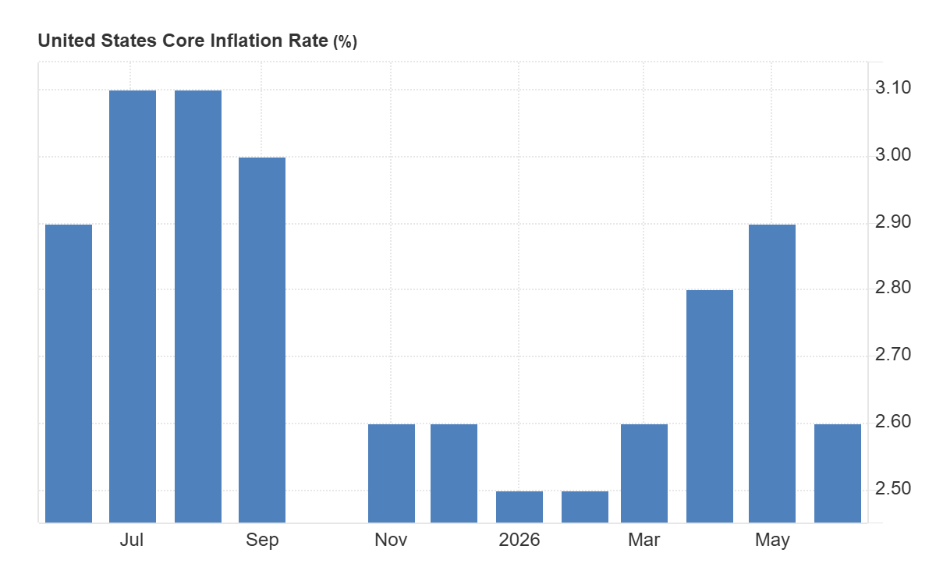
Core inflation came in flat for the month, bringing the yearly core rate down to 2.6%, below its 2.9% forecast.
The main reason for the drop was energy. Energy prices fell 5.7% in June, driven by a 9.7% plunge in gasoline prices.
This came after the ceasefire deal between the US and Iran that had calmed oil markets briefly. Still, gasoline was up nearly 27% YoY, showing how volatile the picture remains. ⁽²⁾
Where Else Prices Slowed
Moving aside from energy, several other sectors also showed signs of cooling. Shelter costs came in at 0.1%, its smallest increase since January 2021. Transportation services fell, motor vehicle insurance dropped 2%, and even tobacco prices had their biggest decline since 2014. ⁽³⁾
Apparel prices fell 0.6%, which some economists see as a sign that the effect of tariffs on clothing prices may be fading. Food prices rose at a moderate pace of 0.2%, matching May’s pace, though eggs and dairy costs still climbed. ⁽⁴⁾
The Fed Isn’t Celebrating Yet
Despite easing inflation, Federal Reserve Chairman Warsh made it clear that policymakers are not ready yet to declare victory.
He told lawmakers that seeing this data does not mean the job is done, and that the Fed has no tolerance for inflation staying high. Fed Governor Christopher Waller added that it would take several more months of good data before he would feel confident inflation is heading back to the Fed’s 2% target. ⁽⁵⁾

Due to this cautious stance, financial markets are still expecting a 47% chance of a rate hike from the Fed by September, even after the weaker-than-expected inflation data. ⁽⁶⁾
Iran Conflict Threatens to Reverse the Decline
The timing of this report matters, as the ceasefire between the US and Iran helped push oil prices down last month. However, the ceasefire has come under threat after commercial tankers were attacked in the Strait of Hormuz this week, which resumed the fighting between the two nations. Brent crude has jumped 12% since Monday.
This could mean the improvement in price data seen in June’s data may already be out of date. Economists warned that July’s inflation picture looks less promising, since gasoline prices have already started climbing again at the pump. ⁽⁷⁾
Wholesale Prices Add to the Story
A day after the CPI report, the Producer Price Index (PPI) also came in below expectations, falling 0.3% in June and 5.5% YoY. This was another sign that cost pressures at factory levels were easing, even before the latest round of Middle East tensions. Core PPI rose at a modest pace of 0.2% MoM and 4.7% YoY. ⁽⁸⁾
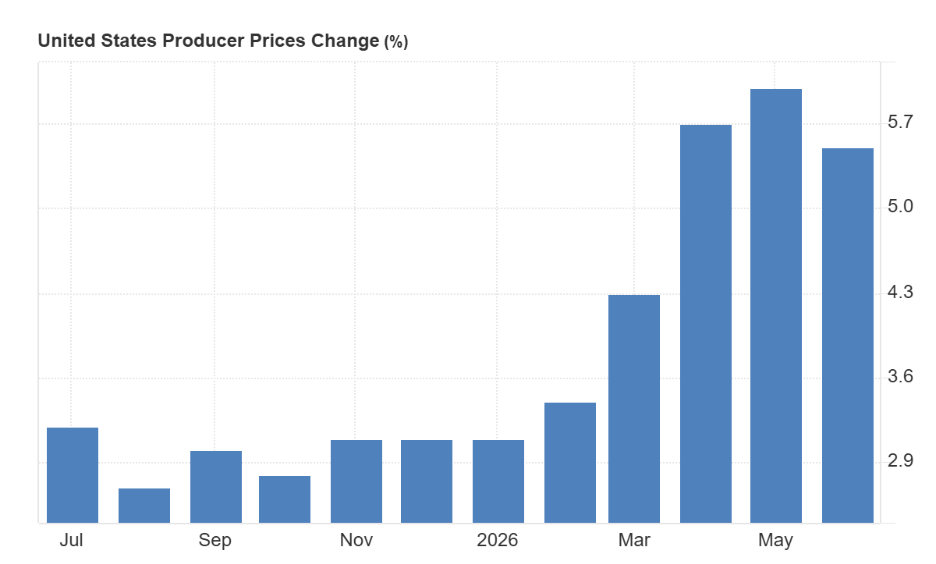
Since CPI and PPI both feed into the Fed’s preferred inflation gauge, the PCE index, the data offer some hope that PCE inflation will also come down when it is released later in the month.
How will the Fed Proceed?
Based on the signals in both CPI and PPI reports, the Fed looks like it wants to stay in wait-and-see mode, but might be leaning toward tightening rather than cutting.
Chair Warsh and Governor Waller both signaled that one good month of data will not be enough to change their approach. They want to see the trend hold for several months before trusting it.
Renewed tensions between the US and Iran make this even more likely. With oil prices already climbing again this month, the Fed has reason to worry that June’s improvement was temporary.
Policymakers will likely treat the inflation drop as encouraging, but not decisive, especially with energy markets so unstable.