ar
ar
- US inflation came in hotter-than-expected for a second consecutive month in April, with headline CPI reaching its highest level since May 2023, driven by rising energy prices.
- Energy costs continued to rise in April, causing other sectors such as food, clothing, and gasoline to rise along with it, further reducing purchasing power as average hourly wages decline.
- The Federal Reserve faces mounting pressure from elevated inflation, alongside deep internal divisions within the central bank.
American consumers are feeling the squeeze again. CPI inflation in the US picked up pace for a second straight month in April, pushing the annual rate to its highest level in three years.
A combination of rising energy prices linked to the conflict in the Middle East and lingering economic uncertainty has kept prices well above the Federal Reserve’s target and placed the White House under growing political pressure.
Prices Rose Sharply in April
April’s CPI reading showed a monthly increase of 0.6%, following an even higher surge of 0.9% in March, while yearly CPI came in at 3.8%, marking its largest yearly rise since May 2023. ⁽¹⁾
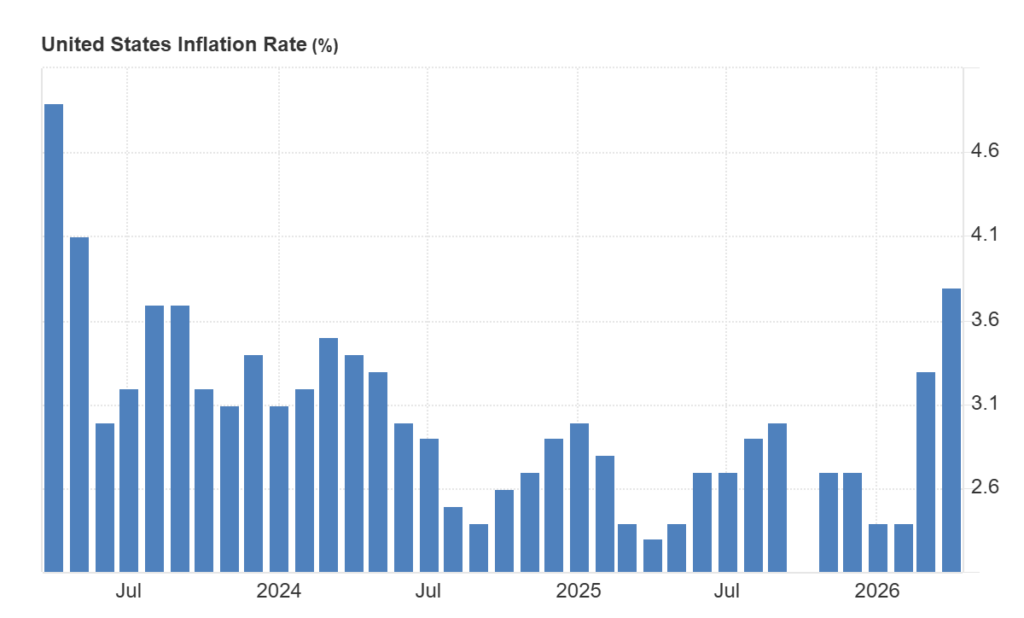
Core CPI rose 0.4% (MoM) and 2.8% YoY. Both the headline and core figures are well above the Fed’s 2% target. ⁽²⁾
War in the Middle East Is Driving Energy Prices Higher
Much of the recent inflation pressure can be traced back to oil.
When the Middle East conflict began, crude prices climbed above $100 per barrel in March, adding fresh pressure to energy costs. Prices have since pulled back slightly following a fragile ceasefire announcement, but they remain elevated.
Energy prices rose 3.8% in April, with gasoline increasing 28% (YoY). Jet fuel costs also jumped, impacting transportation and travel costs. Economists warn that the full impact of higher oil prices on the broader economy may not be felt until later in the year. ⁽³⁾
Inflation Is Spreading Beyond Energy
While energy has caught most of the headlines’ attention, price pressures are also showing up in other areas. Food costs rose 0.5%, up 3.2% year-on-year, indicating that inflation is not simply a war-driven energy story. ⁽⁴⁾
Clothing and airline prices also jumped. Many of these increases have been linked to the impact of tariffs, though the US Supreme Court struck down some of the sweeping duties earlier this year, which economists believe reduced some of the tariff-driven pressure on core goods. ⁽⁵⁾
One of the most concerning findings in the report is what all this means for workers. Average hourly wages fell 0.5% last month, indicating that prices are rising faster than salaries. Most workers could lose purchasing power even if their wages remain unchanged, as rising inflation erodes the real value of their income.
The Fed Is Stuck, and So Is Trump
Financial markets now expect rates to stay unchanged well into 2027. The Federal Reserve’s recent meeting saw four dissents among policymakers, the most since 1992, reflecting genuine disagreement about the right path forward. ⁽⁶⁾
Things don’t seem to be getting better for President Trump either. Despite his promise to bring inflation down, voters are increasingly blaming his policies for rising prices.
With higher interest rates, consumer sentiment is at an all-time low, although the stock market has been resilient. Major indices have pulled back from their all-time highs following the latest inflation release, while the US dollar remained firm as Treasury yields rose.