

 ar
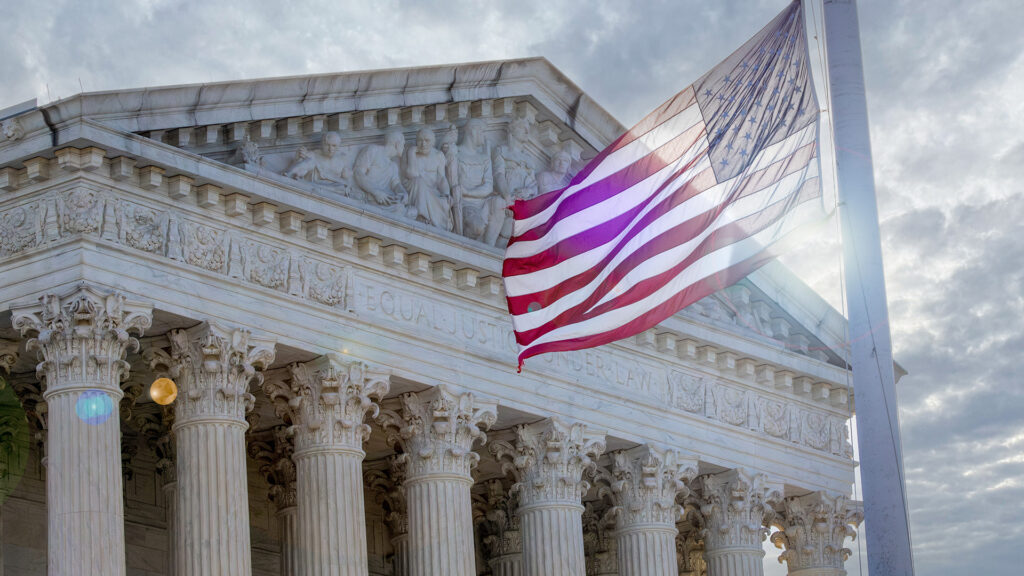
- The Supreme Court has struck down on Trump’s tariffs last Friday, but the US President hit back with a new plan to raise tariffs.
- Trade deals that were already made were not affected by the ruling, according to Trade Representative Greer.
- The refund question remains in play, as the Supreme Court did not mention much about it.
Last week ended in turbulence for President Trump’s trade policies after the Supreme Court struck down a large portion of the president’s tariffs in a 6-3 ruling.
This marks a major setback for Trump during his presidency. But he still didn’t sit quietly.
On Saturday, President Trump announced he was raising global tariffs from 10% to 15% immediately and warned that more tariffs are on the way.
For American importers, trading partners, and everyday consumers already feeling the pinch of rising prices, the message was clear. Trump is not backing down.
What the Supreme Court Actually Said
The court ruled that Trump had wrongfully used the International Emergency Economic Powers Act, known as IEEPA, to impose his tariffs.
It was a significant legal defeat, and Trump did not take it quietly. He called the ruling “ridiculous, poorly written, and extraordinarily anti-American” and personally attacked two justices who voted with the majority, Neil Gorsuch and Amy Coney Barrett, both of whom he had appointed. ⁽¹⁾
Within hours of the ruling, Trump found another legal route. He imposed a 10% global tariff under Section 122 of the Trade Act of 1974, a law that gives the president the power to set temporary tariffs for up to 150 days. By Saturday, that figure had already climbed to 15%. ⁽²⁾
What This Means for Ordinary People
For most Americans, tariffs can feel like an abstract political fight, but the effects are very real.
Higher tariffs mean higher costs for businesses that import goods, and those costs are usually passed on to consumers. With affordability already a top concern for voters, the timing is extremely sensitive.
Trump’s approval rating on economic performance dropped, with only 34% of Americans approving his handling. Democrats, who need to flip just three Republican-held seats in the House to win a majority in November’s midterm elections, are already making tariffs a central part of their campaign. ⁽³⁾
Senate Minority Leader Schumer described the tariffs as illegal. Republicans remain divided, with some backing Trump while others continue to argue that the power of tariffs belongs to Congress. ⁽⁴⁾
? Did you know?
During the 2018–2019 US–China trade war, average US tariffs on Chinese goods rose from 3% to over 19%, contributing to higher input costs for manufacturers and increased volatility in equity markets.
Trade Deals Still Stand
Despite the Supreme Court striking down, trade deals that were already made were not impacted. Trade Representative Greer stated that negotiated tariff rates remain in place.
Greer confirmed that no country plans to withdraw from existing agreements and said the administration will rebuild its trade strategy using other legal tools, including Sections 301 and 232, both of which have already survived past legal challenges. ⁽⁵⁾
- Section 301: Allows the US government to respond when another country is seen as treating American businesses unfairly.
- Section 232: Allows the US government to impose tariffs on imports that are deemed a threat to national security.
A $175 Billion Question
Perhaps the most uncomfortable consequence of the Supreme Court ruling is the question of refunds. By one estimate, the US government could owe more than $175 billion to importers who were charged under the now-struck-down tariffs.
Treasury Secretary Scott Bessent said the matter would be handled by the lower courts, but how and when that money is returned remains deeply uncertain. ⁽⁶⁾
Stock markets reacted with cautious optimism after the ruling, initially rallying before pulling back and then recovering again. Investors are hoping the decision could ease tensions with trading partners and help bring inflation down, though much depends on what comes next.


