ar
- The Reserve Bank of Australia hiked interest rates by 25 basis points to 4.1%, marking the second straight rise as inflation remains high.
- With unemployment at a historic low of 4.1% and economic growth surpassing expectations, Australia’s economy is showing little sign of slowing down.
- Rising oil prices driven by the Middle East conflict have added fresh pressure on inflation, pushing the RBA to act even as most other major central banks are expected to hold rates steady.
For the second time this year, the Reserve Bank of Australia hiked its Cash Rate by 25 basis points to 4.1%, reaching a 10-month high. The vote resulted in a narrow 5–4 vote, highlighting uncertainty over further tightening.
The decision made it clear that while the central bank feels it must act on inflation, there is real disagreement about the right path forward.
Why the RBA Decided to Hike
The main reason behind the 25-basis point rise is inflation remaining stubbornly higher than the RBA’s target range of 2%-3%, with headline inflation reaching 3.8% in January while core inflation rose to 3.4%, reaching a 16-month high. ⁽¹⁾
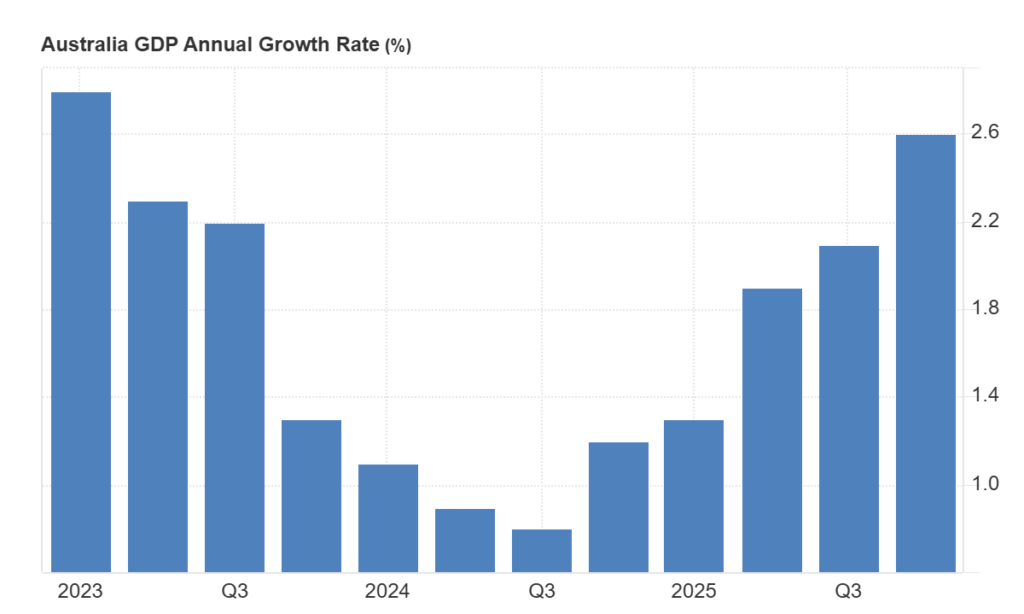
The labor market showed resiliency, with the unemployment rate remaining at a historical low of 4.1%. Australia’s economy expanded by 2.6% YoY in Q4 2025, coming in well above the RBA’s expected figure of 2%. ⁽²⁾
Alongside resilient growth and rising inflation, Australia’s economy may face a major challenge, driven by the same factor we’ve been discussing over the past two weeks.
The ongoing conflict in the Middle East has pushed oil prices above $100 a barrel, raising the risk that fuel costs will feed into broader price pressures. The board noted that short-term inflation expectations have already started to rise as a result.
Undoing Last Year’s Cuts
The RBA remained more cautious than any other central banks during the inflation shock of 2022, choosing to protect the labor market instead of hiking rates aggressively and playing catch-up with its peers.
The Cash Rate peaked at 4.35% early last year before moving on to three rate cuts to 3.6%. But that approach backfired somewhat, as inflation picked up again in the second half of 2025, forcing the central bank to reverse course and become hawkish.
This latest hike has reversed two of those three cuts, and further increases may be needed if inflation does not come down.
A Wider Global Picture
The RBA’s decision kicked off a week of major volatility, with the economic calendar filled with central bank meetings across the globe. The Federal Reserve, the Bank of England, the European Central Bank and the Bank of Japan are all expected to keep rates steady, making Australia something of an outlier.
Still, the RBA acknowledged that interest rate expectations have risen across most advanced economies in response to the inflation risk posed by the Middle East conflict. ⁽³⁾
The RBA’s forecasts that were published in February already showed expectations of headline inflation rising to 4.2% by the middle of this year, and that was even before the surge in oil prices. What are the expectations now that oil prices are trading around $100 per barrel?
Market Reaction
The Australian dollar pulled back after the decision due to risk-off sentiment amid a close vote that led traders to reduce bets on further tightening.
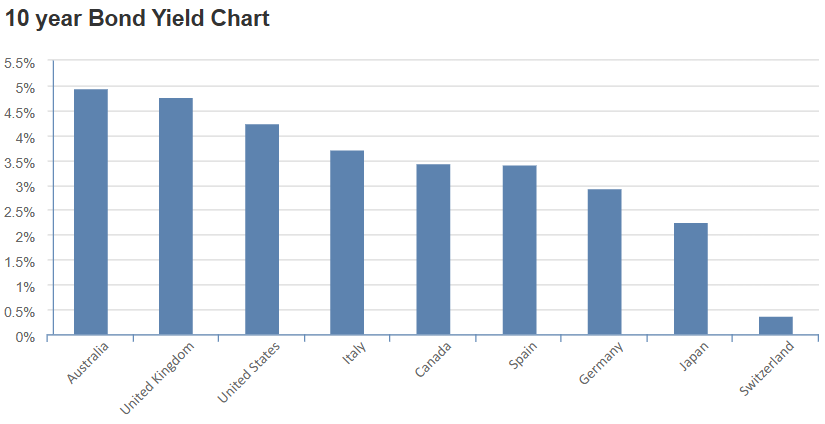
The three-year government bond yields fell 7 basis points to 4.509%. Traders pared back the chance for another hike in May, which is now priced at around 30%. Australia’s 10-year yield now stands as the highest across major economies. ⁽⁴⁾
What Comes Next?
The RBA said it will keep a close eye on incoming data and will do whatever necessary to bring inflation back under control while maintaining full employment.
Financial conditions have tightened somewhat this year, but the central bank noted that credit remains readily available to households and businesses, and the full effect of last year’s rate cuts has not yet been felt across the economy. ⁽⁵⁾
With the Middle East situation still highly uncertain, the RBA warned that risks could go in either direction. A longer or more severe conflict could push energy prices even higher and keep inflation elevated well beyond current forecasts. At the same time, prolonged uncertainty could weigh on growth both in Australia and among its major trading partners. ⁽⁶⁾
For now, the RBA’s message is that inflation is the priority, and rates will stay higher for as long as necessary to bring it back to target.