ar

A pivotal week lies ahead for global markets, with multiple central bank decisions set to shape expectations for interest rates across major economies.
At the same time, investors continue to monitor tensions in the Middle East, as developments in the region keep oil prices and broader market sentiment in focus.
Below, we’ve gathered the key events and themes likely to drive markets in the days ahead. Let’s get started.
Calendar Events
- Canada CPI – Mar. 16
- Reserve Bank of Australia Interest Rate Decision – Mar. 17
- Eurozone Final CPI – Mar. 18
- US PPI (Feb) – Mar. 18
- Bank of Canada Interest Rate Decision – Mar. 18
- Federal Reserve Interest Rate Decision – Mar. 18
- Australia Unemployment Rate – Mar. 19
- Bank of Japan Interest Rate Decision – Mar. 19
- UK Claimant Count Change – Mar. 19
- UK Unemployment Rate – Mar. 19
- Swiss National Bank Interest Rate Decision – Mar. 19
- Bank of England Interest Rate Decision – Mar. 19
- European Central Bank Interest Rate Decision – Mar. 19
- People’s Bank of China Interest Rate Decision – Mar. 20
Top Things to Watch
Middle East Tensions Drive Oil Market Risks
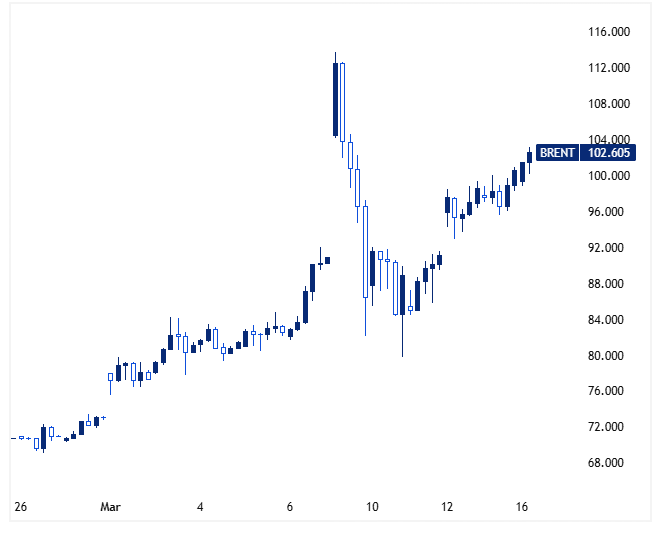
Oil remains firmly on the market’s radar as it topped $100 per barrel again due to tensions in the Middle East which continued to fuel concerns about possible supply disruptions. With the Strait of Hormuz ? acting as one of the world’s most important energy chokepoints, any further escalation could quickly tighten global supply and send prices higher.
That’s why traders will be watching developments closely. Moves in oil don’t just affect energy markets. They can also shape inflation expectations, influence central bank thinking, and shift overall market sentiment.
All Eyes on the Fed
The Federal Reserve’s decision on Wednesday is set to be one of the standout events of the week. With the Fed funds rate currently at 3.75% following last year’s series of rate cuts, markets are now focused less on the decision itself and more on the message behind it.
Investors will be watching closely for clues on how policymakers assess inflation, the labor market, and the impact of rising energy prices.
Recently, the US dollar has strengthened, gaining roughly 2–3% over the past month, supported by safe-haven demand amid geopolitical tensions, higher oil prices, and expectations that the Federal Reserve may delay interest rate cuts.
Gold Slips as Dollar Strength Pressures Prices
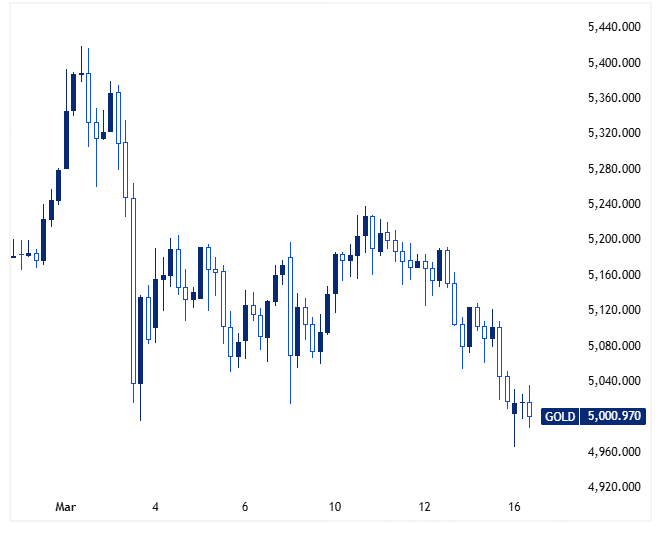
Gold has recently come under pressure, driven largely by a stronger US dollar and fading expectations for near-term Federal Reserve rate cuts, which reduce the appeal of non-yielding assets like gold. Despite ongoing geopolitical tensions and high oil prices supporting inflation concerns, rising Treasury yields and the firm dollar have weighed on bullion in the short term.
Europe’s Policy Outlook
Thursday will also bring decisions from the Bank of England and the European Central Bank, rounding off a packed week for global monetary policy.
In the UK, the Bank of England is still balancing inflation that remains too high with an economy that is showing signs of slowing. Traders will pay close attention to the vote split and any change in tone for clues on whether policymakers still want to stay restrictive or are edging closer to easing.
In the Eurozone, the ECB will also be under the spotlight as markets assess how officials see inflation, growth, and the broader policy path ahead. Any shift in language could influence expectations for rates across the region later this year.
Bank of Japan Under Close Watch
The Bank of Japan’s decision on Thursday will be a key test for markets, as investors assess whether policymakers are ready to move further away from ultra-loose policy or stay patient for now.
The focus will be on inflation, wages, and the Bank’s overall tone, with any fresh signal on the path ahead likely to ripple through the yen and broader global markets.
RBA and BOC Decisions Add to a Busy Central Bank Week
Tuesday’s Reserve Bank of Australia decision kicks off a crucial week for central banks, with the cash rate currently at 3.85% after a 25-basis-point hike earlier this year.
Markets will be watching for guidance on whether policymakers still see room for further tightening or prefer to remain patient, which could move the Australian dollar and influence sentiment across Asia-Pacific markets.
On Wednesday, the Bank of Canada also announces its decision as policymakers balance slowing economic growth with lingering inflation risks, with any shift in tone likely to shape expectations for future policy and drive moves in the Canadian dollar.