ar
ar
- The Fed is expected to hold rates tomorrow, but two voting members have signaled openness to a hike, and markets are still pricing roughly a one-in-three chance of one.
- The BoE is expected to hold at 3.75%, even with UK inflation at a 15-month low, as rising energy costs push markets to price a 67% chance of a September hike.
- The BoJ is also expected to hold, but a 40-year-low yen and firming inflation are building the case for a hike later this year.
Oil markets have turned volatile again, and that’s putting central banks in an uncomfortable spot. Just as inflation data in several major economies started to look more encouraging, renewed tensions in the Middle East have driven energy prices back up, threatening to undo months of progress.
This week brings decisions from three of the world’s most closely watched central banks, including the Federal Reserve, the Bank of England, and the Bank of Japan. Each stands at a crossroads, either hold back and hope price pressures fade on their own, or act now before it is too late.
The Fed Faces a Surprise Hike Debate
The FOMC will start its two-day meeting today and announce its interest rate decision tomorrow, with a rate hold widely expected. June’s CPI data came in less than expected, bringing some relief to the Fed.
However, renewed tensions in the Middle East have sent oil prices up again, hitting $100 per barrel last week before easing yesterday, while new tariffs from the Trump administration brought another layer of uncertainty.
Markets briefly priced the probability of a hike at the upcoming meeting at close to 40% last week, although the odds fell to around one-third yesterday as oil prices retreated. Expectations for September remain more hawkish, with markets assigning a 55.6% probability to an increase. ⁽¹⁾
Two FOMC voters, Dallas Fed President Lorie Logan and Cleveland Fed President Beth Hammack, have both stated that they see room for higher rates. Analysts expect one or both governors to dissent if the committee decides to hold. ⁽²⁾

Fed Vice Chair Philip Jefferson struck a cautious tone, saying that if actual inflation does not start to cool down soon, it could be appropriate to reconsider the current policy stance. ⁽³⁾
Fed Chair Kevin Warsh announced back in June that he has departed from his predecessor’s practice of guiding markets ahead of meetings, increasing uncertainty surrounding this week’s decision.
The BoE Balances Softer Inflation Against Oil Risks
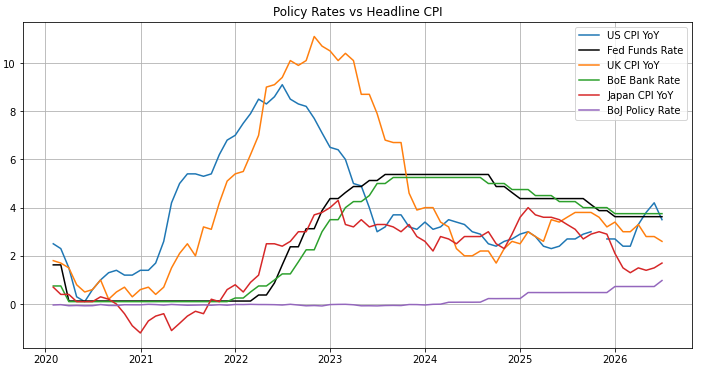
Next, the Bank of England is expected to keep its Bank Rate at 3.75% on Thursday amid higher oil prices. Inflation in the UK fell to 2.6% in June, reaching a 15-month low.
That’s partly because regulated domestic energy prices adjust more slowly to wholesale costs than in the US or eurozone, giving the UK a temporary buffer against rising energy costs. ⁽⁴⁾
Still, a rate hike could bring complications for the new Prime Minister Andy Burnham, who has promised to bring down the cost of living. After last week’s rise in oil prices, interest-rate futures moved to price in a 67% chance of a quarter-point BoE hike in September and nearly three increases by next June. ⁽⁵⁾
Some analysts have reconsidered earlier calls for a precautionary hike after seeing repeated soft inflation readings and signs of a loosening labor market.
BoE Chief Economist Huw Pill has voted for hikes twice this year and worries a second oil shock could shift inflation expectations for good. ⁽⁶⁾
The BoE is also expected to assess the market impact of its bond-sales program ahead of September’s annual quantitative tightening decision. Markets expect the pace of balance-sheet reductions to slow from £70 billion to around £50 billion a year. ⁽⁷⁾
The BoJ Turns More Hawkish as the Yen Slides
Lastly, the Bank of Japan meets on Friday and is also expected to keep rates unchanged. However, policymakers are signaling greater concern about inflation.
Governor Kazuo Ueda is trying to support the yen while avoiding tensions with a government that has typically preferred an easier policy stance.
Japan’s inflation also ticked up in June, with headline CPI rising to 1.7% YoY, while core CPI climbed to 1.6% YoY. Energy prices were lower year over year because of government subsidies, but the decline was smaller than in the previous month, contributing to firmer headline inflation. ⁽⁸⁾
The figures support the BoJ’s case for further tightening after it raised its policy rate to 1% in June, its highest level since 1995. The yen’s relentless slide, falling overnight to a fresh 40-year low against the dollar, is creating an additional source of concern for policymakers who are already wary of upside inflation risks. ⁽⁹⁾
Japanese firms have increasingly responded to higher costs by raising prices for their customers rather than absorbing them, suggesting a shift in long-standing price-setting behavior since the outbreak of the Middle East conflict.
The BoJ will release updated quarterly economic projections that may support keeping the bank on track for rate hikes later this year.