ar
ar
- Gold has fallen 14% from its peak price despite the ongoing Middle East conflict, as rising oil prices drive inflation fears and keep central banks cautious on rate cuts.
- Markets are prioritizing monetary policy concerns over geopolitical risk, with higher short-term yields making non-yielding assets like gold less attractive to investors.
Nine weeks into the Middle East conflict, markets are still waiting for a credible path toward de-escalation.
High tensions have kept the Strait of Hormuz closed for business, disrupting global energy supplies and pushing inflation risks up.
Gold, a traditional safe-haven asset, usually rises in value during times of geopolitical tensions, has instead declined 14% since late February.
Despite its role as a safe-haven asset, gold declined as rising inflation pressures kept central banks cautious on interest rate changes, increasing the likelihood of tighter policy and weighing on risky assets.
A Deal That Hasn’t Come Together
Fragile hopes for a ceasefire lifted sentiment, but they did not last. Iran signaled it may be open to an interim agreement that would lead to reopening the Hormuz Strait in exchange for the removal of the US blockade around it.
However, President Donald Trump and his national security team have appeared skeptical of the proposal. ⁽¹⁾
Trump later appeared openly dissatisfied with Iran’s latest offer, with a US official confirming he was unhappy with the terms. This dampened any remaining market optimism.
The conflict continues to disrupt energy flows across one of the world’s most important shipping routes. ⁽²⁾
Yields Take Control of Gold’s Direction
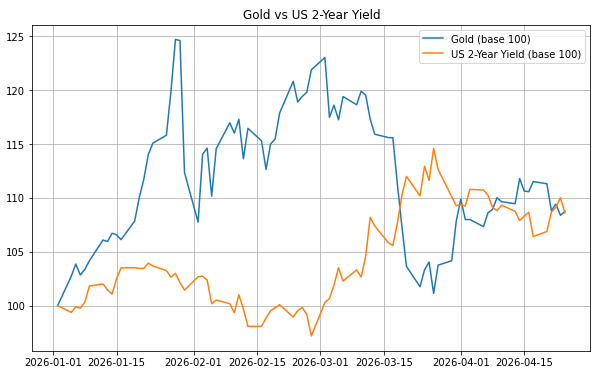
Gold’s recent decline is more directly tied to rising short-term yields. The first chart below shows gold against US 2-year Treasury yields, a key benchmark for interest rate expectations.
As yields moved higher through March, gold came under pressure. This reflects tighter financial conditions and a higher opportunity cost of holding non-yielding assets like gold.
Even with geopolitical risks elevated, gold has struggled to rally. This suggests that markets are currently more focused on monetary policy than safe-haven demand.
Oil Shock Reshapes the Inflation Outlook
It might seem strange that gold is falling during a war. Normally, geopolitical tension pushes investors toward safe-haven assets like gold. But the story here is more about interest rates than fear.
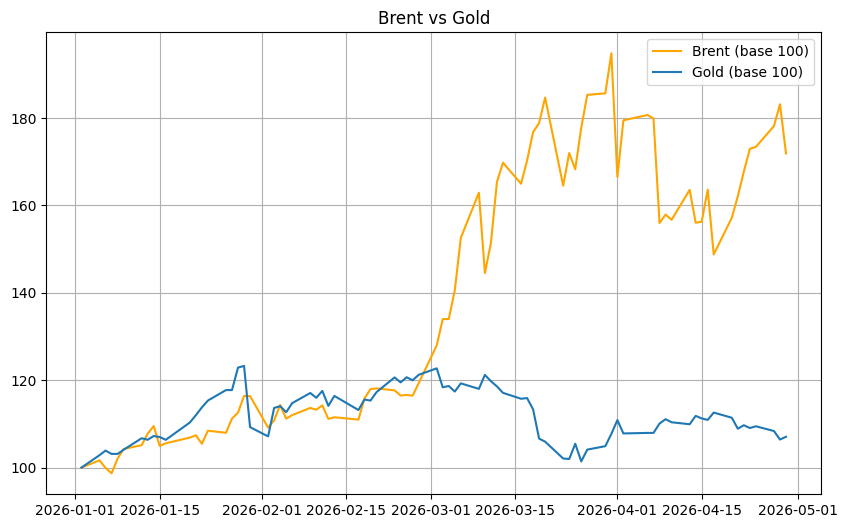
Gold is usually considered a hedge against inflation, usually rising during these scenarios. But the opposite is happening. The reason for this change in sentiment is that higher oil prices push inflation up, which in turn keeps central banks cautious towards monetary policy and leads to more restrictive interest rates.
Oil prices climbed 70% YTD and have been feeding directly into inflation, which could cause central banks to keep interest rates higher for longer.
In this sense, oil is no longer supporting gold through traditional inflation hedging. Instead, it is contributing to a more restrictive macro environment, with markets reacting to policy implications rather than the initial shock.
All Eyes on Central Banks
This week is a busy one for central bankers. The Federal Reserve is expected to keep interest rates unchanged today, but Fed Chair Jerome Powell’s comments will be monitored for any hints about future moves.
The Bank of Japan kept its interest rate unchanged at 0.75% on Tuesday, though a split vote among policymakers raised the odds of a hike in June. Decisions from the European Central Bank and the Bank of England are due tomorrow, keeping traders on edge.
How Gold Got Here
To understand why a 14% drop still leaves gold above $4,500 an ounce, it helps to look at what happened in 2025. Gold surged 70% in a single year, rising from $2,620 to $4,340 per ounce before the conflict pushed it even higher.
Three main forces drove that rally:
- The US dollar significantly weakened throughout last year due to capital outflows out of US assets, which made gold attractive.
- President Trump’s tariffs on imported goods increased demand for gold because of high safe-haven demand.
- Gold became more accessible, with retailers and online sellers making gold coins and bars widely available to everyone.
Until inflation pressures ease and rate expectations shift, gold is likely to remain driven more by policy than by geopolitics.