

 ar
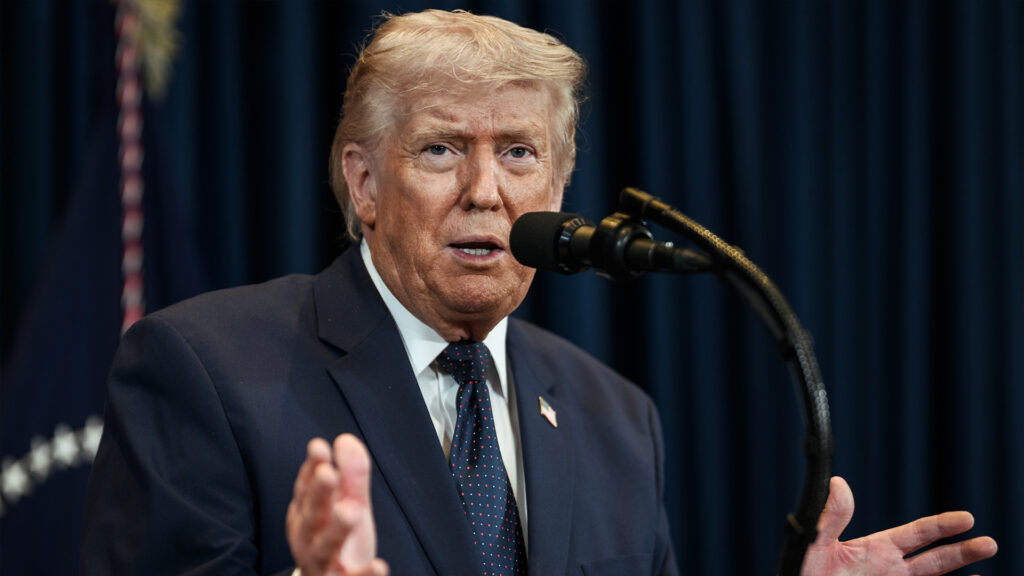
- President Trump announced that he has extended the US ceasefire with Iran, reversing his aggressive tone earlier on.
- Global markets recovered, with US indices reaching new highs despite geopolitical risks and elevated oil prices.
- The Supreme Court’s ruling on illegal tariffs opens a $160 billion refund portal, with Trump criticizing companies that claim refunds.
As the US-Iran ceasefire deadline loomed, President Trump announced a new extension of the truce with Iran, reversing his earlier stance that the two-week pause in hostilities would end today.
The move comes amid what Trump described as a “seriously fractured” Iranian government and stalled peace negotiations.
During his interview with CNBC, Trump also talked about the unexpected resiliency of financial markets throughout the conflict and the ongoing controversy around his tariff policies.
The announcement marks a significant shift in the administration’s approach as diplomatic efforts face mounting challenges.
Trump Extends Ceasefire as Iran Negotiations Stall
President Trump announced late yesterday that the ceasefire with Iran will continue as both sides try to reach an agreement to end the war.
The president justified the extension by citing Iran’s government being “seriously fractured,” a reversal from his earlier statement that the ceasefire would expire today. ⁽¹⁾
The ceasefire extension comes after reports that Vice President Vance was set to travel to Pakistan for a second round of peace talks, though the visit has since been put on hold. Iran also informed the US that its delegation will not attend further talks. ⁽²⁾
The main headache for the world is still the Strait of Hormuz, a major route for global oil transit that was closed by Iran for the second time in April.
Trump stated that the ceasefire would open passage through the strait, but the impact in reality has been minimal, leading Trump to order his own blockade after a first round of talks failed.
Markets Show Surprising Resilience Amid Conflict
Trump expressed surprise at how well financial markets have performed during the Iran conflict, revealing he had anticipated much worse economic fallout.
The president said he expected both the Dow Jones Industrial Average and the S&P 500 to have fallen by 20% and oil prices to have risen even more. ⁽³⁾
Instead, oil prices have stayed around $90 per barrel, which Trump attributed to companies finding alternative sources. He noted that vessels are now obtaining supplies from Texas, Louisiana, Alaska, and other locations, calling this adjustment “an amazing phenomenon.” ⁽⁴⁾
The stock market has similarly defied expectations. After an initial sell-off in early March, markets have recovered significantly. The Dow Jones is currently trading just below its record high from early February, while the S&P 500 broke new record highs alongside the Russell 2000 and the Nasdaq 100.
Analysts were also surprised by the rally, given the unresolved nature of the conflict and ongoing diplomatic tensions. Markets have been seen to ignore geopolitical risks and have shifted their focus towards AI, which continues to drive gains in tech stocks. ⁽⁵⁾
The US labor market also continues to show strength after the recent report showed a strong rebound in jobs, alongside revived expectations for rate cuts from the Federal Reserve later this year.
Tariff Refund Controversy Creates New Political Tension
Trump also addressed ongoing concerns about tariff refunds. After the Supreme Court ruled that Trump’s tariffs were imposed illegally, the US Customs and Border Protection opened the door for major importers to submit refunds.
The president criticized the 6-3 Supreme Court decision, expressing frustration that the ruling did not include language preventing the refund of already collected tariffs.
Trump said he would “remember” companies that choose not to seek refunds, even though they are legally entitled to them. Major corporations, including Apple and Amazon, have not filed refund requests, possibly to avoid antagonizing the president. ⁽⁶⁾
Major US retailers, which have been significantly impacted by Trump’s trade policies, stand to benefit substantially from these refunds. The controversy highlights the ongoing tension between the judiciary and the executive branch over trade policy authority. ⁽⁷⁾


