ar
ar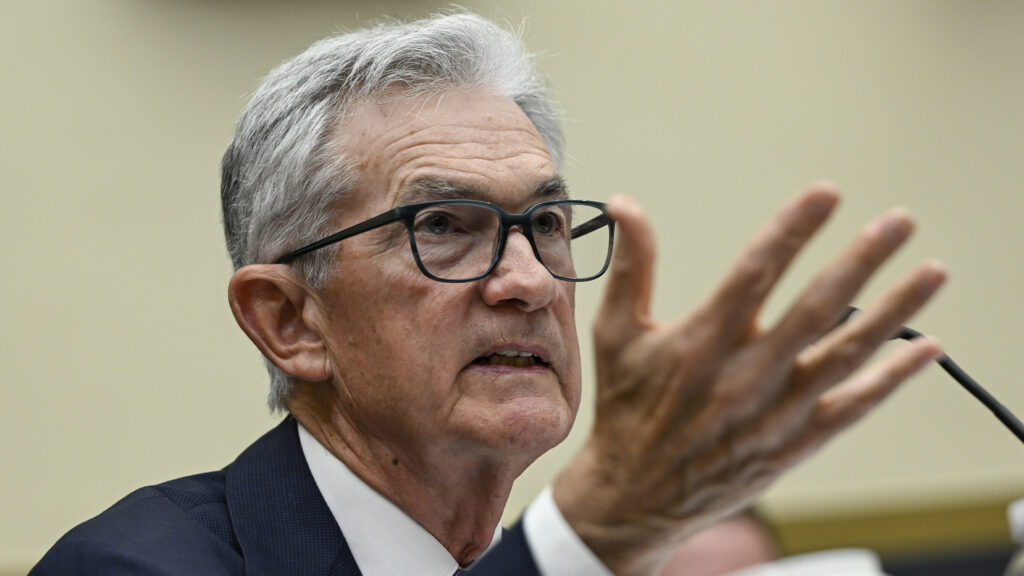
- The Federal Reserve is expected to keep rates steady at 3.75%, as policymakers monitor economic impacts from the Middle East war.
- The upcoming meeting will be the last one for current chairman Powell, with nominee Kevin Warsh awaiting confirmation from the Senate.
- A Justice Department investigation into Powell was dropped last week, potentially clearing the way for a smooth leadership transition.
After the Bank of Japan kept rates steady and signaled a more hawkish tone amid rising inflationary pressures, markets are now laser focused on the Federal Reserve’s upcoming meeting on Wednesday, where it is expected to hold interest rates at 3.75%.
The expected decision comes during a critical time, where current Fed Chairman Powell will announce the FOMC’s decision for the last time as his term is set to expire next month.
At the same time, policymakers are now assessing the economic fallout from the Middle East conflict and growing uncertainty around the Fed’s leadership.
Prioritizing Stability as Uncertainty Looms
As the Fed looks to keep rates steady, policymakers have adopted a cautious stance, monitoring developments in the Middle East and how it could impact the US economy before committing any changes to a policy shift.
The conflict is threatening the Fed’s dual mandate, as gasoline prices have risen, while business uncertainty could cause hiring to slow and weaken employment.
This creates a policy dilemma. Raising rates would fight inflation but could hurt job growth, while cutting rates might support employment but risk fueling price pressures.
Fed Governor Christopher Waller described the current situation as “very complicated for a policymaker.” The Fed must manage both a potentially weakening labor market and rising inflation pressures. ⁽¹⁾
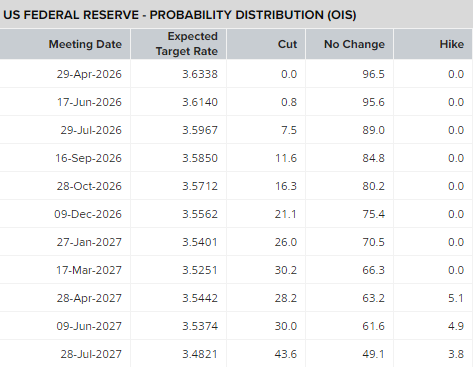
Market pricing has shifted over the past two months. Before the conflict began in late February, markets were expecting at least two 25 basis point rate cuts for this year. Now these expectations have diminished, with a probability of less than 50% for a possible rate cut by next year. ⁽²⁾
The Iran War Factor
The Middle East conflict has led to the closure of the Strait of Hormuz, where 20% of the world’s oil and gas pass through. This disruption has injected fresh risks to the global economy, complicating the Fed’s plan towards monetary policy.
Federal Reserve Chairman Powell struck a cautious tone at the March meeting, stating that it is too early to assess the inflationary effect on the economy. Now, March’s inflation report showed that inflation climbed above 3% alongside the ongoing closure of the strait, which could fuel inflation even more. ⁽³⁾
Analysts expect Powell to change his tone and highlight the resilience of the US economy as justification for keeping rates on hold. ⁽⁴⁾
Leadership Transition in Focus
With Powell’s term coming to an end on May 15, Kevin Warsh, President Trump’s nominee, will take over the Fed, and is currently going through the Senate confirmation process.
A major challenge to Warsh’s confirmation was removed last week when the Justice Department dropped its criminal investigation into Powell over renovation cost overruns at the Federal Reserve headquarters in Washington DC. ⁽⁵⁾
The investigation had caused complications to the transition as Powell denounced the probe as political pressure from the Trump administration, which demanded him to cut interest rates. Powell stated that he would not leave his Board of Governors seat until the investigation is concluded.
Senator Thom Tillis of North Carolina had also threatened to block Warsh’s confirmation until the investigation was scrapped. ⁽⁶⁾
While Fed chairs traditionally resign their board seats when their leadership terms expire, Powell said last month he might remain until his governor term ends in January 2028.
At Wednesday’s press conference, Powell could clarify whether the investigation’s closure satisfies his conditions for departure.