ar
ar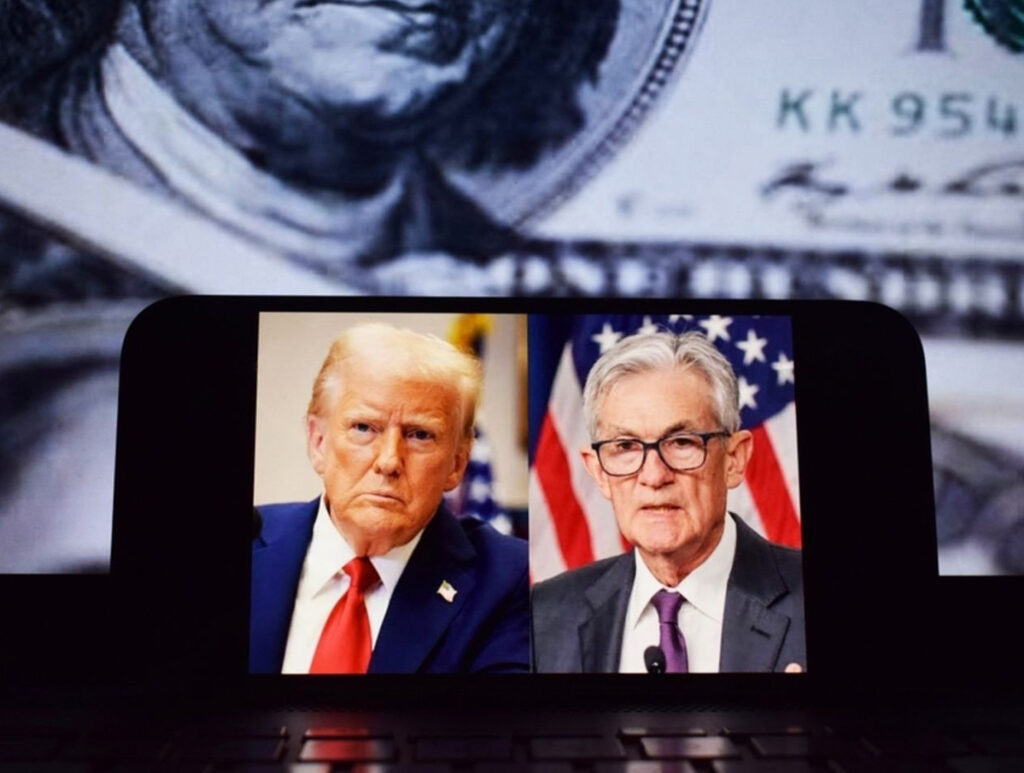
- Fed Chairman Jerome Powell has been served with grand jury subpoenas due to mismanagement in building renovations of the Fed headquarters and his statement during his congressional testimony.
- Powell defended his record in serving under both Democratic and Republican administrations and pledged to continue doing his job with integrity despite the threats.
- President Trump wasn’t acknowledged by this investigation but stated that Powell wasn’t good at his job.
- Meanwhile, Republican Senator Thom Tillis warned he would block all of Trump’s Fed nominees until the legal matter is resolved, raising the political stakes of the investigation.
Pressure on the US Federal Reserve has intensified after Chair Jerome Powell revealed that the central bank has been served with grand jury subpoenas that could lead to criminal charges. The development has started to raise serious questions about political influence over US monetary policy at a time when interest rates remain a highly sensitive issue for markets.
Powell said the subpoenas relate to his congressional testimony concerning the renovation of the Federal Reserve’s headquarters, a project that has drawn criticism from political figures aligned with President Donald Trump. While Powell insists the investigation has nothing to do with wrongdoing, he warned that the legal action risks undermining the independence of the world’s most powerful central bank.
Powell Pushes Back Against Political Pressure
In a recorded message, Powell described the subpoenas as unprecedented and said they should be viewed in the context of ongoing pressure from the Trump administration to push interest rates lower. He argued that threatening criminal charges against a sitting Fed chair could influence how monetary policy decisions are made.
According to Powell, the issue goes beyond his personal situation. He warned that the episode could set a dangerous precedent, forcing the Fed to choose between following economic data or responding to political demands.
Powell emphasized that he has served under both Democratic and Republican administrations and has consistently based policy decisions on the Fed’s dual mandate: maximum employment and price stability. Despite the legal threat, he said he intends to continue performing his role with integrity. ⁽¹⁾
The Renovation Dispute at the Center of the Investigation
The investigation focuses on a $2.5 billion renovation of the Federal Reserve’s headquarters in Washington and Powell’s testimony before Congress regarding the project. President Trump has publicly criticized Powell’s handling of the renovation, arguing that costs escalated unnecessarily.
During a visit to the Fed’s construction site, Trump reportedly challenged Powell on the budget overruns. The dispute later spilled into Congress, where Powell denied claims that the renovation included excessive features such as luxury elevators, rooftop gardens, or water installations. ⁽²⁾
Powell has stated that reports suggesting mismanagement or unlawful spending were inaccurate, pushing back against accusations from the Office of Management and Budget and senior administration officials. ⁽³⁾
Trump Responds, Markets Watch Closely
President Trump has denied any involvement in the Justice Department’s investigation while simultaneously questioning Powell’s leadership. Speaking to reporters, Trump criticized Powell both as Fed chair and as the overseer of the renovation project, saying he was “not very good at the Fed” and “not very good at building buildings.”
When asked whether the investigation was intended to pressure the Fed into cutting interest rates, Trump rejected that suggestion, while reiterating his long-standing view that rates remain too high. Since returning to office in January 2025, Trump has repeatedly called for faster and deeper rate cuts. ⁽⁴⁾
The Fed held rates steady for most of 2025 before resuming its easing policy in September and the final quarter of the year, a pace that has continued to frustrate the White House.
Political Fallout Reaches Congress
The threatened indictment has triggered immediate political consequences. Republican Senator Thom Tillis, a key member of the Senate Banking Committee, raised concerns about the credibility and independence of the Justice Department. ⁽⁵⁾
Tillis announced that he would block all future Trump nominees to the Federal Reserve, including the eventual successor to Powell, until the legal matter is fully resolved. His stance significantly raises the stakes, potentially delaying key appointments at the central bank. ⁽⁶⁾
What This Means for Markets
At the heart of the controversy is the Federal Reserve’s independence. As the world’s most influential central bank, the Fed’s ability to set interest rates without political interference is critical for global financial stability.
Central bank independence is widely viewed as a cornerstone of effective monetary policy, allowing policymakers to focus on controlling inflation and supporting long-term economic growth rather than responding to short-term political pressures.
For markets, the situation adds another layer of uncertainty. Any perception that political influence could shape US interest rate decisions risks increasing volatility across currencies, bonds, equities, and commodities.
As the legal process unfolds, traders and investors will be watching closely, not just for the outcome of the investigation, but for what it signals about the future relationship between politics and monetary policy in the United States.