ar
ar
A month into the Middle East conflict, markets remain on high alert. Surging oil prices, nearly double what they were before the conflict began, are pushing inflation higher across the globe.
While President Trump recently suggested the conflict could end within weeks and ceasefire reports have sparked brief market rallies, traders remain cautious as the Strait of Hormuz stays largely closed and economic damage continues to mount.
Oil Drops, Gold Recovers
Oil prices traded around $100 per barrel after dropping while gold rebounded.
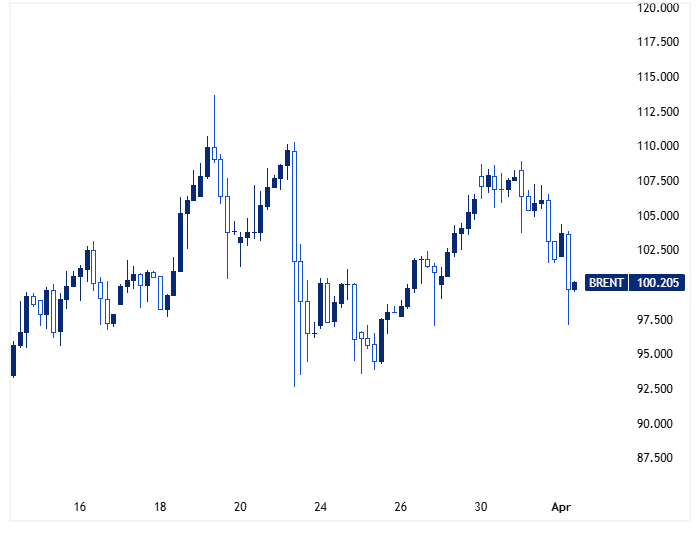
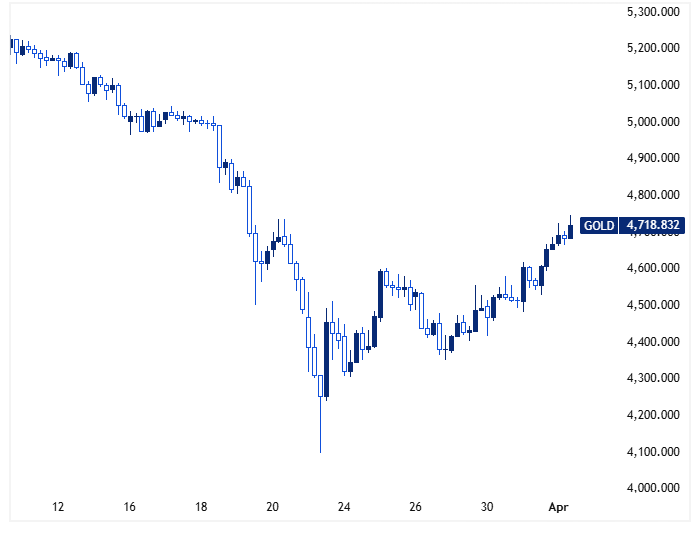
President Donald Trump stated that he is willing to end the conflict against Iran even if the Strait of Hormuz remains largely closed, while regional reports suggested Iran’s President Masoud Pezeshkian may consider ending the conflict under certain conditions. ⁽¹⁾
United States: Dollar Declines as Conflict Uncertainty Persists
The US dollar index extended its decline on the first trading day of April after dropping in the previous session. The US dollar rose 2.3% in March, supported by safe-haven demand due to the uncertain impacts of the Middle East conflict.
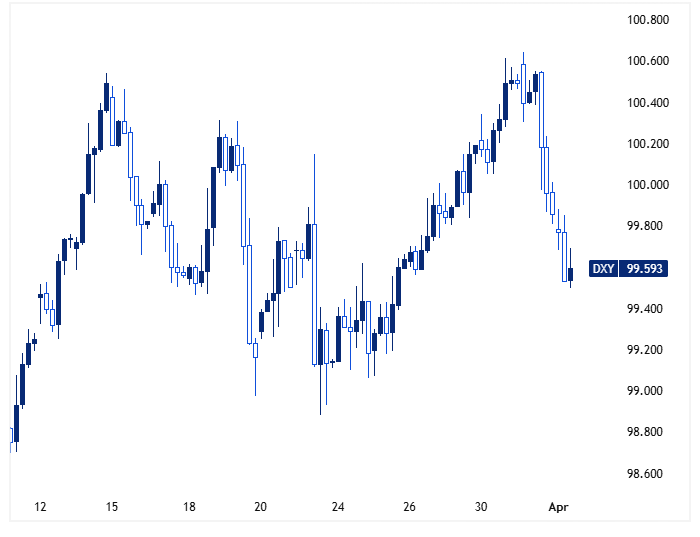
While President Trump suggested that the conflict could end within two to three weeks, traders remain cautious as more US troops are being deployed to the region.
Despite the ongoing Middle East conflict impacting the global economy, US consumer confidence surprised to the upside in March. The survey rose to 91.8, up from February’s 91 reading and above expectations. ⁽²⁾
However, the headline number covers a rising concern. Households have lifted their expectations for inflation for the next 12 months, reaching August 2025 levels. This is due to rising gasoline prices and tariff costs that are keeping the cost of living high. ⁽³⁾
Labor market data painted a picture that was less encouraging. Job openings tracked by the JOLTS survey fell sharply to 6.882 million in the latest reading, down from a revised 7.24 million the month before. ⁽⁴⁾
Traders will focus on today’s upcoming ADP employment data, retail sales, and ISM manufacturing PMI.
Europe: The ECB Faces a Difficult Choice
The euro finished in March at above $1.15 after it encountered heavy volatility during the month. The late month’s rally was due to reports of a possible ceasefire in the Middle East that sent other risk-on currencies higher.
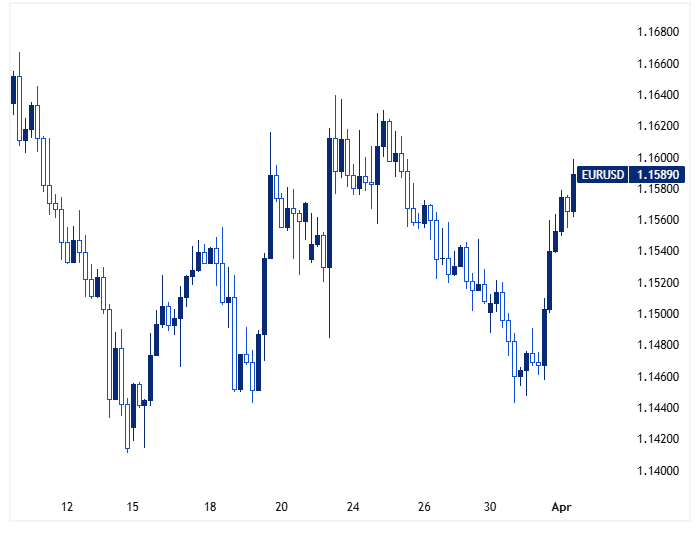
Inflation in the Euro Area has surged to 2.5% in March, marking a huge increase from February’s 1.9% due to high energy prices. This puts inflation now above the European Central Bank’s 2% target and comes as oil prices have nearly doubled following the start of the Middle East conflict. ⁽⁵⁾
The ECB is now caught at a crossroads. Either it needs to hike interest rates to prevent inflation from rising further or hold steady to avoid making things worse. Financial markets currently expect three rate hikes this year, with the first coming in either April or June. ⁽⁶⁾
Not all policymakers agree on timing. Germany’s Bundesbank chief Joachim Nagel has suggested a hike as early as April is possible, while ECB board member Isabel Schnabel has warned against acting too quickly. ⁽⁷⁾
ECB President Christine Lagarde noted that public confidence in the ECB could weaken if it appears to do nothing, even if the inflation spike is temporary.
One positive sign from the latest inflation report is the core reading, which came in at 2.3%, slightly below February’s 2.4% figure and estimate. Service inflation, which is the main driver of price pressure, also showed a decline to 3.2% ⁽⁸⁾
Still, economists warn that if high energy prices begin feeding into wages and broader goods prices, the situation could become much harder to control.
United Kingdom: House Prices Rise, But Headwinds Are Building
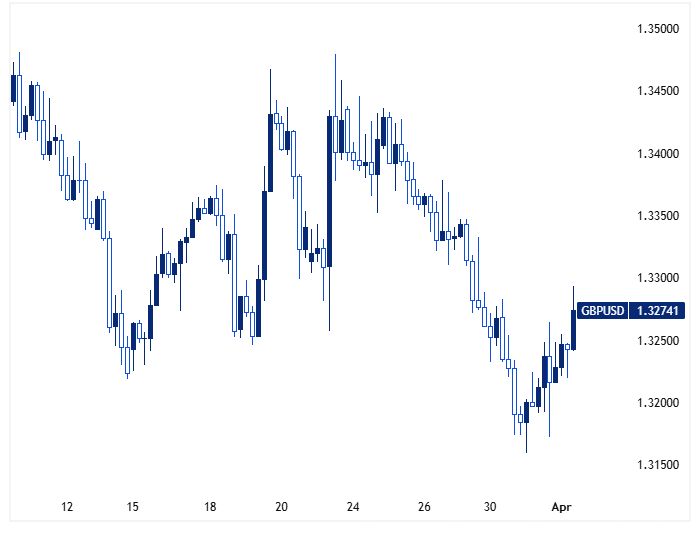
Pound sterling ended March at $1.32, its lowest level since December of last year, as the pound came under pressure from the Middle East conflict and ongoing weakness in the UK economy.
British house prices rose 0.9% MoM, the strongest increase since December 2024. Prices are up 2.2% YoY, well above the 1% annual rise recorded in February. The data came as a surprise to many analysts who had expected a small decline. ⁽⁹⁾
However, the outlook is far less optimistic. The Middle East conflict has pushed up both energy costs and borrowing costs, which are expected to weigh on buyer demand and affordability in the months ahead.
Most economists expect rates to remain unchanged this year, as weak economic growth limits how far the Bank can push. ⁽¹⁰⁾
The ongoing conflict is already damaging Prime Minister Keir Starmer’s housing construction plans, which are already seeing a decline in house building plans. Meanwhile, the broader economy grew just 0.1% in the final quarter of 2025, with manufacturing providing the main boost. ⁽¹¹⁾
Japan and Australia: Rate Pressure Mounts in the Asia-Pacific
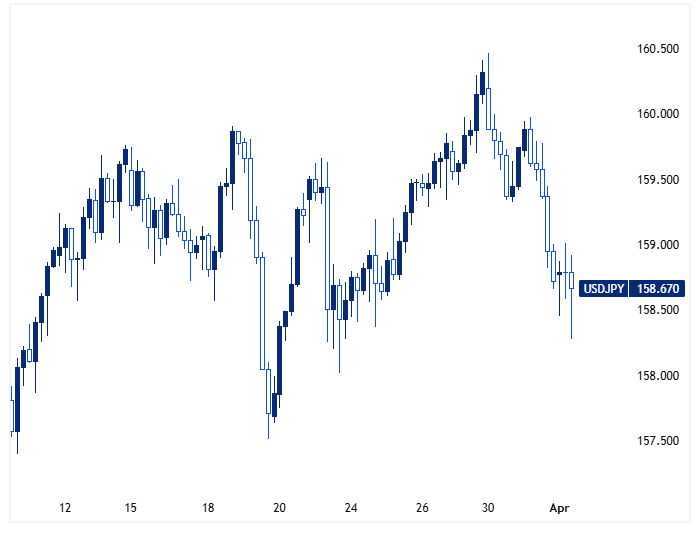
In Japan, the yen rebounded after it had been trading near 160 for a couple of days, a heavily monitored level, causing Finance Minister Katayama to warn of speculative activity in the FX market. Japanese authorities have historically used such statements as a signal that intervention may be coming.
The weak yen is making Japan’s inflation problem worse by raising import costs, and the closure of the Strait of Hormuz has added to oil price pressures.
Japanese stocks have fallen more than 11% in March, and government bond yields have risen to levels not seen since 1999. Markets are now expecting the Bank of Japan to raise interest rates as soon as April. ⁽¹²⁾
Down South, the Reserve Bank of Australia raised rates by 25 basis points to 4.1% last month in a closely fought 5-4 vote, its most divided decision since it began disclosing voting results.
The move reversed two of the three cuts made in 2025. According to the meeting minutes, board members acknowledged that the conflict creates deep uncertainty.
If oil prices stay around $100 per barrel, headline inflation in Australia could reach 5% by mid-year, the RBA warned. Markets now see a 60% chance of another hike in May. ⁽¹³⁾
The five members who voted to raise rates argued that the conflict would reduce the economy’s supply capacity and risk unhinging inflation expectations.
The four who voted against were more cautious, pointing to weak household spending and wanting to wait for more clarity on the conflict’s economic impact. ⁽¹⁴⁾