ar
ar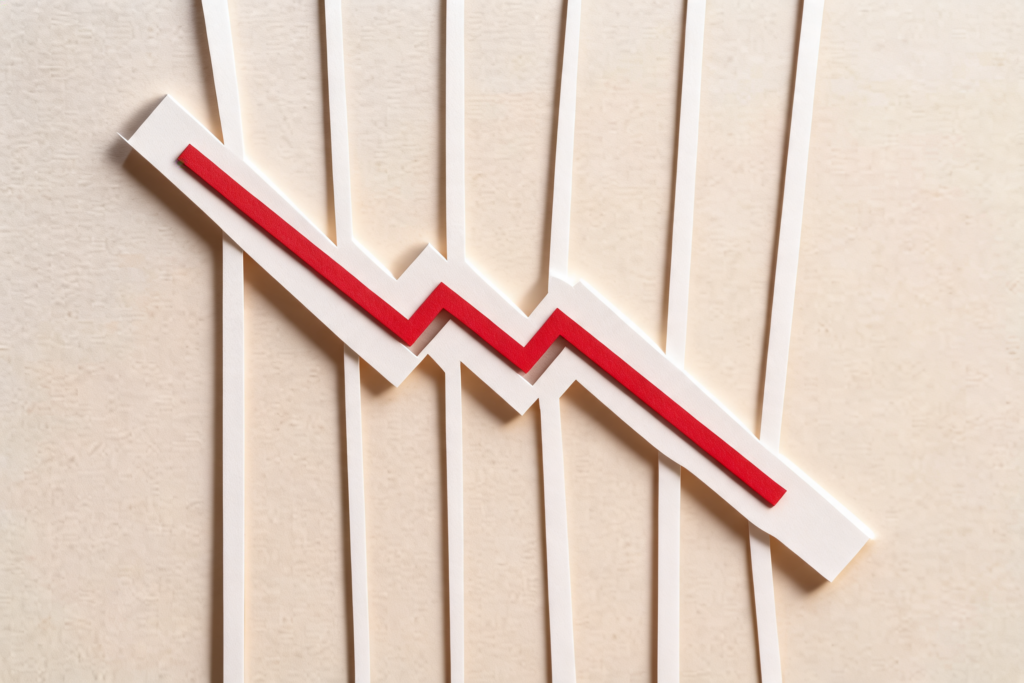
- A bear market has a specific technical definition: a broad index falling 20% or more from a recent high, sustained over time rather than a brief dip.
- Bear markets can start with systemic shocks, like the 2008 credit crisis, or narrower ones, like 2026’s sell-off in AI-linked chip stocks.
- Diversification and policy buffers, the kind the UAE has built over the past decade, shape how far a downturn travels rather than stopping it outright.
A bear market has a plain definition. It is referred to as a broad market index falling 20% or more from a recent high, and staying there for a sustained period rather than bouncing back within days. ⁽¹⁾
For traders across the UAE and the wider Gulf, the more useful question is what typically drives one. The answer changes depending on what triggered the move in the first place.
How Bear Markets Take Shape
Most bear markets start with a shock to confidence, not to daily life. Credit tightens, earnings expectations reset, or a geopolitical event raises costs overnight.
Once enough investors reprice risk at the same time, selling can feed on itself. Falling prices trigger stop-losses and margin calls, pushing prices lower still.
The 2008 financial crisis remains the clearest example. The S&P 500 fell 57% between its October 2007 peak and its March 2009 trough, a 17-month decline that began with a collapse in mortgage credit and spread into nearly every asset class. ⁽²⁾
Correction or Bear Market?
Markets fall often, and most drops do not qualify as a bear market. A decline of 10% to 20% from a recent high is commonly called a correction, and most resolve within a few months.
A bear market runs deeper and lasts longer. Reaching 20% signals a genuine shift in how investors price risk, not just short-term profit-taking after a strong run.
The 2022 downturn shows the difference. The S&P 500 entered a bear market on June 13, 2022, down 21.8% from its January peak, as inflation hit a 40-year high of 8.6% and the Fed raised rates aggressively to contain it. ⁽³⁾
What Limits How Far a Bear Market Travels
Policy response is one limit. Central banks can cut rates or expand asset purchases to restore confidence, as the Fed did between 2008 and 2010, buying close to $1.75 trillion in mortgage and Treasury securities. ⁽⁴⁾
Diversification works the same way nationally. UAE non-oil sectors generated 77.3% of real GDP in the first quarter of 2025, the highest share on record, limiting how far an oil-driven downturn can reach the wider economy. ⁽⁵⁾
The dirham’s peg to the US dollar, fixed at 3.6725 since 1997, reduces one source of volatility. Oil and equity swings can still move sentiment, but they do not translate directly into currency volatility, unlike in a country with a floating exchange rate. ⁽⁶⁾
Bear Markets Don’t Always Need a Crisis
Not every bear market needs a recession behind it. In July 2026, the Philadelphia Semiconductor Index fell into a technical bear market, down 20.2% from its record high set in June, after a 105% rally in AI-linked chip stocks ran into a wave of profit-taking. ⁽⁷⁾
The broader S&P 500 barely moved during the same stretch. That gap shows how a bear market can form inside a single sector, driven by valuation concerns rather than a systemic loss of confidence.
So a bear market measures realized confidence loss, not a forecast of what comes next. What separates one downturn from another is usually the source of the shock, and how much of the economy it can reach.