

 ar
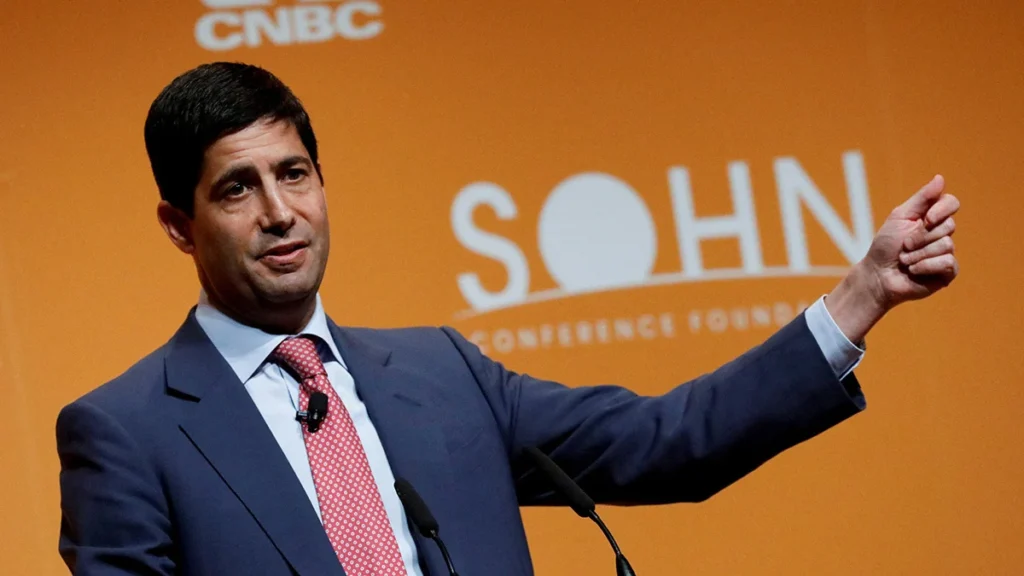
- President Trump has nominated former Fed Governor Kevin Warsh to become the next chairman of the US central bank.
- His confirmation is at risk after Republican Senator Thom Tillis vowed to block all Fed nominations until a DOJ investigation into Powell is closed.
- Even if confirmed, rate cuts look hard to justify with inflation still sticky, oil prices surging after Persian Gulf tensions, and the Fed signaling patience.
President Donald Trump has officially nominated Kevin Warsh, a former Federal Reserve Governor, to become the next chair of the Fed. The move brings Trump closer to his goal of placing a rate-cut-friendly leader at the head of the Fed.
But the road ahead is far from smooth. Warsh faces serious obstacles both in getting confirmed by the Senate and, if confirmed, in persuading his colleagues to support the lower interest rates that Trump wants.
Who Is Kevin Warsh and Why Was He Chosen?
Warsh is a former Morgan Stanley banker who previously served as a Federal Reserve Governor. He would replace Jerome Powell, whose term as Fed chair ends on May 15.
If confirmed, Warsh would take the seat currently held by Fed Governor Stephen Miran, a Trump appointee who has been pushing for rate cuts since joining the Fed in September. ⁽¹⁾
Trump has made no secret of why he picked Warsh. He has long criticized Powell for not cutting rates quickly or deeply enough, and he made support for lower borrowing costs a condition for any Fed chair candidate.
Warsh shares that view, as he believes that productivity growth driven by artificial intelligence creates room to reduce interest rates without causing inflation to rise. His argument is that AI is already making workers more efficient, which allows the economy to grow without prices going up. ⁽²⁾
The Path to Confirmation Is Not Clear
The Republican-controlled Senate Banking Committee is expected to hold a confirmation hearing, and Republican members have said they see Warsh as well-qualified. However, there is a serious obstacle.
Republican Senator Thom Tillis has promised to block any Fed nomination until a Department of Justice investigation into Powell is closed. The investigation relates to Powell’s testimony about building renovations at the central bank in Washington. ⁽³⁾
Tillis himself calls the probe frivolous and says it threatens the Fed’s political independence, which is widely seen as essential to keeping inflation under control. Without his vote, Republicans do not have enough support to push the nomination through against unified Democratic opposition. ⁽⁴⁾
Cutting Rates May Be Harder Than It Looks
Even if Warsh clears the Senate, his real challenge may be inside the Fed itself. Many of the Fed’s policymakers currently favor waiting for inflation to ease further before cutting rates again.
Recent economic data shows the labor market is stabilizing and inflation remains above the Fed’s target. Financial markets are not expecting any rate cut until at least July.
The situation has been made more complicated by the ongoing conflict in the Middle East, which has sent oil prices sharply higher. Brent crude rose from about $72.50 to over $82 per barrel in just a few days.
Economists stated that if oil prices stay $10 higher, it could slightly increase the core inflation measure closely watched by the Fed. Because higher oil prices raise costs across the economy, they can make interest rate cuts harder for the Fed to justify. ⁽⁵⁾
The AI Argument: Bold, but Not Without Merit
Warsh’s central economic argument is that artificial intelligence will drive a wave of productivity growth strong enough to justify lower interest rates. Critics have called this a convenient view for someone nominated by a president who wants cheaper borrowing. But the idea has some backing in the data. ⁽⁶⁾
Revised figures from the Bureau of Labor Statistics suggest that hiring slowed significantly in 2025, even as the overall economy stayed strong. That means workers produced more output per hour, which is exactly what productivity growth looks like.
Industries that have embraced AI, such as telecoms, broadcasters, and publishers, have seen stronger productivity gains than sectors like hotels and restaurants, where AI has fewer obvious uses. ⁽⁷⁾
The Kansas City Fed has cautioned that direct AI use is still patchy across the economy, but businesses that expect a big role for AI technology do seem more willing to keep headcount lean. ⁽⁸⁾


