ar
ar
- High government bond yields shaped markets in 2025, impacting stocks, currencies, and gold.
- Central banks eased gradually, but long-term yields stayed high due to fiscal pressures and heavy debt issuance.
- Bonds delivered positive returns mainly from income, while volatility reduced their role as a portfolio hedge.
Financial markets have been driven by several factors this past year, but one has defined the global financial conditions – the bond market.
Government bond yields across major economies set the tone for financial conditions, influenced asset prices far beyond fixed income, and reshaped assets across equities, currencies and commodities.
Bonds as the Macro Driver: Real Yield Data
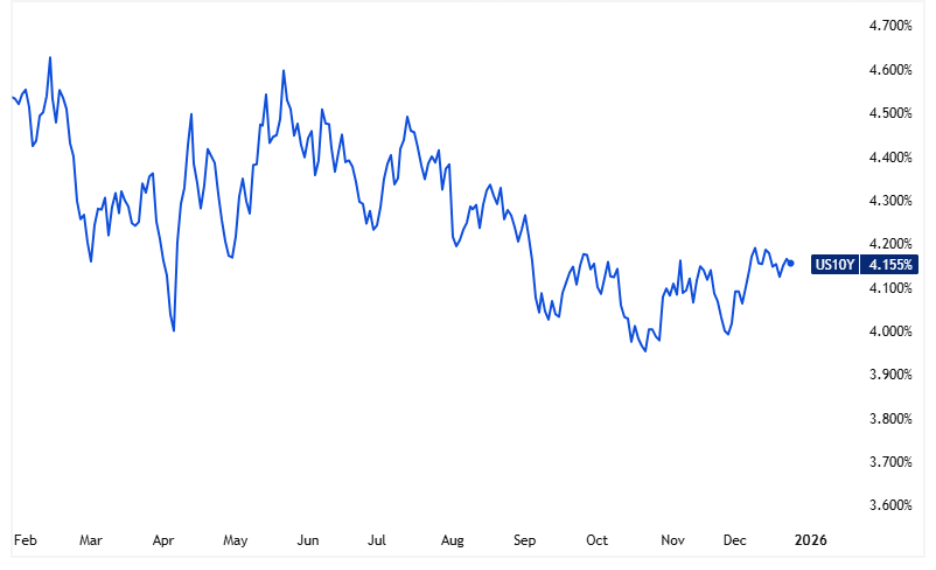
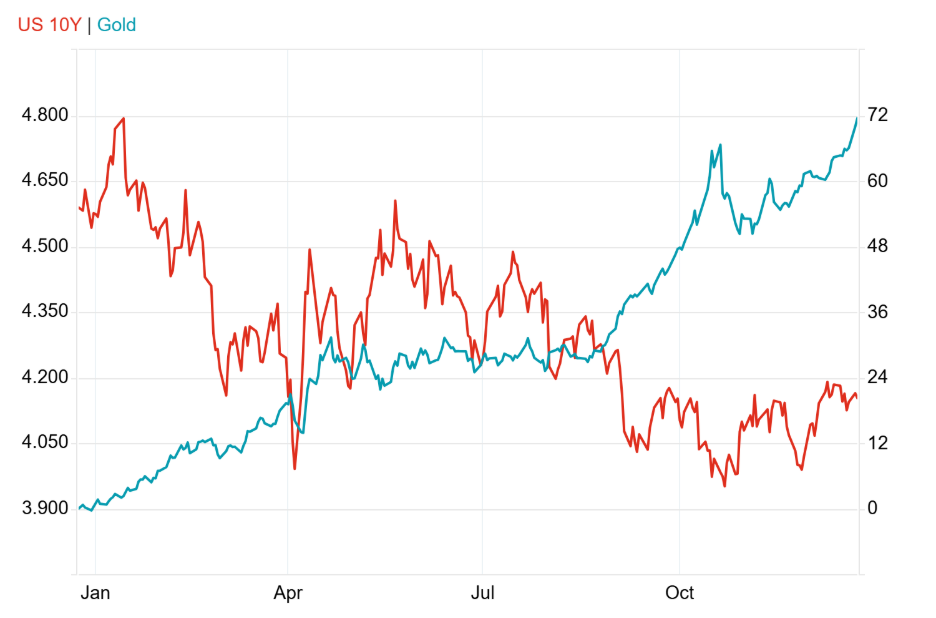
Throughout the year, Treasury yields were high, with the US 10-year Treasury yield fluctuating between 4.8%-3.92% and stayed around 4.2% by year’s end. Longer maturities, such as the 30-year US Treasury yields, reached 5%, driven by fiscal and inflation concerns.
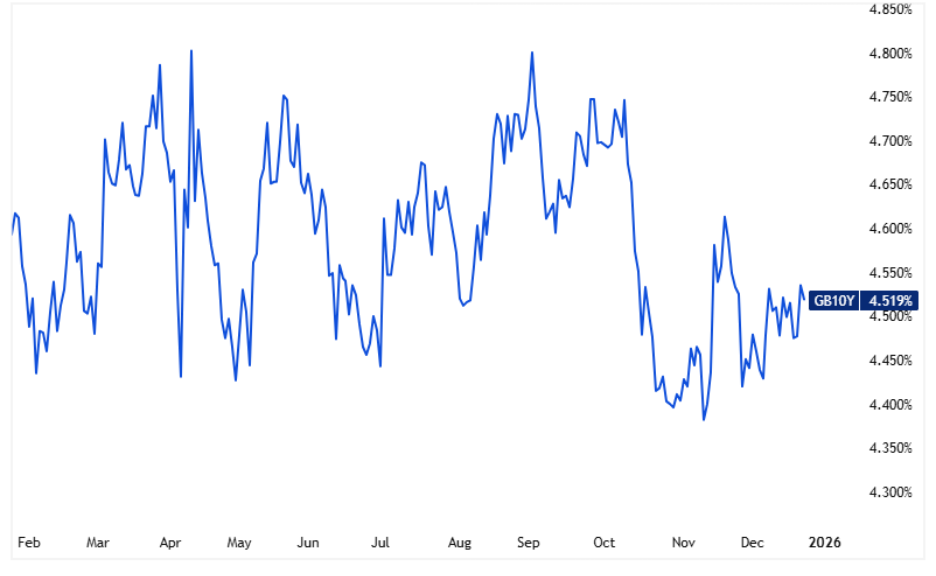
UK 10-year gilt yields peaked at 4.9%, before easing later as markets reacted to changes in monetary and fiscal policies. Gilt yields saw sharp price movements due to heavy issuance, fiscal concerns and market volatility.
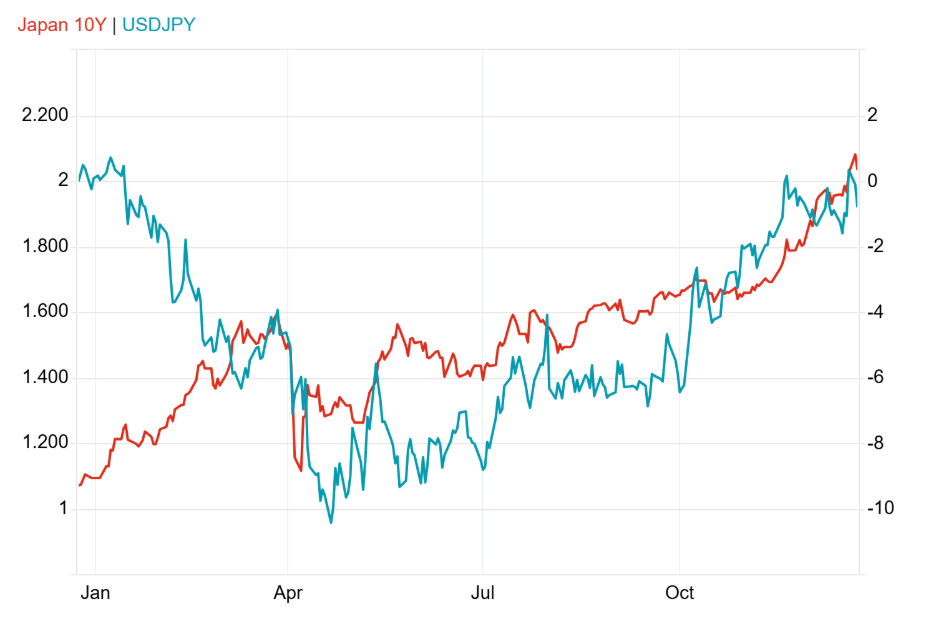
Japanese bond yields underperformed this year, especially when the 30-year JGB yield reached a 20-year high at 3.432% due to the Bank of Japan raising interest rates twice this year, pressuring bond prices.

Bonds denominated in euros delivered slightly positive returns, with performance coming from coupon payments instead of price action.
Eurozone government bonds posted modest positive total returns, supported early in the year by ECB rate cuts and carry on bonds (income generated from coupon payments on bonds), though gains were limited as long-term yields moved higher later amid heavy issuance and fiscal concerns.
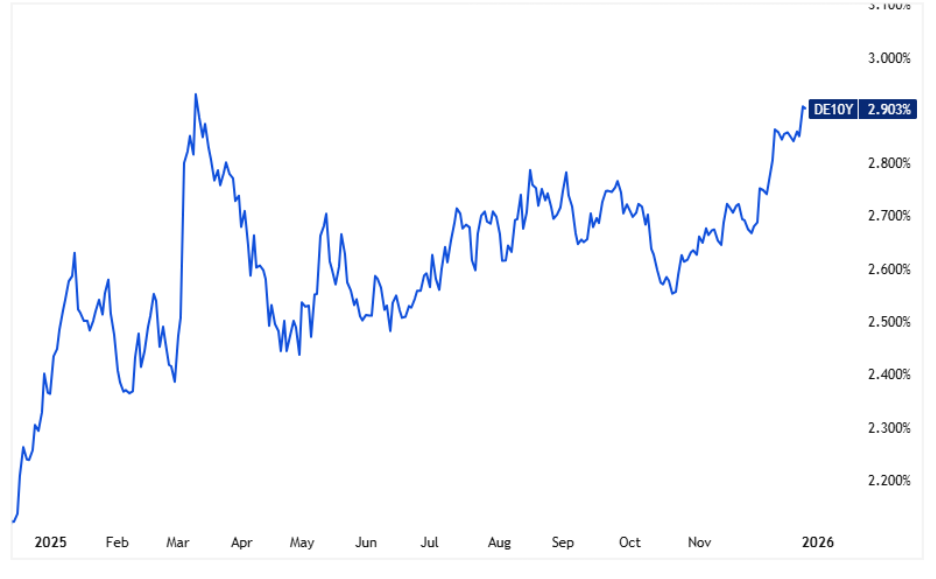
These bond yields showed tightened financial conditions and set the tone for global stocks and currencies. Unlike previous decades, bonds were exposed to high volatility, which reduced their reliability for portfolio diversification.
Yield Dynamics: Short vs. Long Maturities
Short-term yields remained tied to central bank policy expectations and decisions. The Federal Reserve cut rates this year but in a gradual manner, with a series of 25-basis point rate cuts late in 2025.
Markets showed a cautious tone for expectations of further easing. Even with these cuts, the gap between policy rates and longer yields persisted, reflecting firm “higher for longer” sentiment among investors. ⁽¹⁾
Long-term yields reacted more to market changes due to elevated fiscal deficits and massive debt issuance, which pressured long-term bond pricing. Investors demanded higher premiums on these bonds for duration risk, keeping premiums elevated relative to historical levels. ⁽²⁾
Impact on Stocks
Investors benefited from high yields coming into the year, which meant income payments were relatively higher than they’ve been for a long time, and from a gradual decline in yields during the year because of Fed rate cuts, which pulled up bond prices as well. ⁽³⁾
Treasury yields were heading higher in late 2024 and early 2025 on fears that President Trump’s tariff and trade policies would reignite inflation and possibly trigger a bond-market rout.
Instead, inflation has remained stable enough for the Fed to turn its attention to a softening labor market. The Fed delivered three quarter-point reductions to its key interest rate target this year.
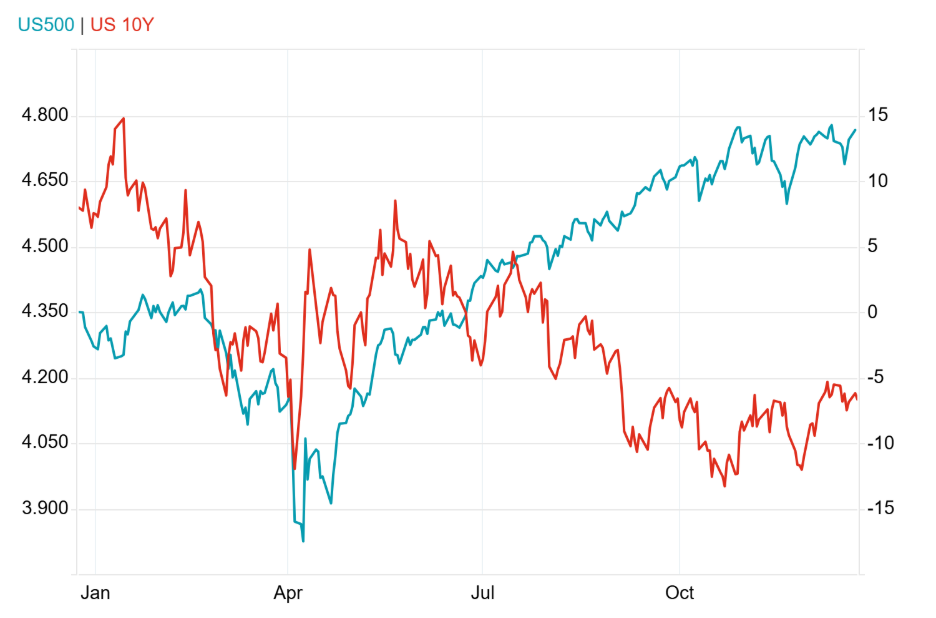
However, even though stocks were driven by huge gains, higher yields still pressured valuations. Even with positive returns for stocks in the US, the cost of capital was still an issue for equities that faced headwinds. This was especially true in Q1, where stocks faced corrections due to policy and trade uncertainty, driving volatility in both the bond and stock markets. ⁽⁴⁾
Treasury yields have already fallen dramatically this year, which means anybody looking to buy bonds now will be getting in at a less attractive price. Bond yields move inversely to prices, meaning they rise as prices fall, and vice versa.
Cross-Asset Effects: Gold and Currencies
High bond yields also impacted gold prices but failed to dominate price action. This was due to higher safe-haven demand for the precious metal, rising geopolitical tensions, and massive central bank purchases of gold, which also helps explain why gold hit record highs this year.
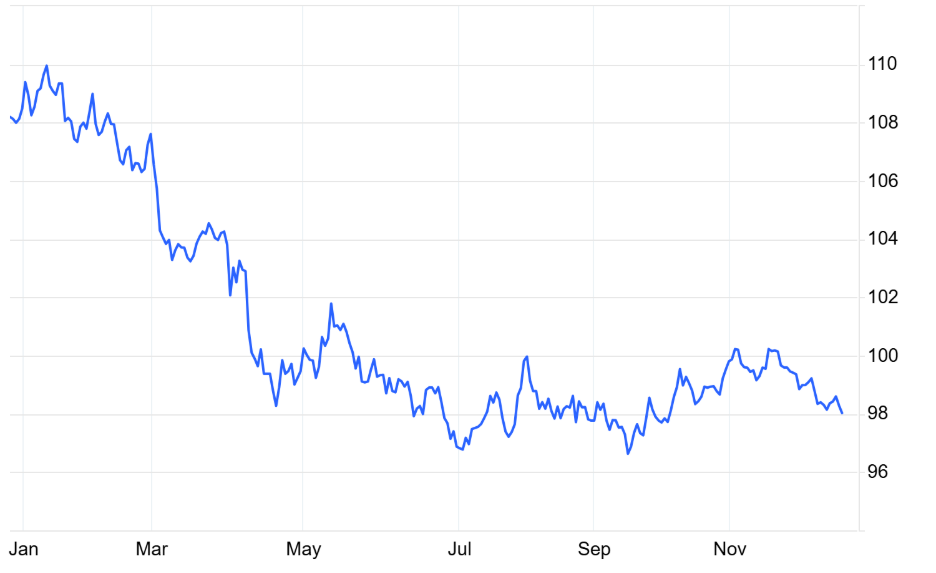
The US dollar started the year strong, with bond yields high due to restrictive Fed policy, while also supported by yield differentials between the US and other nations.
As the year progressed, the yield curve steepened, where short-term yields eased gradually due to rate cuts while long-term yields stayed elevated due to rising risk premiums and fiscal concerns in the US. These factors caused the US dollar to weaken. ⁽⁵⁾
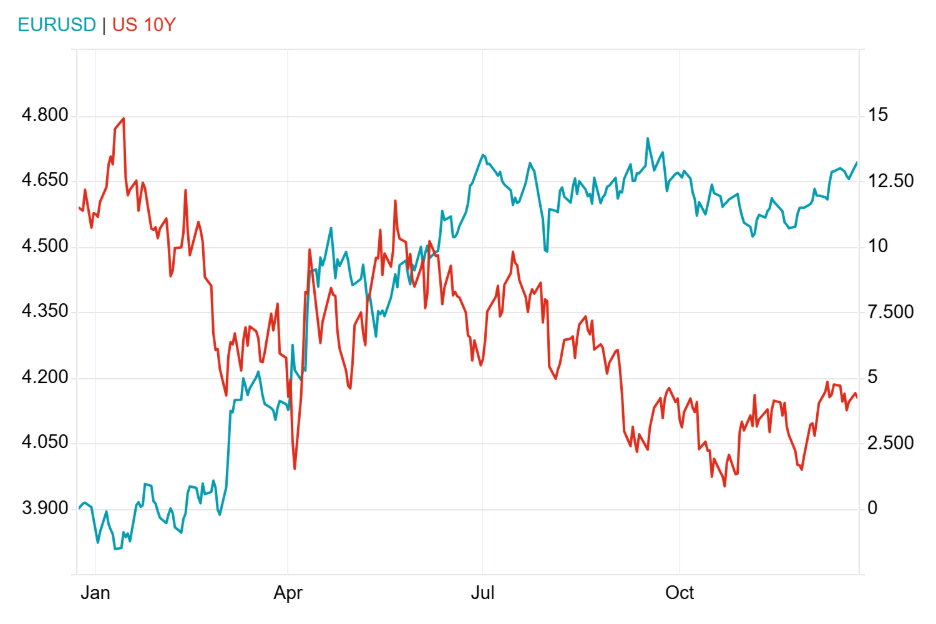
Fiscal concerns stayed high, with the US deficit expected to reach 5-6% of the country’s GDP, with markets favoring sovereign risk alongside yield advantages.
The euro performed well this year, supported by payments from coupons that helped keep euro assets attractive to yield-seeking investors, supporting capital inflows into euro credit and limiting downside pressure on the currency. ⁽⁶⁾
The Japanese yen faced extreme volatility due to the Bank of Japan’s cautious stance on policy normalization and ongoing fiscal concerns. This kept JGB yields rising. Rather than supporting the currency, rising yields reflected uncertainty over policy credibility, limiting yen strength and amplifying exchange-rate volatility.
Why “Higher for Longer” Mattered
The cautious stance of central banks not to cut rates aggressively influenced global bond yields. Despite inflation easing toward targets, central banks prioritized price stability over rate cuts, which kept short-term yields elevated and reinforced the view that ultra-loose monetary policy was over.
These decisions had major implications for investors. Bonds became less effective as a portfolio diversifier, reducing their reliability as a tool for managing risk. At the same time, financing costs remained high for both governments and corporations. Duration risk, a bond’s sensitivity to changes in interest rates, also returned as a key driver of fixed-income performance, meaning bonds behaved more like a source of volatility than a hedge. ⁽⁷⁾
Performance Snapshot: 2025 Bond Returns
Despite volatility, bonds performed well overall. The Bloomberg US Aggregate Bond Index, which tracks US investment-grade bonds (Treasuries, mortgage-backed securities, and corporate bonds), has shown a return of 7% for 2025. It was one of the stronger bond years recently, though analysts warn future returns could be lower due to high yields and fiscal risks. ⁽⁸⁾
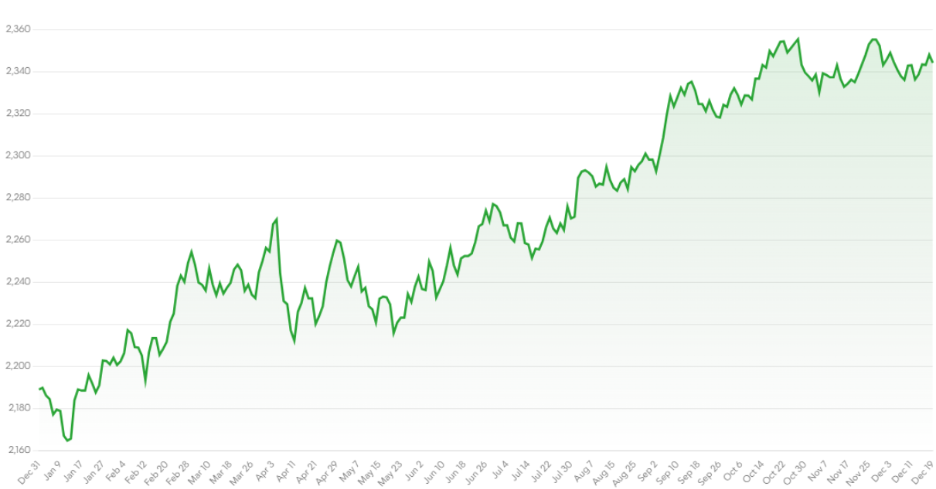
Looking Ahead
As we enter 2026, bond yields are likely to remain big drivers for currencies, especially the US dollar, but maybe less influential overall. As the Federal Reserve continues its gradual easing cycle, short-term yields could continue to tumble, which reduces the dollar’s advantage for carry trades.
The US dollar’s direction could depend on long-term yields. If yields decline alongside inflation and fiscal concerns, the dollar could see some downward pressure, but if they remain elevated because of high debt and fiscal concerns, higher yields could limit the US dollar, rather than support it.