ar
ar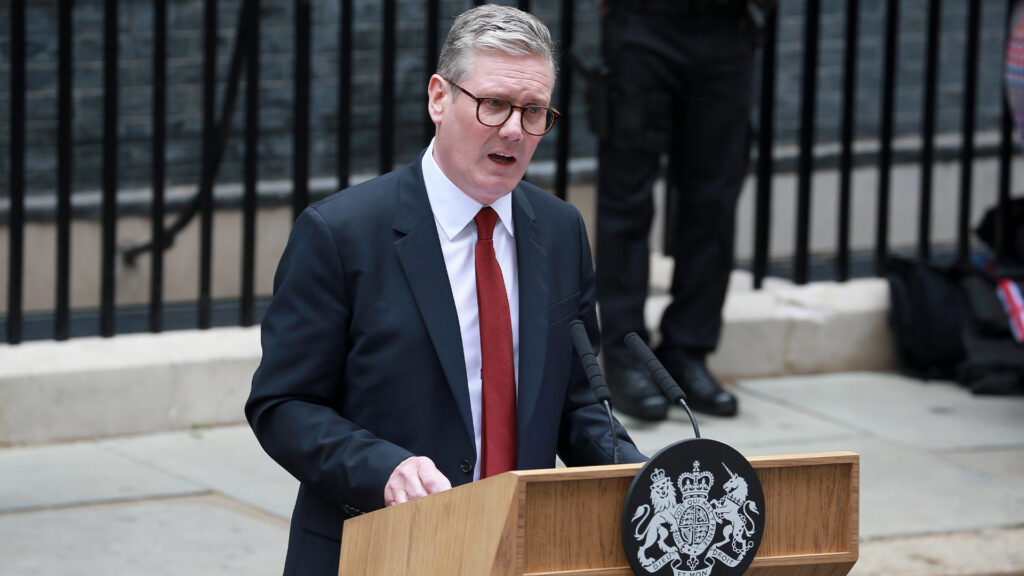
- Keir Starmer resigned as UK Prime Minister on Monday, less than two years after leading Labour to a landslide election victory, citing his party’s loss of confidence in his leadership.
- Andy Burnham, former Greater Manchester mayor, is the clear frontrunner to replace him, with a new leader expected before parliament returns in September.
The UK is set to have its seventh prime minister in just 10 years after Keir Starmer announced that he is resigning as Labour Party leader and UK Prime Minister.
The move ends months of political turmoil and opens the door to a leadership contest widely expected to be won by Andy Burnham, the former Greater Manchester mayor.
A Fall From Grace
Starmer’s resignation comes less than two years after he won one of Labour’s biggest parliamentary majorities in the 2024 general election, a landslide victory that promised to bring stability to the UK, which has seen many political crises throughout the years.
Speaking outside Downing Street, a visibly emotional Starmer called entering Number 10 the “proudest moment of my life.” He credited his tenure with restoring Britain’s reputation abroad, attracting investment, and delivering improvements in workers’ rights. But he acknowledged the reality that had caught up with him. ⁽¹⁾
“The question my party is asking now is whether I am best placed to lead us into the next general election,” Starmer said. “I have heard the answer of my parliamentary party to that question, and I accept that answer with good grace.” ⁽²⁾
Starmer confirmed he would remain in post until a new leader is chosen, with nominations opening on July 9 and a replacement expected before parliament returns in September.
Pressure That Had Been Building for Months
The signs of trouble were long visible before his speech, including Labour’s loss in the local elections back in May and the growing dissatisfaction within the parliamentary party.
The final blow came on Friday, when Burnham won a decisive by-election victory to return to Westminster, defeating a candidate from Nigel Farage’s Reform UK party. Reform has led national opinion polls for over a year, making Burnham’s win a significant signal to Labour lawmakers that an alternative leader could reverse the party’s fortunes. ⁽³⁾

Burnham Steps Into the Spotlight
Burnham is on track to become the next candidate to take over. Known for his strong communication skills, Burnham is seen by many Labour members as the figure best placed to challenge Reform’s dominance. ⁽⁴⁾
However, questions about his policy position remain unanswered. He has spoken broadly about the need for fundamental change and reducing the cost of living, but has yet to lay out a clear approach to foreign policy, defense, or the economy. ⁽⁵⁾
Markets will be watching Burnham closely. Last September, he said the UK should move beyond being too dependent on bond markets, which shook investors. He later said his comments were taken out of context and has tried to calm markets ahead of any possible leadership bid. ⁽⁶⁾
Markets React with Caution
During Starmer’s speech, sterling was very much volatile. The currency was down 0.30%, then rebounded to end the day in positive territory. Meanwhile, UK gilt yields held steady.
The market reaction was relatively contained, as investors had widely anticipated the resignation after Burnham’s by-election win sent gilt yields higher on Friday.
Still, the broader fiscal picture gives investors little comfort. The UK already carries the highest borrowing costs among G7 nations, driven by elevated debt, years of weak growth, and rising defense spending needs.
The UK’s next leader inherits a country that is impatient for change but deeply constrained in how much it can deliver.