ar
ar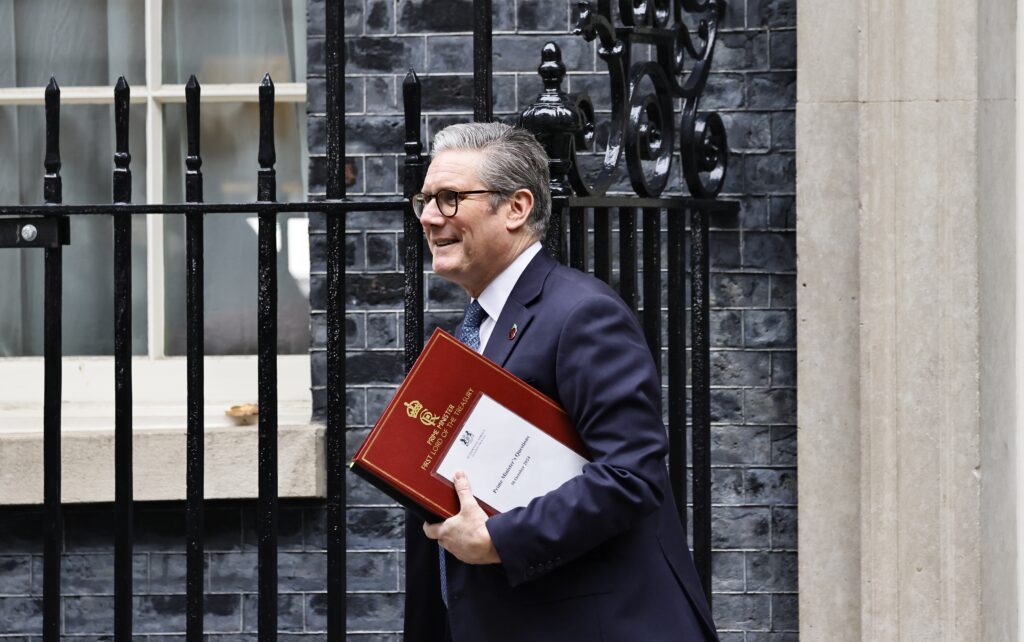
- UK PM Kier Starmer is facing calls to resign after the Labour Party witnessed its worst local election in 30 years, resulting in losses of traditional strongholds to the Reform Party.
- Despite Labour lawmakers demanding his resignation, Starmer vowed to remain in office and continue his promise to deliver change to the UK and develop new ties with the EU.
- Political uncertainty in the UK is adding to market unease, as investors consider the possibility of the country having its seventh prime minister in less than a decade.
UK Prime Minister Keir Starmer is fighting to hold on to his leadership after the Labour Party suffered heavy losses in recent local elections across England, Scotland and Wales.
Less than two years after his landslide victory in 2024, Starmer is now under pressure to prove he can still deliver the change he promised. Calls for his resignation have grown as voter support weakens, with Reform UK among the parties benefiting from Labour’s losses.
Historic Election Defeats
Last week’s election marked one of the worst losses for a UK government party in over 30 years, with Labour losing control of key councils across England. The party also lost control in Greater Manchester, including 20 seats won by the Reform Party. ⁽¹⁾
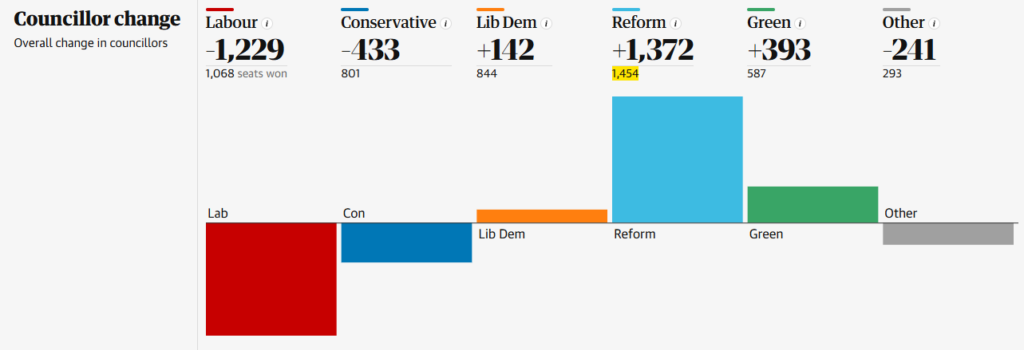
Losses extended beyond England. In Scotland and Wales, Reform UK is set to become the main opposition party, while nationalist parties like the Scottish National Party and Plaid Cymru have gained ground. The Conservatives, however, lost 466 council seats.
The results highlight a dramatic fracture in UK politics, with voters abandoning the traditional two-party system that has dominated for generations, where Labour and the Conservatives have long controlled the political landscape. Now, the latest results indicate that voters are shifting to alternative parties. ⁽²⁾
Reform UK’s Surge
The biggest winner was Reform UK. Led by Brexit campaigner Nigel Farage, the party won more than 1,000 council seats across England. Reform benefited from Labour’s weakness as voters grew frustrated and expressed a feeling of betrayal by the current government. ⁽³⁾
The Reform party gained support in working-class and pro-Brexit areas that Labour had relied on. Farage’s party is now one of Labour’s biggest threats, if not the biggest. ⁽⁴⁾
The party performed particularly well in places with strong Brexit support, underlining how political divisions created by the 2016 referendum are still shaping UK elections today.
The Green Party also made notable gains, including in London, where it captured the Hackney mayoralty in what has long been considered Labour territory.
Starmer Vows to Stay
Despite the disastrous election for Starmer, the PM has rejected calls to resign, acknowledging that his government made “unnecessary mistakes” and taking full responsibility for the result. He argued that voters were frustrated by the pace of change, rather than the overall direction of his policies.
More than 30 Labour lawmakers have called on Starmer to resign or schedule a date for his departure. Some cabinet members, however, still support him staying.
Starmer vowed to prove his critics wrong during a speech on Monday, insisting he would remain in office to avoid pushing Britain into a new political crisis.
Starmer is also seeking closer ties with Europe, a move that could appeal to pro-EU Labour lawmakers and younger voters. However, it carries political risks, with Reform UK likely to frame any closer EU alignment as a reversal of Brexit. ⁽⁵⁾
Growing Political Instability
The UK is facing renewed political uncertainty, with Starmer now under pressure to avoid becoming the latest prime minister caught in the country’s cycle of unstable leadership.
If he were to step down, Britain could see its seventh prime minister in less than a decade, raising further concerns over policy continuity and political stability.
Analysts state several factors behind these risks, including:
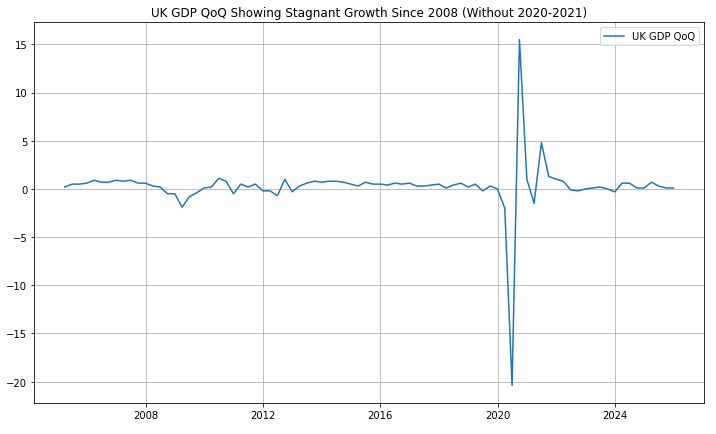
- Stagnation since the Global Financial Crisis of 2008
- Poor public financing
- Deep political divisions due to Brexit
- High cost of living that had reduced public confidence
Market Reactions
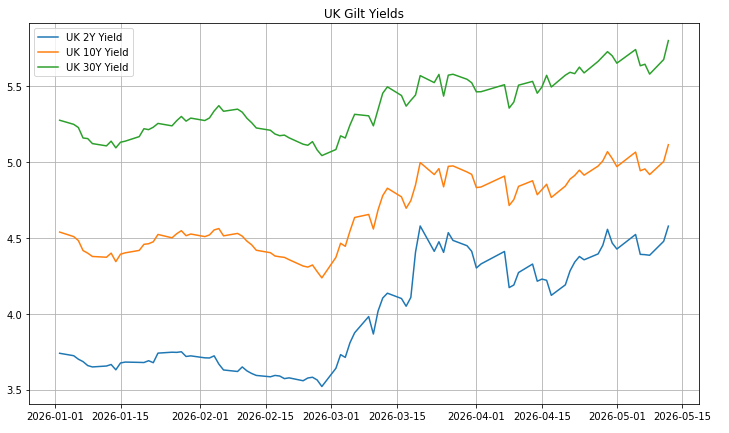
UK bond markets saw heightened volatility in the aftermath of the election. Long-term gilts came under pressure as speculation over a possible leadership change increased, with the 30-year gilt yield rising more than 5 basis points to 5.80%, its highest level since 1998.
The move reflected growing investor concerns over fiscal sustainability, while the 10-year gilt yield climbed to 5.1%, reaching levels last seen in 2008.
GBP/USD ended yesterday’s session subdued, only 0.2% lower. This calmer market reaction suggests that Labour’s failure had been priced-in to some extent. ⁽⁶⁾
However, today the pound saw a sharper 0.7% fall as political instability deepened.
As economic pressure and political uncertainty continue to weigh on the UK, Starmer’s ability to restore confidence and deliver on his promises may determine whether he survives this crisis, or becomes the latest casualty of Britain’s era of political turbulence.