

 ar

Years of very low domestic yields encouraged Japanese investors to seek returns overseas.
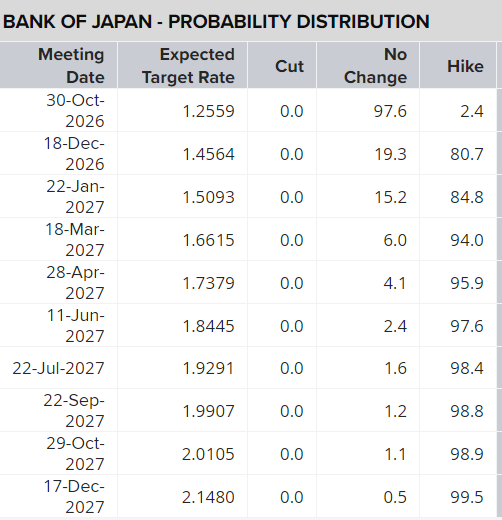
That fact is changing as Japan’s interest rates move higher. In September, the Bank of Japan raised its policy rate to 1.25%, its highest level since April 1995 and the sixth increase since it began tightening in March 2024.
The 10-year Japanese government bond yield is trading around 3%, with the 30-year near 4.03%. These levels make domestic bonds more competitive with foreign debt, particularly after currency-hedging costs.
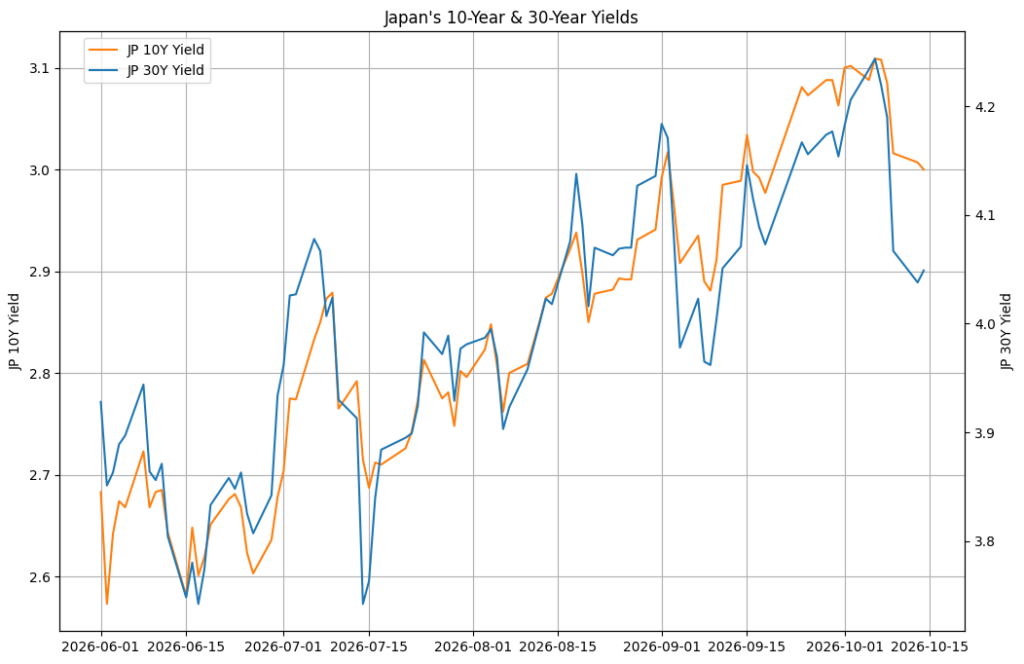
A shift toward Japan could weaken demand for overseas bonds and raise borrowing costs abroad. However, the latest investment flows suggest a selective change in allocations, leaving a broader withdrawal from global markets unproven.
Why Foreign Bonds Are Losing Their Shine for Japan
Rising JGB yields are giving domestic investors more reason to reconsider overseas bonds. What matters is what foreign bonds pay after hedging costs, especially against currency fluctuations.
The yen remains pressured by the US dollar, elevated Treasury yields and oil prices. The 10-year yield gap between the US and Japan is 217 basis points in favor of the US.
The chart below uses the two-year yield gap because short-term rates are what traders watch most when judging the yen. When the US two-year yield rises faster than Japan’s, the dollar tends to gain against the yen, and when the gap narrows, the yen usually firms. The US-Japan two-year gap is now 285 basis points.
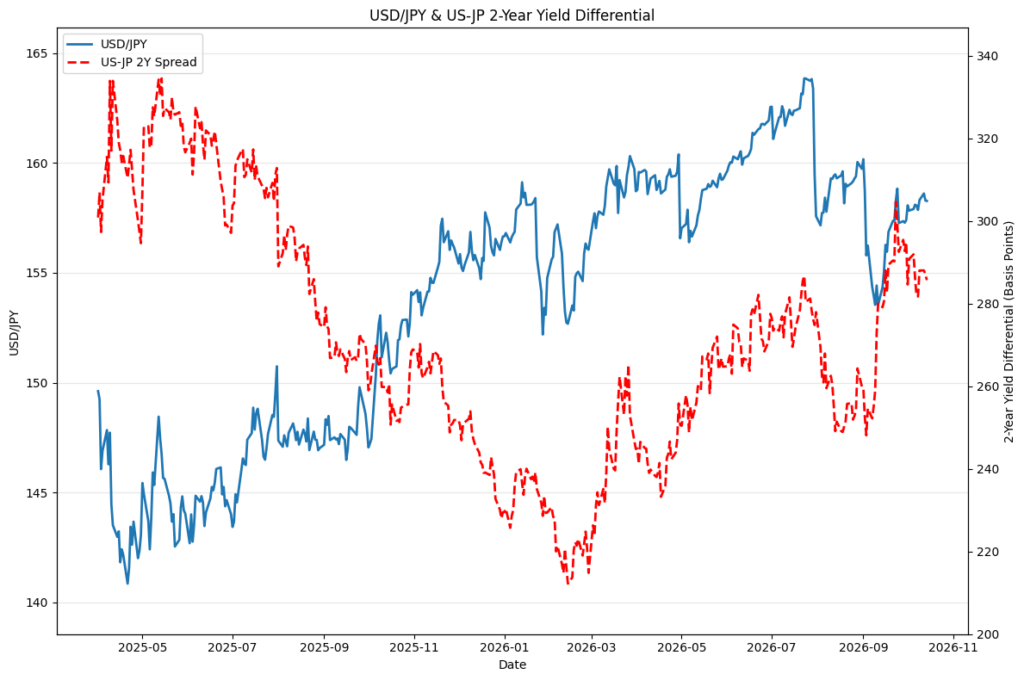
A US Treasury bond can offer a higher headline yield while providing a lower return once the cost of hedging dollars into yen is deducted. Some major investors remain cautious about committing heavily to Japanese bonds because further increases in yields could cause additional price losses.
On September 25, Reuters cited Deutsche Bank strategist Shoki Omori saying a hedged Treasury position paid Japanese investors less than domestic bonds. ⁽¹⁾
Many institutional investors hold long-term foreign bonds while repeatedly renewing short-term currency hedges. Their hedging costs can therefore change well before the bonds mature, which affects the income they earn after those costs. ⁽²⁾
Higher domestic yields also have their risks. Some investors are cautious about buying Japanese bonds because further yield increases would push prices lower. But that’s not the only case.
Concerns about how Prime Minister Takaichi’s spending plans will be funded could add more to that uncertainty, despite her recent pledges to control debt issuance.
The BoJ’s next meeting is on October 29-30, with a rate hold expected. Speaking in the Japanese parliament yesterday, BoJ Governor Kazuo Ueda said underlying inflation “has now come quite close to 2%.”
Fewer Japanese Buyers, Higher Yields Everywhere Else?
Japan’s investment decisions matter well beyond its own bond market. Japanese investors are major holders of overseas debt, and a shift toward domestic bonds could reduce demand elsewhere. Japan’s US Treasury holdings were $1.104 trillion at the end of July 2026, making it the largest reported foreign holder. ⁽³⁾
The IMF shows that the US, Australia and several European nations are exposed to changes in Japanese allocations. The biggest dollar holding does not necessarily imply the greatest relative vulnerability. ⁽⁴⁾
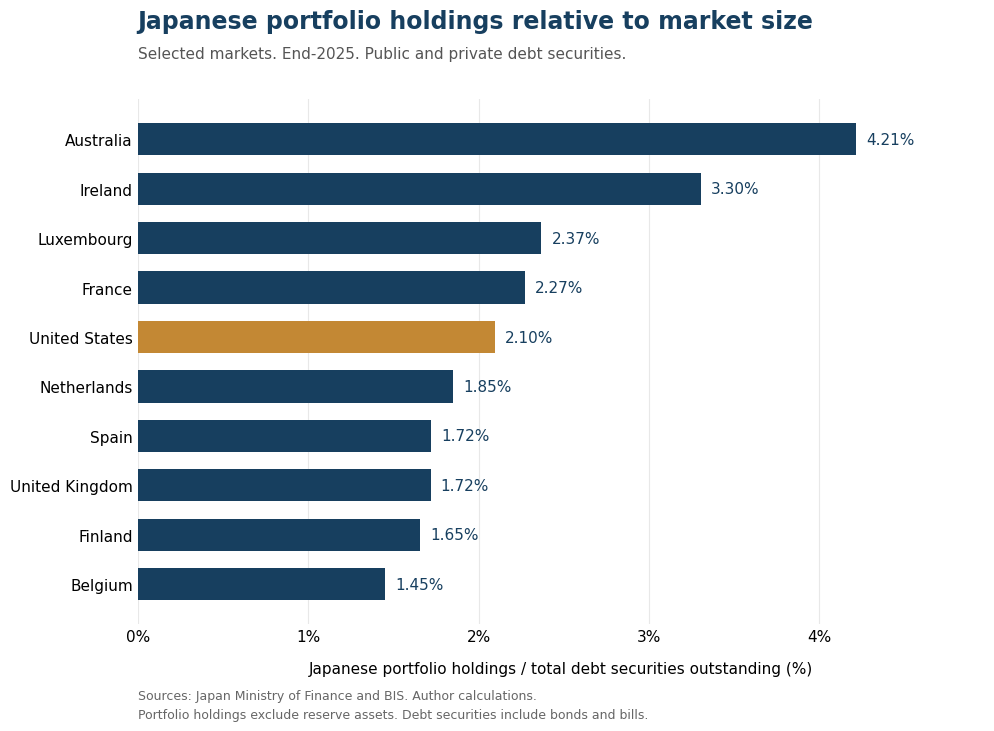
The pressure could emerge through bond sales or a slowdown in new purchases. If Japanese investors reduce their holdings of foreign bonds while governments continue to borrow, other buyers might demand higher yields to absorb that supply. Even a gradual change in allocations could make bond funding more expensive.
That could affect equity valuations and companies refinancing debt, even without direct Japanese selling of their shares.
France shows how this could play out for a borrower already under fiscal strain. Worries about a growing deficit ahead of the 2027 presidential election are weighing on European markets, and France has acknowledged that its 2026 budget deficit will exceed the government’s target of 5% of GDP. Weaker foreign demand would make that harder to fund.
The gap between French and German 10-year yields, which shows how much extra investors demand to hold French debt, reached almost 160 basis points last week, the widest since 2012.
The effect would extend beyond government budgets. Foreign bond yields provide a reference for pricing other debt, including corporate bonds and mortgages. Higher yields can raise the cost of new debt and refinancing for businesses and households. ⁽⁵⁾
However, higher yields can also attract replacement buyers. The Financial Times reported on October 13 that investors had put almost $14 billion into US government bond funds since the start of the month, showing that the recent selloff was drawing fresh demand.
Selling Bonds, Still Buying Stocks
In the week through October 3, Japanese investors sold a net ¥503.6 billion in foreign debt while buying around ¥1.32 trillion in foreign stocks. This suggests a shift in the mix of overseas investments, with weaker demand for bonds alongside continued risk appetite for foreign equities. ⁽⁶⁾

The selling extended beyond that week. Japanese investors have sold around ¥5.08 trillion of foreign bonds during 2026 through October 3, the largest net sales since 2022. ⁽⁷⁾
That factor alone supports the argument that foreign bonds are losing appeal. However, those sales do not show where the proceeds were invested or establish a broad return of capital to Japan.
Large pension funds are also following long-term allocation plans. Japan’s Government Pension Investment Fund, or GPIF, targets a 25% allocation to each of four categories: domestic bonds, foreign bonds, domestic equities and foreign equities. Its framework allows adjustments within specified ranges while maintaining a diversified portfolio. ⁽⁸⁾
Stronger evidence of repatriation would include sustained domestic bond purchases and confirmed decisions by major institutions to increase investments in Japan.
GPIF classifies foreign bonds hedged into yen as domestic bonds. A larger reported domestic-bond allocation therefore does not, by itself, prove that GPIF has bought more Japanese government bonds or brought capital home.
What the Actual Flows Reveal
Japan’s latest weekly figures show how foreign bond selling can coexist with continued investment abroad. The Ministry of Finance’s October 8 release provides this breakdown for the week ended October 3, covering designated major investors.
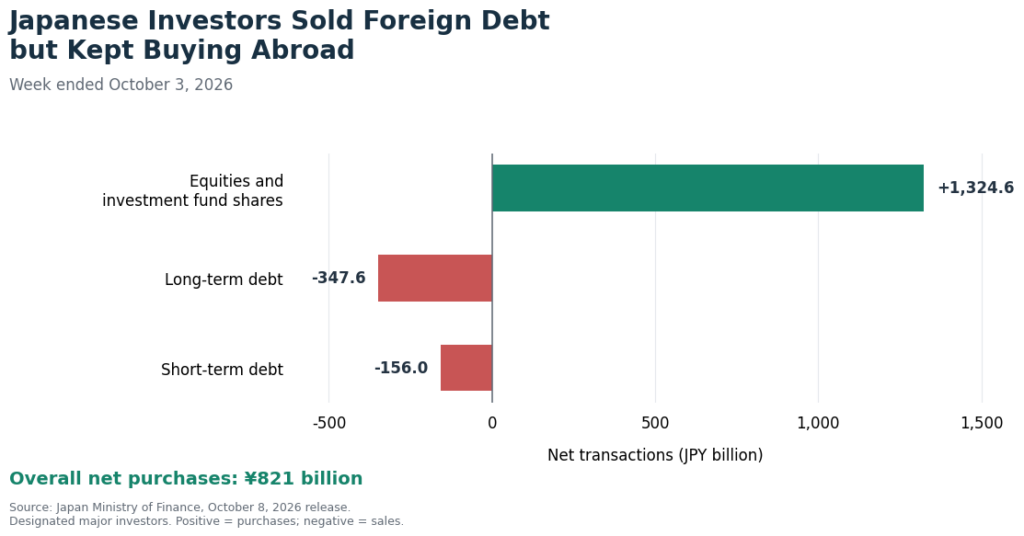
Japanese investors sold foreign debt for a third consecutive week. However, purchases of foreign equities and investment fund shares more than offset those sales, leaving the reporting institutions as net buyers of foreign securities overall during that week, with net purchases of ¥821 billion.
The figures do not trace where the bond-sale proceeds went or whether they were converted into yen. They therefore provide limited evidence of a broad return of capital to Japan.
Overseas bond markets could face weaker Japanese demand while other foreign assets continue attracting investment. Japan’s rising yields may change which markets receive its capital before producing a wider withdrawal from global investments.


