ar
ar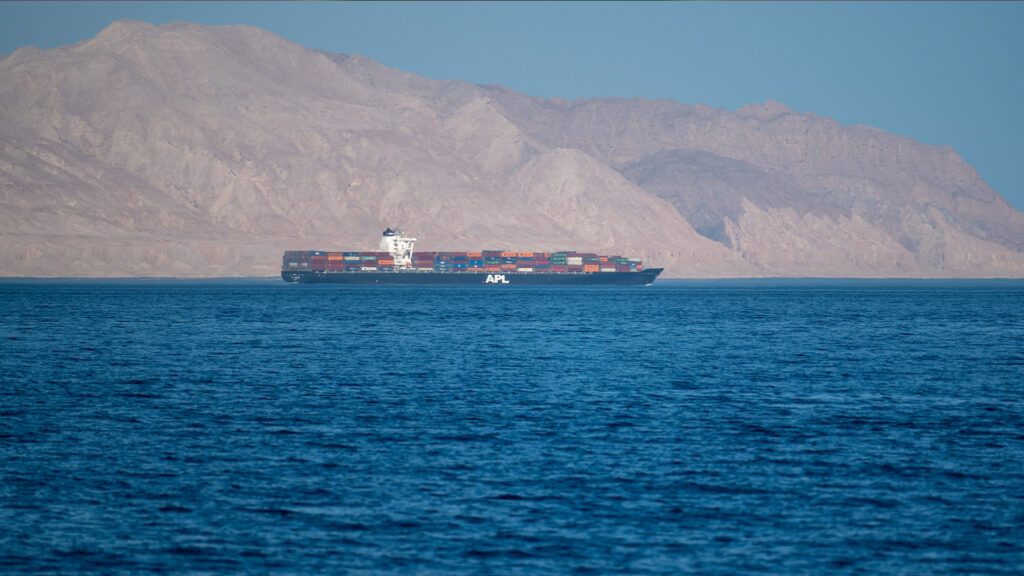
- Iran says the Strait of Hormuz could reopen within seven days if the US reduces military pressure and lifts its blockade on Iranian ports.
- Saudi Arabia has partially restarted its East–West Pipeline, clearing the way for crude exports from Yanbu to resume.
Energy traders received the first meaningful improvement in the Middle East supply outlook in weeks yesterday.
Oil prices fell to two-week lows, although any lasting decline will depend on whether diplomatic progress leads to a sustained increase in regional exports.
Iran Sets Conditions for Reopening Hormuz
A senior Iranian official said the country could reopen the strait if the US eases its military operations and lifts the blockade on Iranian ports. However, they also stated that the US needs to declare its intent to resolve the conflict through diplomacy. ⁽¹⁾
Iran’s delegation to the UN General Assembly in New York has full authority to restart talks with the US. A proposal was reportedly sent to Washington through mediators on September 16.
Iranian President Masoud Pezeshkian is in New York and is due to address the UN General Assembly today. He has ruled out meeting President Trump during his visit. ⁽²⁾
During President Trump’s UN General Assembly address, he defended the US war against Iran and called on Tehran to fully reopen the Strait of Hormuz and return to negotiations.
Trump also said that US envoys Steve Witkoff and Jared Kushner held a three-hour meeting with Iranian representatives on the sidelines of the UN General Assembly. He described the talks as “very good” and “very productive” and said another meeting was scheduled for the near future.

He said he expected an agreement after the November 3 midterm elections but warned that he could annihilate the nation if no deal was reached.
Oil Falls to Two-Week Lows
Oil prices extended their decline for a sixth consecutive session on Wednesday. Brent fell around $98 a barrel, while WTI dropped to around $89. Both benchmarks remained near their lowest levels since September 8.
Just before the conflict began back in late February, the Strait of Hormuz handled roughly 20% of the world’s oil and LNG supply.
Despite the decline in crude prices, physical supply remains restricted. Traffic through the strait is still severely limited, while diesel prices in Europe and the US remain near record highs as the wars in Iran and Ukraine disrupt exports from major producers, including Russia, Saudi Arabia and the UAE.
Saudi Pipeline Restores Alternative Export Route
Adding to the market’s relief, Saudi Arabia reportedly restarted operations at its East–West Pipeline after drone attacks earlier in September forced a precautionary shutdown.
Before the disruption, the pipeline was carrying around 4 million barrels per day, equivalent to roughly 4% of global oil supply, to Yanbu on the Red Sea while bypassing the Strait of Hormuz. Sources said it restarted at a reduced rate, while full restoration could take several weeks. ⁽³⁾
A cargo bound for China was expected to be among the first shipments loaded at Yanbu following the restart. Shipping data also showed that Saudi Aramco increased exports through the Strait of Hormuz, loading around 14 million barrels onto seven tankers at Ras Tanura on September 20. ⁽⁴⁾
Regional Tensions Remain
The improving supply outlook has not removed the wider regional risks. G7 foreign ministers condemned continued Houthi strikes in Yemen and against Saudi Arabia while calling on Iran to stop supporting and arming the group.
The G7 also urged the Houthis to end attacks on civilian shipping and return to the political process. Meanwhile, Houthi advances around the Bab el-Mandeb Strait continue to threaten shipping through the Red Sea and Saudi exports from Yanbu.
The UK has agreed to provide temporary aerial-refueling support to Saudi forces for several weeks as the conflict continues, with the arrangement remaining under review.