

 ar

- Global PMI data showed mixed performances across major economies, with manufacturing strengthening while services weakened due to supply chain disruptions caused by the Middle East conflict, driving costs up.
- Business confidence fell sharply across major economies, with firms citing geopolitical uncertainty and concerns that current manufacturing momentum may not be sustained if Middle East disruptions persist.
Diverging growth patterns across major economies are starting to appear, as shown in April’s collection of PMI surveys. Some regions witnessed an expansion in their manufacturing activities while others showed a contraction in services.
You might ask, “Why are some regions seeing improvements in their private sectors while others are weakening?”
The answer lies largely in the ongoing geopolitical tensions in the Middle East, which has rippled through global markets and weighed on economic activity for nearly two months now.
These disruptions are uneven, disproportionately affecting regions that are more sensitive to energy and supply chain shocks, and in turn, driving higher inflationary pressures in those economies.
Eurozone Sees Surprise Contraction as Iran War Saps Demand
As the effects work their way through the world economy, Europe was hit with a contraction in its composite PMI, coming in at 48.6, far below its forecast of 50.1, partly reflecting rising prices. ⁽¹⁾
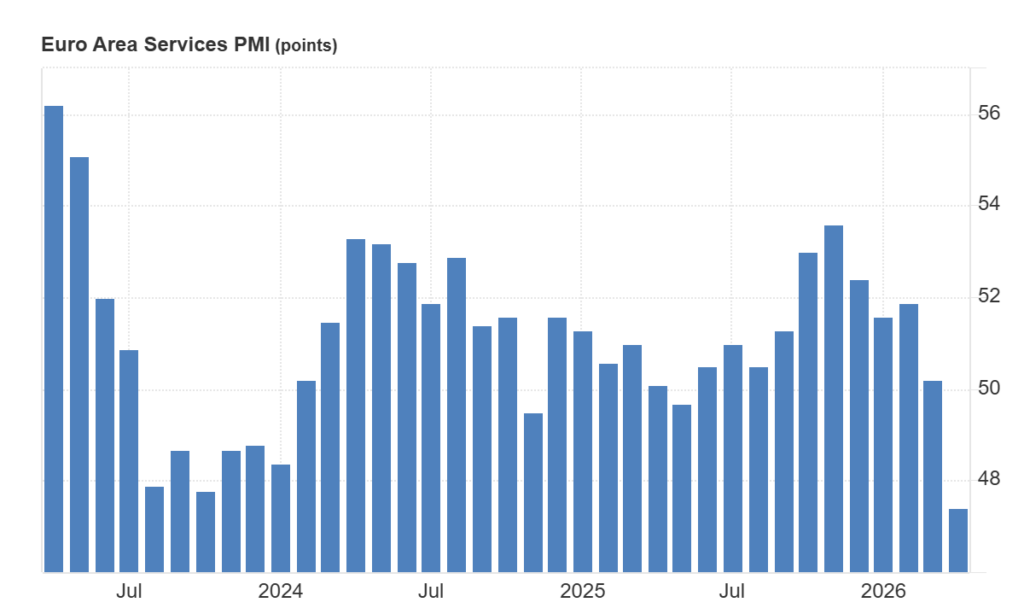
Breaking down the report, eurozone PMI showed diverging results across both sectors. Demand for services dropped sharply to 47.4 from its previous figure of 50.2, and coming in below its forecast of 49.8, dropping to its lowest level since October 2023. ⁽²⁾
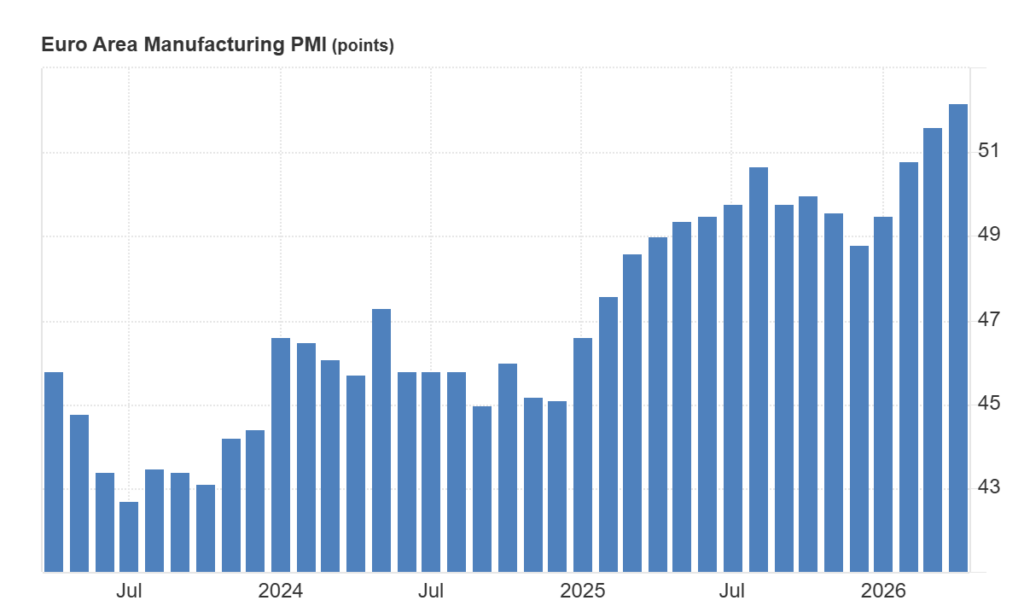
However, the manufacturing sector showed some resilience, unexpectedly rising to 52.2 from a previous 51.6. The sector was expected to decline to 50.9. Despite the expansion, factories continued to face rising production costs.
Since the conflict began in late February, fuel prices have sky rocketed. The input price index jumped to 68.4 from 65.3, its highest reading since late 2022. ⁽³⁾
Focusing on the region’s largest economy, Germany saw its private sector contract for the first time in almost a year. The German composite PMI declined from 51.9 to 48.3, and came in well below its forecast of 51.2, indicating an economic slowdown that it had hoped to avoid after years of struggle. ⁽⁴⁾
Services led the downturn, with this PMI dropping to 46.9 from 50.9, its lowest level since late 2022. Manufacturing growth slowed to 51.2 from 52.2. The index measuring new businesses registered fell at its steepest rate since December 2024 as services demand dropped sharply. Firms cited customer caution amid geopolitical uncertainty. ⁽⁵⁾
United Kingdom Uncovers Record Cost Increases
While weakness was expected to spill over into the UK, the private sector continued to show expansion, with the composite PMI coming in at 52, up from 50.3 in March and higher than its forecast of 49.9. ⁽⁶⁾
The report showed modest economic growth of around 0.2% per quarter. However, analysts warned this may not be sustained if the Middle East conflict persists.
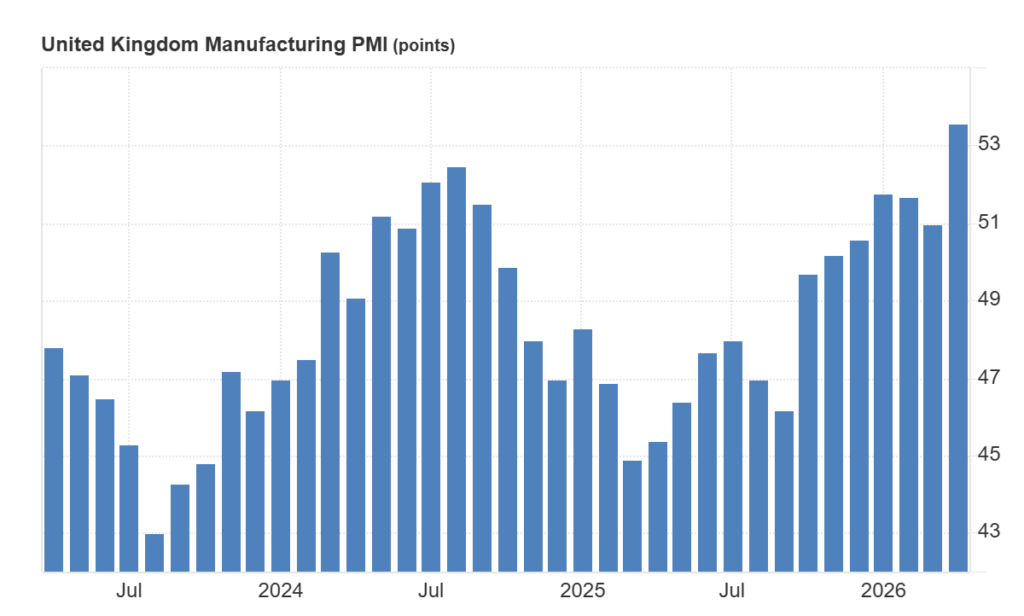
The UK’s services sector improved to 52, up from 50.5. Meanwhile, manufacturing continued to show resilience, coming in at 53.6, up from 51 to reach its highest level since May 2022.

Despite the good news, cost pressures intensified, with input prices rising to their highest level since June 2022. ⁽⁷⁾
Activity in the US Picks Up but Inflation Pressures Build
Moving on across the Atlantic, the US also showed impressive results across both sectors, with the composite PMI coming in at 52, up from March’s 50.3.
But beneath the surface, signs of strain are building. Output prices rose to near four-year highs at 59.9 following persistent inflationary pressures, while delivery times reached their longest levels since August 2022. ⁽⁸⁾
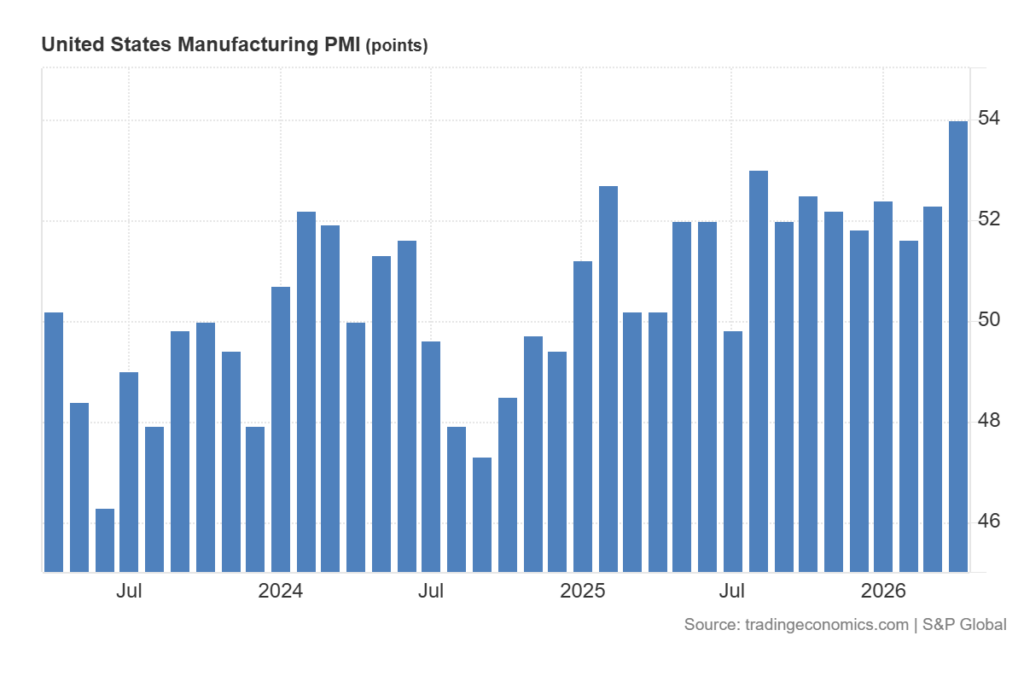
Manufacturing PMI reached 54, up from 52.3 and almost reached up to four-year highs. This was driven by inventory buildup amid concerns over price hikes and availability in supply, alongside a jump in new orders.
Services PMI rebounded to 51.3 from 49.8, but the economy appears to be struggling to manage growth.
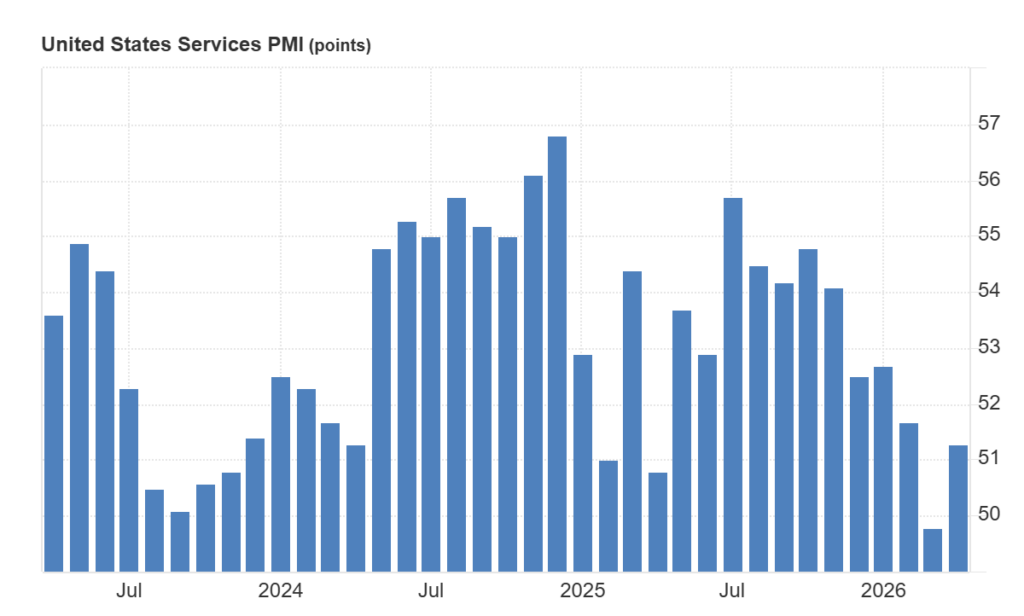
Inflationary pressures continue to build up with surging input prices that reached 11-month highs, alongside prices charged for goods and services, which rose at their fastest pace since mid-2022, indicating that higher prices are being passed on to consumers. ⁽⁹⁾
These factors could continue to reinforce an already restrictive stance from the Federal Reserve.
The central bank has been trying to deal with elevated inflation for more than four years now, given the fact that inflation reached 3.3% in March and could fade hopes of near-future rate cuts.


