ar
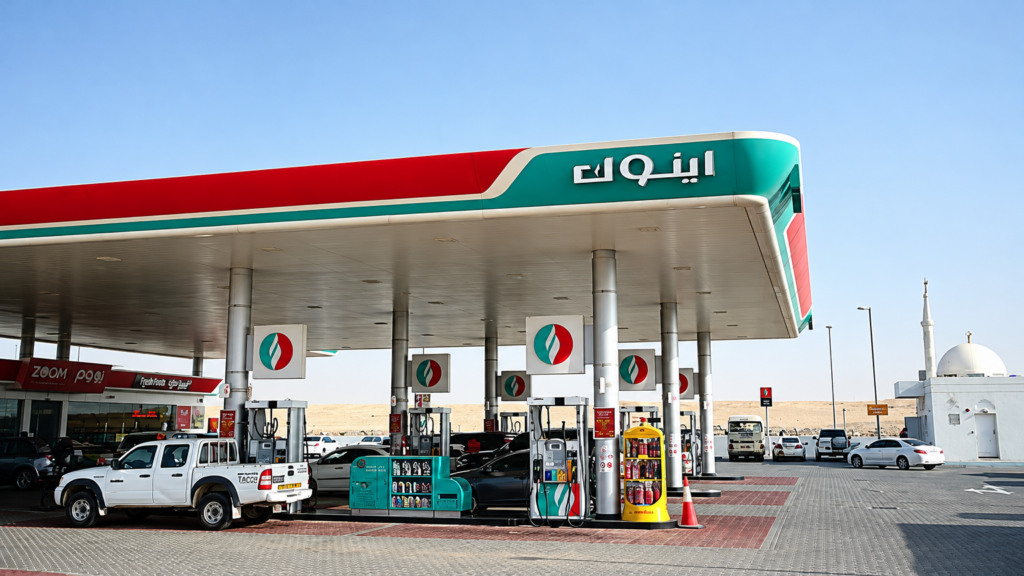
- Petrol prices fall by 24 fils a litre for November, while diesel declines by 5 fils, ending three consecutive months of increases.
- Brent crude oil rose 8.6% from September to October, ⁽¹⁾ while Mediterranean CIF wholesale petrol quotations declined 7.1%. ⁽²⁾ This divergence in both benchmarks show why rising crude prices do not always spill over higher UAE pump prices.
- Diesel’s smaller reduction offers less relief to transport and logistics businesses, which depend heavily on the fuel to move goods across the GCC.
UAE motorists are paying less to fill up this November. Super 98 petrol drops to Dh4.16 a litre, Special 95 to Dh4.04, and E-Plus to Dh3.97, each down 24 fils from October. ⁽³⁾
Diesel falls by a smaller 5 fils, to Dh4.75. ⁽³⁾
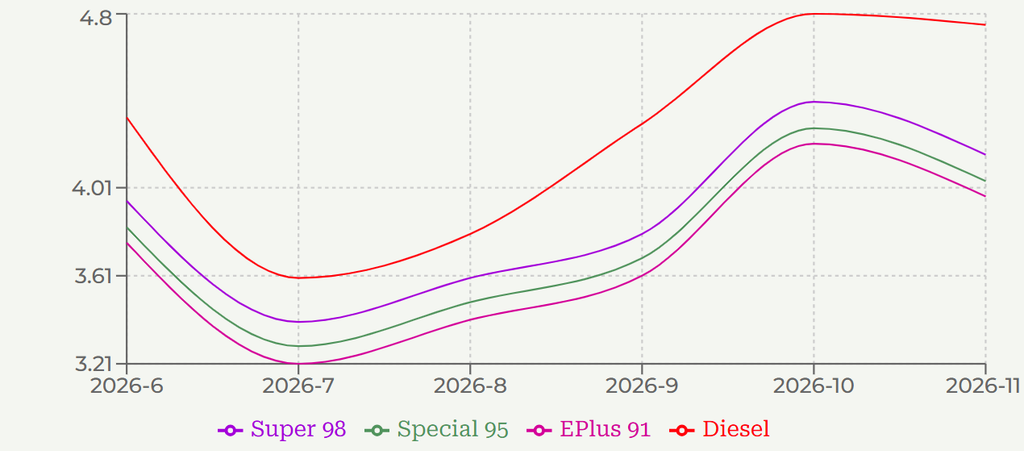
The move breaks a run of three consecutive monthly increases, the sharpest of which came in October, when petrol jumped 60 fils in a single step, the largest monthly rise so far this year. ⁽⁴⁾ November’s reduction brings some of that back, though pump prices remain well above where they sat before the summer.
Two Benchmarks, Moving in Opposite Directions
Monthly price averages show how crude oil and wholesale petrol can move in different directions. EIA data indicate that Brent spot prices rose from $114.16 in September to $123.93 in October, marking an 8.6% gain. ⁽¹⁾
The increase came amid heightened supply concerns as attacks around the Strait of Hormuz intensified. Iran said it was stepping up strikes in response to the US blockade of its ports and tougher sanctions. ⁽⁵⁾
Over the same period, FIGISC, the Italian fuel retailers’ federation, reports that Mediterranean CIF petrol quotations fell from $1,321.65 per tonne to $1,228.35, a decline of 7.1%. ⁽²⁾
The comparison shows why Brent alone isn’t a useful indicator for UAE pump prices. It provides data of different conditions in crude and refined-fuel markets but does not establish which assessments the UAE committee used to calculate November’s reduction.
Why the Pump Price Tracks Refined Products, Not Crude
The UAE deregulated fuel prices on August 1, 2015, replacing the previous fixed-price system with a monthly mechanism linked to international fuel prices. ⁽⁶⁾ A committee representing the Ministry of Energy and Infrastructure and the Ministry of Finance reviews prices against average international levels before setting the following month’s rates.
ADNOC Distribution’s listing prospectus identified international refined-product benchmarks compiled by S&P Global Platts as the basis for fuel pricing, alongside a regulated margin covering transportation and operating costs.
However, the sources reviewed do not identify the specific assessments, weights or averaging dates used for November. The Mediterranean comparison therefore provides market context rather than a verified calculation of the UAE price adjustment.
A Five-Fils Diesel Cut Still Leaves Freight Exposed
Diesel’s smaller reduction is another important distinction. Petrol prices fell by roughly 5.6%, while diesel declined by just over 1%. ⁽³⁾
That matters because diesel is a major operating expense for road freight, commercial transport, and cold-chain logistics across the GCC.
The smaller reduction therefore offers less immediate relief to businesses that depend heavily on diesel-powered transportation. Pump prices alone cannot determine overall freight costs, but the difference highlights why November’s reduction will be felt more by private motorists than by some fuel-intensive businesses.
November partly reverses October’s increase, with petrol falling by 24 fils per litre and diesel by 5 fils. The benchmark comparison shows why crude prices alone cannot explain monthly pump-price changes while smaller diesel reduction could offer less relief per litre to business dependent on road transport.
Sources: ⁽¹⁾ U.S. Energy Information Administration (EIA), ⁽²⁾ FIGISC, ⁽³⁾ Gulf News, ⁽⁴⁾ DubiCars, ⁽⁵⁾ MercoPress, ⁽⁶⁾ UAE Government Portal (u.ae).