ar
ar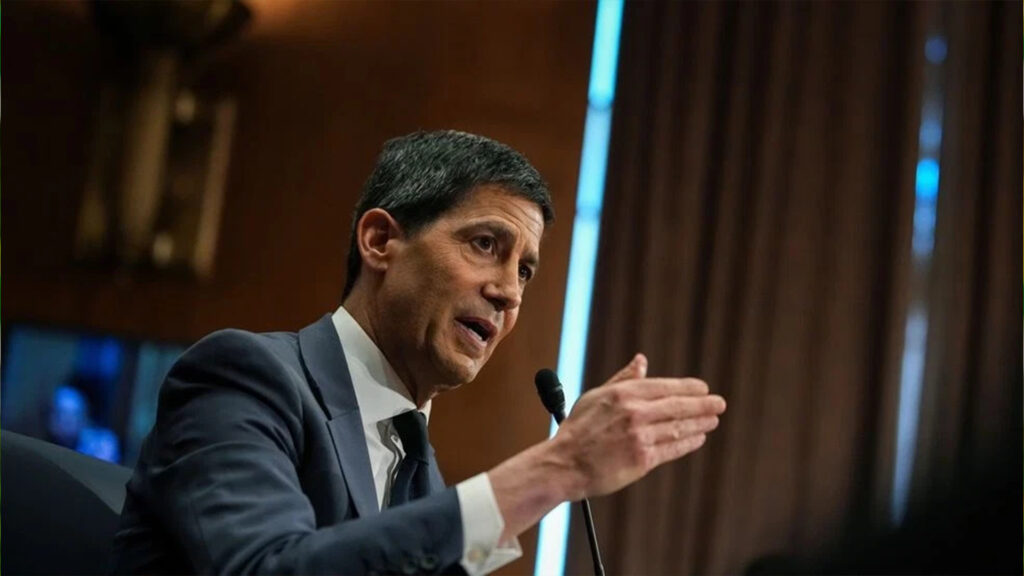
- Fed Chair Warsh made inflation his top priority during his first congressional testimony but avoided giving clear signals on the Fed’s next interest-rate move.
- He praised the strength of the US economy and AI investment, while other Fed officials offered clearer views on inflation risks, rate policy, and the need for more evidence that price pressures are easing.
At his first testimony before Congress and the Senate Banking Committee, Federal Reserve Chairman Warsh sent a clear message showing that he is committed to fighting inflation, making it his top priority.
But when it came to specifics on interest rates, he gave lawmakers very little to work with. Warsh combined tough talk on prices with praise for the strength of the US economy, especially the boom in artificial intelligence investment.
A Call for “Regime Change”
Warsh has repeated the same phrase he’s been using since last summer, “regime change”. He described inflation as an unfair tax on Americans and said that the Fed can no longer tolerate persistently high inflation. ⁽¹⁾
His remarks came after June’s CPI report showed inflation cooling, with consumer prices falling 0.4% MoM and the annual rate easing to 3.5%.
Much of his criticism was aimed at the Fed’s 2020 policy of flexible average inflation targeting, which allowed inflation to run moderately above 2% after periods below target. US inflation later peaked at 9.1% YoY in June.
Warsh called this approach a mistake and stated that he was glad it had already been scrapped before he took the helm at the Fed. ⁽²⁾

To reshape how the Fed operates, Warsh has set up five task forces. These groups are reviewing the Fed’s communications, productivity, balance sheet, economic data, and its approach to inflation.
He said the panels are part of a broader plan to overhaul the institution by December.
Strong Economy, AI in Focus
Despite his hawkish tone on prices, Warsh described the US economy as resilient and expanding at a solid pace. He pointed to business investment, particularly the buildout of AI data centers, as the standout feature of the current landscape. ⁽³⁾
He suggested that the term “AI investment” may soon simply be called “investment,” reflecting how it played a major role in economic growth.
Warsh also addressed AI’s link to inflation directly. He noted rising prices for AI-related products, especially memory chips, stating that the supply shock is already affecting demand. He expects AI-driven costs to push measured prices higher over the next year, though he was careful not to say whether the Fed sees this as truly inflationary. ⁽⁴⁾
No Dot, No Further Guidance
One of the most notable moments came when Warsh explained why he chose not to cast a rate projection on the dot plot in the Fed’s recent Summary of Economic Projections.
He said his goal is to keep markets focused on economic data rather than on signals from policymakers. His now-familiar phrase, “play the ball, don’t play the Fed,” summed up his approach of avoiding forward guidance.
His stance puts him at odds with some colleagues. Fed Governor Christopher Waller and New York Fed President John Williams have both said that combining rate outlooks from other policymakers could give markets a useful set of perspectives. ⁽⁵⁾
Williams also struck a more optimistic tone on inflation, calling policy “well-positioned” and saying price pressures appear to be easing.
Colleagues Fill in the Gaps
While Warsh stayed vague, other Fed officials were more direct about their views. Governor Lisa Cook said she is watching for signs of disinflation and is prepared to raise rates if progress stalls. ⁽⁶⁾
She cited risks from AI-related investment, tariffs, and the conflict in the Middle East. Waller, meanwhile, said he wants to see several months of cooling inflation data before feeling confident that prices are heading back toward the Fed’s 2% target. ⁽⁷⁾
With the Fed’s blackout period beginning this weekend ahead of its next meeting, investors will need to rely on incoming economic data, particularly inflation and AI-related price trends, rather than statements from policymakers to gauge the central bank’s next move.