

 ar
- The Trump-Xi summit delivered limited breakthroughs, with modest deals on Boeing aircraft and US oil exports, but little progress on the bigger issues driving market uncertainty.
- The US and China agreed to a new three-year diplomatic framework, suggesting both sides want to stabilize relations even as trade, tech and geopolitical tensions remain unresolved.
- Markets were left with more symbolism than substance, as key issues including Nvidia chip sales, Taiwan, tariffs and Middle East diplomacy remained unresolved.
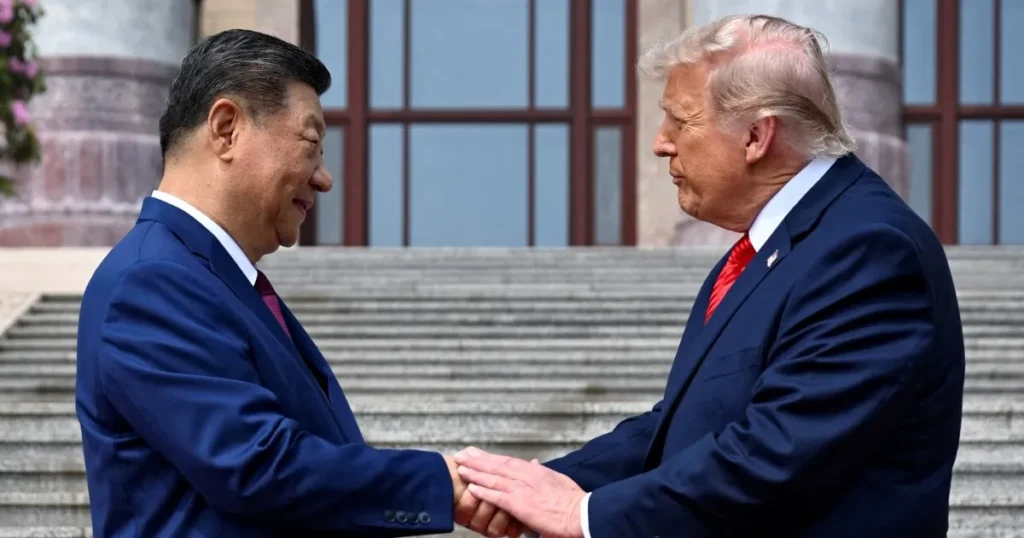
After a two-day high-stakes summit in Beijing, President Trump’s meeting with Chinese President Xi Jinping ended with limited breakthroughs.
The summit showed only some modest commercial deals, but pointed to little progress on bigger issues, including the Middle East conflict and ongoing trade tensions between the US and China.
Despite the formal ceremony and diplomatic displays, the summit appeared to deliver more symbolism than substance, with key topics such as Taiwan, oil purchases, and aircraft sales still unresolved.
Commercial Deals Take Center Stage
Trump said China agreed to purchase 200 Boeing aircrafts, though neither Boeing nor Chinese officials released the full details. Boeing shares slipped after the announcement, as investors had been hoping for a larger order. Trump said that Chinese ships would begin traveling to Texas, Louisiana, and Alaska to collect oil shipments. ⁽¹⁾
These agreements come at an important time for both China and the United States. US crude exports to China have declined sharply amid trade tensions and tariffs. China imported roughly 166,000 barrels of US crude per day in 2024, while exports fell further in 2025. ⁽²⁾
Iran Crisis Remains Unresolved
Despite Trump’s urgent push to resolve the conflict with Iran, China hasn’t yet stated any commitments to aid the US. China’s foreign ministry expressed frustration with the conflict, commenting that it should never have happened and has no reason to continue. ⁽³⁾
China called for reopening shipping lanes as soon as possible and urged all parties to work toward a comprehensive and lasting ceasefire to bring stability to the Middle East and Gulf region.
Treasury Secretary Scott Bessent had urged China to use its influence with Iran, saying it was in Beijing’s interest to reopen the strait. Trump said that Xi promised not to send military equipment to Iran. ⁽⁴⁾
A New Framework for Relations
Beyond Iran and oil, the summit established a new diplomatic framework, with President Xi announcing that both nations have agreed to pursue a strategic stability framework for the next three years.
China’s foreign ministry confirmed that both leaders reached a series of new agreements, including plans to build constructive, strategic stability in bilateral relations for the next three years and beyond. ⁽⁵⁾
Trump also invited Xi to visit the White House in September, signaling that negotiations will continue. Additional meetings could also take place at the APEC summit in Shenzhen in November, alongside the G20 meeting in Florida in December.
No Breakthrough on Tech
The summit has brought some disappointment to technology companies, as President Trump and President Xi Jinping concluded their talks without major chip deals or a breakthrough on Nvidia’s sales to the country.
China is actively resisting purchases to support domestic chipmakers like Huawei. Expectations of a breakthrough had been building after Nvidia’s CEO Huang joined a delegation of high-profile CEOs, including Apple’s Tim Cook and Tesla’s Elon Musk, who traveled to China with Trump. ⁽⁶⁾
The US has used export controls to limit China’s access to advanced semiconductors, especially chips that could support military technology and AI developments. ⁽⁷⁾
Taiwan Warning Casts Shadow
Taiwan remained one of the most important topics during the summit. Despite an overall friendly tone during the summit, Xi warned Trump that mishandling the situation on Taiwan could revive tensions between the US and China. ⁽⁸⁾
Taiwan, located just 50 miles off China’s coast, remains a major flashpoint in relations, with Beijing refusing to rule out military force to gain control of the island, while the US is bound by law to provide Taiwan the means of self-defense.
Looking Ahead
The summit featured a considerable ceremony, including flag-waving youths and a state dinner where Trump announced his invitation to Xi.
As Trump departed Beijing on Friday, both nations appeared committed to continuing their negotiations, with the September White House visit potentially serving as the next major milestone in US-China relations.


