

 ar

- President Trump announced that a peace deal may be in reach with Iran after pausing his latest operation of escorting commercial ships out of the Strait of Hormuz.
- Global markets rallied on the announcement, while both oil benchmarks sharply dropped in the previous session.
- The conflict has driven oil prices to multi-year highs and caused drawdowns in global inventories as refineries struggle to offset production shortfalls.
President Donald Trump announced Tuesday that he is pausing “Project Freedom,” the US military operation designed to escort commercial ships out of the Strait of Hormuz, just one day after the mission began.
The decision comes as diplomatic negotiations with Iran appear to be progressing toward a solution to their two-month conflict.
Diplomatic Breakthrough Prompts Military Pause
Trump posted on Truth Social that the pause is based on progress toward reaching a complete agreement with Iran, stating that Project Freedom will now be halted for now to allow time to finalize the deal. ⁽¹⁾
Trump also warned Iran that he would resume attacks if it refused to accept the peace terms, but emphasized that the war would end if Iran agreed to the proposals, ensuring the Strait of Hormuz remains open to all nations. ⁽²⁾
The US expects Iranian responses on several critical points soon to form the basis of a one-page memorandum of understanding.
Trump’s decision to pause the operation marks a major shift from the administration’s earlier tone. Before halting, government officials stated that the operation’s purpose was to rescue stranded ships in the strait.
Secretary of State Marco Rubio emphasized the urgency during a White House briefing on Tuesday. ⁽³⁾
Markets Rally on Peace Hopes
Global stock markets reacted very positively to the news, with the S&P 500 climbing 1.46% on hopes that the Strait of Hormuz would be reopened, while the Nasdaq rose 2%. AMD led the rally in tech, rising 18.6% after issuing strong guidance for Q2 and beating Q1 earnings expectations.
Japan’s Nikkei 225 jumped 5% and climbed above 62,000, fueled by strong corporate earnings and risk-on sentiment.
Oil prices took a heavy slip after the announcement, with Brent dropping 9% early yesterday while WTI declined 10%. Both benchmarks hit two-week lows and were on track for their largest daily declines since mid-April, having previously traded at their highest levels since March 2022 due to the Strait closure.
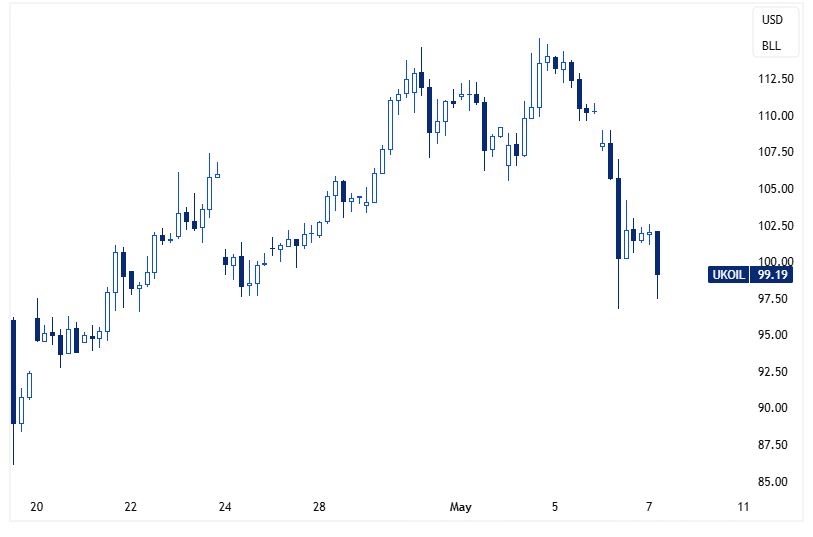
Gold also rose 3% as the drop in oil prices helped ease inflationary pressures, while the euro and pound both rose 0.47% and 0.36%, respectively.
Energy Market Impact
Closure of the Hormuz Strait has become a major source of pressure for global energy markets. Disrupted marine traffic has kept crude prices elevated, while refiners have relied more heavily on existing oil and fuel inventories to manage supply shortages. ⁽⁴⁾
US crude oil inventories declined last week, meaning that storage is getting smaller. The official report from the Energy Information Administration showed that crude oil inventories declined by 2.3 million barrels. ⁽⁵⁾
This points to a slightly tighter energy market, as available supplies have fallen. However, the drawdown was smaller than the earlier American Petroleum Institute estimate, making the signal less bullish than traders initially expected. ⁽⁶⁾
As diplomatic efforts continue, the world watches closely to see whether this pause in military operations will lead to a lasting peace agreement that reopens one of the world’s most critical shipping channels.


