

 ar
- March PPI rose in March due to higher energy prices stemming from the Middle East conflict, with core PPI showing a much calmer picture, indicating that underlying inflation is somewhat contained.
- With core pressures stable and markets pricing limited rate cuts, policymakers may think about holding steady while monitoring whether energy-driven inflation persists.
The March Producer Price Index delivered a mixed inflation picture for markets to digest.
Headline inflation jumped on surging energy costs driven by Middle East tensions, while underlying price pressures remained surprisingly subdued, giving the Fed room to hold steady on interest rates.
Slower Growth Than Forecasted
The PPI report showed an increase of 0.5% MoM in March, coming in way below the expected figure of 1.2%. This was due to a small rise in service prices, which reduced additional rises in the report, other than energy prices.
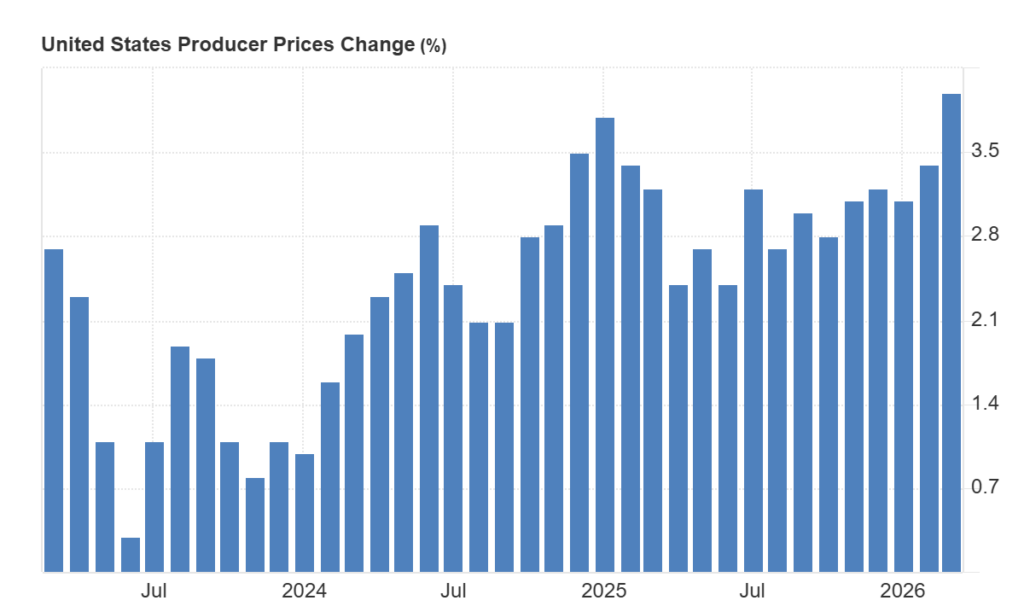
On a yearly basis, the report showed an increase of 4%, up from February’s 3.4%, marking its biggest gain since February 2023. ⁽¹⁾
Energy Drives the Increase
Energy prices are now leading the way in gains, with gasoline prices jumping 15.7%, representing half of the PPI increase, while diesel prices rose even more, coming in at 42%. ⁽²⁾
These sharp moves higher stem from the impact of the Middle East conflict that ignited in late February, sending oil prices up 40% to hit over $100 per barrel.
Initial peace talks in Pakistan ended without progress, as neither side showed much willingness to compromise. Oil prices have eased a little since then, after President Trump suggested negotiations could restart later this week.
Core Inflation Remains Modest
Moving on to core PPI, which strips out food and energy costs. The report showed an increase of just 0.1% MoM, far below its forecast of 0.5%, suggesting that underlying inflationary pressures remain contained. ⁽³⁾
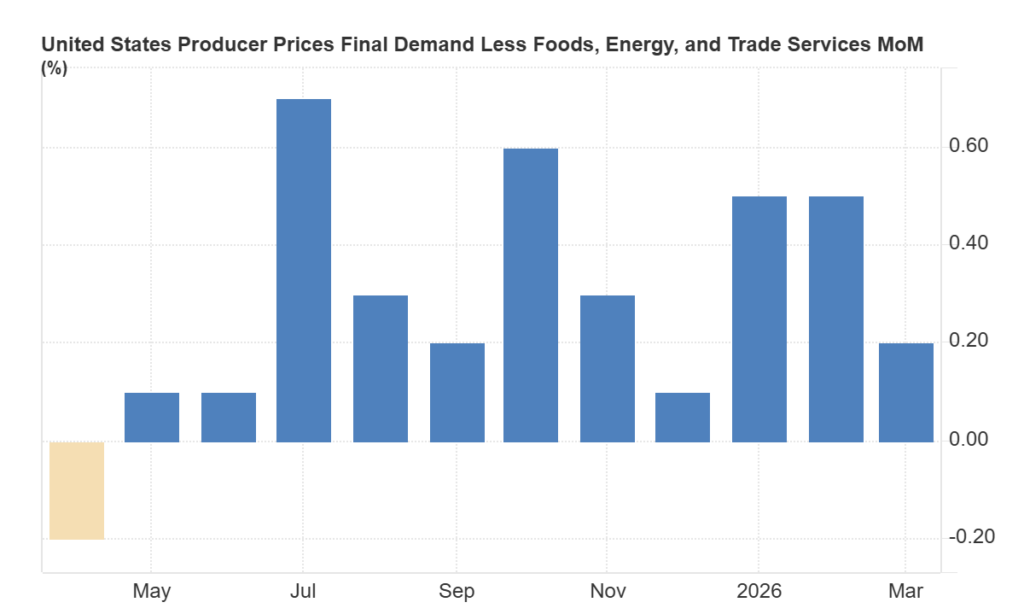
Service prices, which Federal Reserve officials watch closely because they exclude the impact of tariffs and war-related disruptions, were flat for the month.
Trade services actually declined 0.3%, indicating that businesses are absorbing some tariff costs rather than passing them along to customers. ⁽⁴⁾
Consumer Prices Tell a Similar Story
The pattern in producer prices mirrors what consumers experienced in March. The CPI report showed an increase of 0.9% MoM, logging its biggest monthly increase in nearly four years. Like the PPI, this jump was driven primarily by record increases in gasoline and diesel costs.
Core consumer prices, however, rose just 0.2%, suggesting that inflation without energy remains subdued.
Implications for the Federal Reserve
The Fed tracks the Personal Consumption Expenditures price index rather than the PPI or CPI when setting policy.
Economists estimate that core PCE inflation will come in at 0.2% in March after rising 0.4% for two straight months. On an annual basis, this would show a 3.1% gain, up from 3% in February. ⁽⁵⁾
Some components that feed directly into the PCE index showed continued strength. Portfolio management fees rose 1% in March and are up 10.8% over the past year. Health care services also increased. ⁽⁶⁾
Fed Expected to Stay on Hold
Despite the uptick in inflation, Federal Reserve policymakers are likely to look past the March numbers if the underlying trend remains stable and the ceasefire with Iran holds. Fed officials have expressed caution about the war’s impact, but they generally expect inflation to continue easing through the year. ⁽⁷⁾
The March data show that while energy shocks can drive headline inflation higher, core price pressures remain relatively contained. This should give the Fed room to maintain its patient approach as it waits for clearer signs that inflation is returning to target.


