

 ar

- The US dollar rebounded this week as the Federal Reserve showed caution towards interest rates, alongside strong manufacturing and services data.
- Precious metals extended their declines due to eased geopolitical tensions, hawkish signals from the Fed, and a reopening of the US government.
- Concerns over a weak Japanese yen persist, as Prime Minister Takaichi remains willing to push for huge fiscal spending, adding to Japan’s already high debt burden.
This week, markets are shifting as the US dollar gains strength, while precious metals face renewed pressure.
These latest moves come amid growing expectations that the Federal Reserve will take a more cautious approach to interest rate cuts in the coming months.
US Dollar Rises on Fed Hawkish Signals
The US dollar rebounded from last week’s sharp declines, reaching a two-week high following adjusted expectations for Fed rate cuts.
Fed Governor Cook stated she is more worried about inflation being too high, rather than any labor market weakness. She also stated that she won’t be supporting rate cuts until inflation comes down. ⁽¹⁾
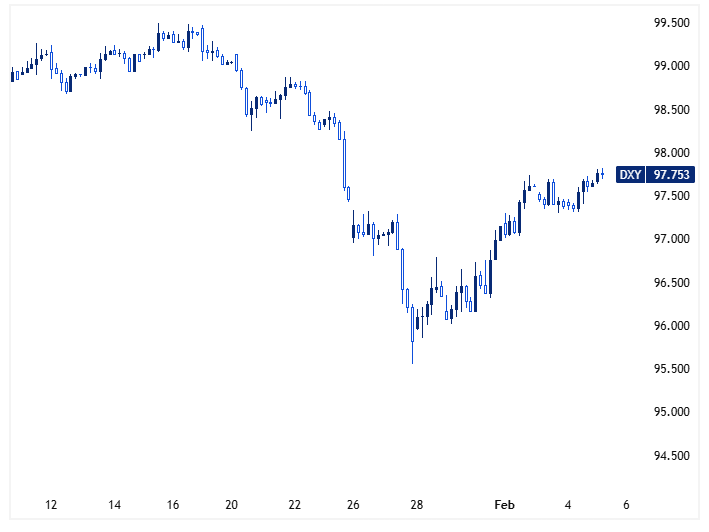
DXY 4H Chart / Source: TradingView
The dollar also gathered support following the nomination of Kevin Warsh as new Federal Reserve Chairman. Warsh was a former Fed Governor and is known to sit more on the hawkish side. He prefers a smaller Fed balance sheet and is expected to be less aggressive towards rate cuts.
The CME FedWatch tool shows a 90% chance of a rate hold at the next Federal Reserve meeting in March. ⁽²⁾
Recent Dollar Weakness and Recovery
The picture hasn’t been entirely positive for the dollar though. Just last Tuesday, it dropped to a four-year low after President Trump said he was comfortable with the recent dollar weakness.
The currency has also been under pressure as foreign investors pull money out of the US, concerned about the growing budget deficit, government spending, and political divisions. ⁽³⁾
However, the dollar bounced back on Wednesday after the government shutdown ended. President Trump signed a deal late Tuesday to fund the government, which helped ease some concerns.
Precious Metals Face Sharp Declines
Silver took a significant hit during the Asian session today, falling as much as 15% to around $74/Oz. This ended a two-day rebound as precious metals faced fresh selling pressure and increased volatility.
Gold also dropped 4% earlier today to around $4,810/oz. Precious metals have been heavily under pressure since last Friday’s market meltdown in gold and silver.
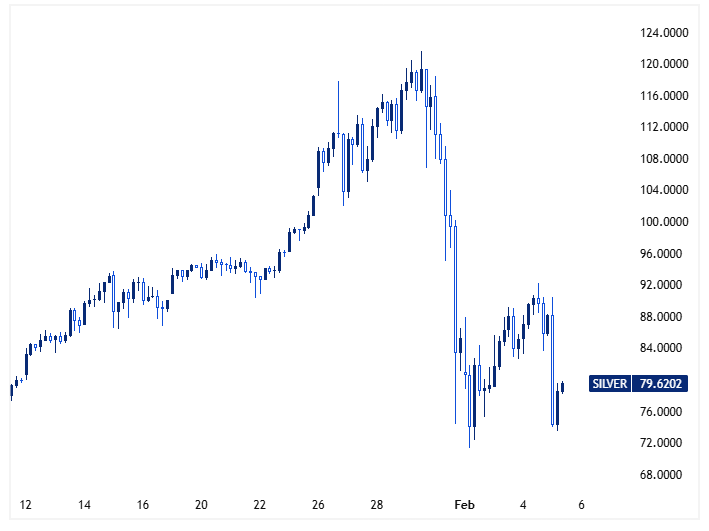
Silver 4H Chart / Source: TradingView
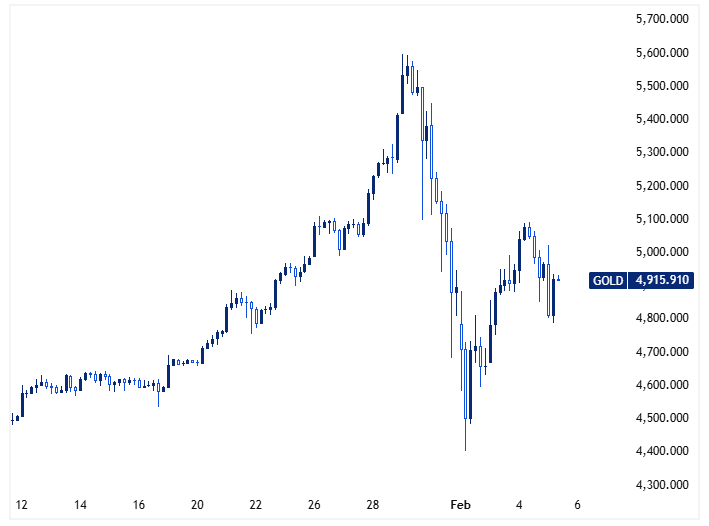
Gold 4H Chart / Source: TradingView
A stronger dollar and the Fed’s cautious stance have weighed heavily on precious metals, alongside comments from Fed Governor Cook and Warsh’s nomination that might have convinced markets that rate cuts could come in a more gradual way than expected.
PMIs Point Higher While the Jobs Picture Stays Incomplete
High-impact economic data was released this week, all of which showed a mixed picture.
Earlier this week, the ISM manufacturing PMI expanded for the first time since February of last year and reached its highest level since 2022, coming above expectations at 52.6.
The ISM services PMI also showed expansion of 53.8, showing robust performance in business activity. ⁽⁴⁾
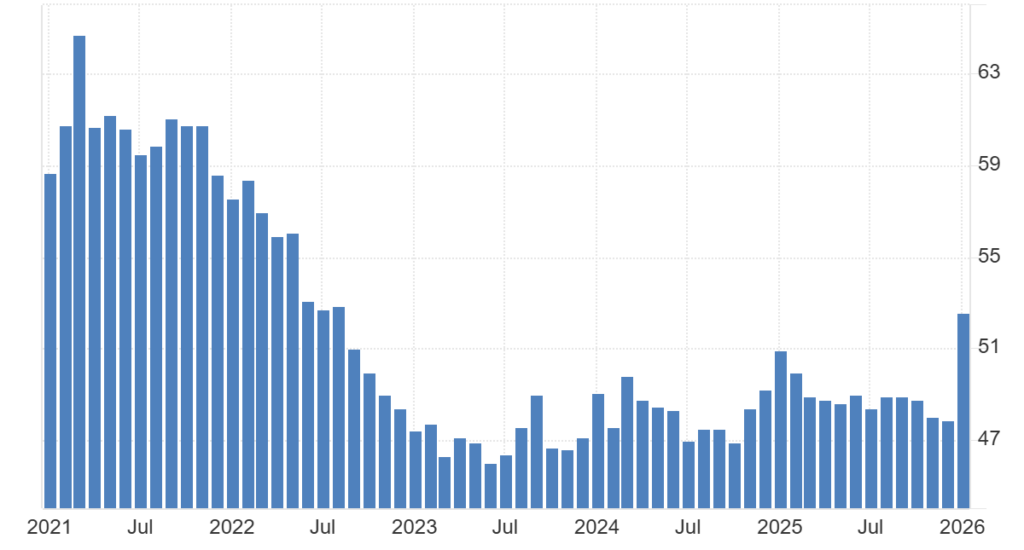
US ISM Manufacturing PMI / Source: Trading Economics
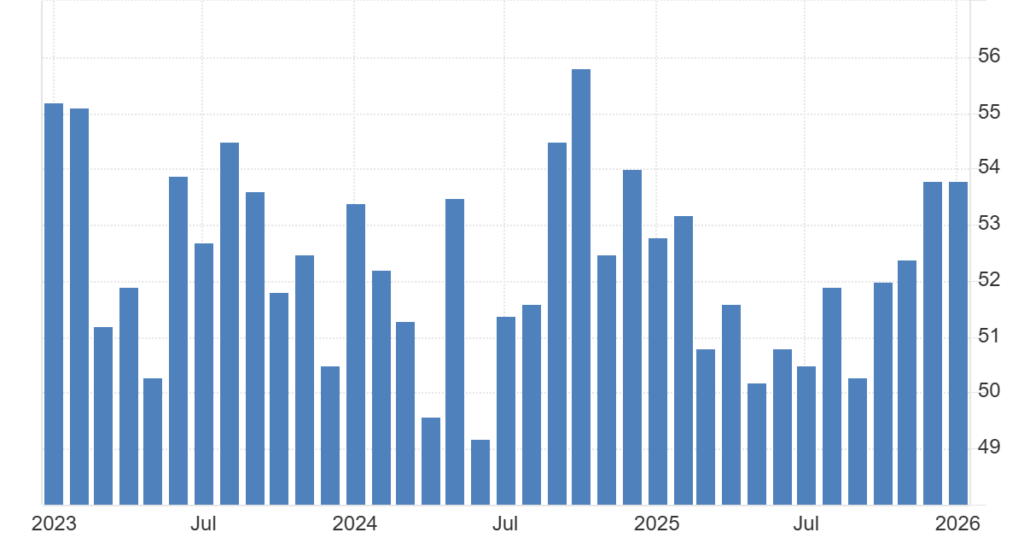
US ISM Services PMI / Source: Trading Economics
However, this week’s labor data only showed one report, the ADP employment change. The data confirmed an increase of 22K jobs, coming up short of its forecast of 48K.
The remaining labor market data was postponed due to the partial government shutdown that occurred earlier this week. JOLTS job openings for December will be released today at 19:00 (GMT+4). ⁽⁵⁾
The Nonfarm Payrolls report for January will be released on Wednesday, February 11, alongside the Unemployment rate and the average hourly earnings reports.
Japanese Yen Under Pressure Ahead of Lower House Elections
Japan’s Prime Minister Takaichi’s ruling party is expected to gain seats as she pushes for increased government spending and other policy objectives. However, her push for massive spending has raised concerns about Japan’s high debt levels, putting pressure on both Japanese bonds and the yen.
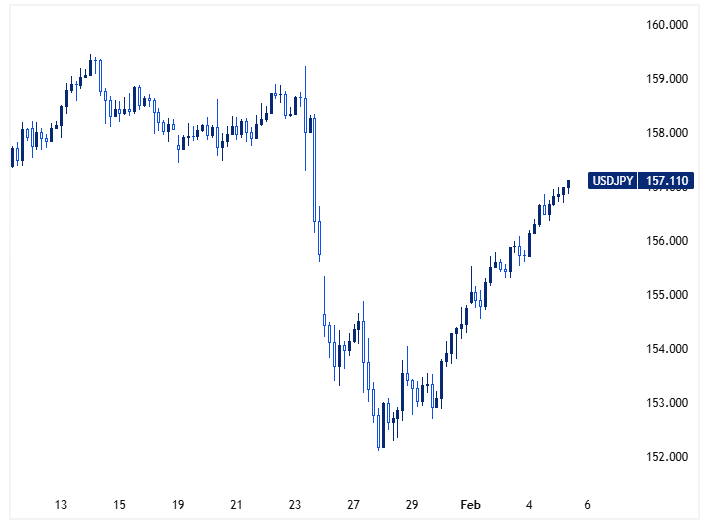
USD/JPY 4H Chart / Source: TradingView
The yen did rally around 4.5% in late January on speculation that the US and Japan might work together to support the currency.
But it has since given up more than half of those gains. Takaichi recently suggested that a weak yen could help Japanese exporters, though she later clarified that she wants Japan’s economy to be resilient regardless of currency movements. ⁽⁶⁾
Looking Ahead
Markets are now watching several key events. The European Central Bank and Bank of England both have policy meetings coming up today, and both are expected to keep rates unchanged.
Investors are also waiting for Japan’s Q4 GDP report next week, which is expected to show a rebound after the economy contracted sharply in the previous quarter.
Additionally, there’s some potential relief on the geopolitical front. The US and Iran have scheduled a fresh round of talks for Friday, which helped ease tensions somewhat, though it’s not clear yet what the talks will cover.


