

 ar

- US economic data showed a mixed inflation picture, with producer prices delivering uneven results against forecasts while retail sales beat expectations.
- The UK economy surprisingly grew after facing contraction in the previous GDP report, with services and production driving growth.
- Threats of a yen intervention rise after a meeting between Japan’s Finance Minister and US Treasury Secretary, sharing concerns about the weak yen with a snap election possibly occurring in February.
- Oil extends its decline after threats eased by US President Trump in the Middle East.
Markets ended the week digesting a mix of solid economic data, cautious policy expectations, and shifting geopolitical headlines. US and UK data pointed to improving growth momentum, though inflation signals remained uneven.
Currency markets reflected the imbalance, with a firm dollar, a subdued pound, and renewed focus on the yen, while oil prices pulled back as geopolitical risks eased.
US Prices and Consumer Spending Paint a Mixed Picture
US PPI came in mixed, with the monthly report coming in at 0.2%, matching estimates. Meanwhile, the yearly report came in at 3%, higher than its forecast of 2.7%. Core PPI showed an increase of 3% YoY, also higher than estimates, while the monthly figure showed a flat reading, less than the expected figure of 0.2%. ⁽¹⁾
A 0.9% gain in goods prices fueled much of the PPI increase, with more than 80% attributable to a 4.6% jump in energy prices. Services prices remained flat. The BLS remains behind schedule in the PPI and retail sales data due to the government shutdown late last year, as the reports released were for the month of November. ⁽²⁾
Retail sales came in higher than expected, showing an increase of 0.6% compared to its forecast of 0.5%. Core retail sales, which excludes automobiles, also showed a higher reading of 0.5% compared to its 0.4% forecast. ⁽³⁾
The November gains were broad based, with motor vehicle and parts dealers, building material and garden centers, gas stations, sporting goods stores, and miscellaneous outlets all seeing gains of 1%. ⁽⁴⁾
UK Economy Grows Unexpectedly After Contraction
Just when economists were bracing for more pain, the UK economy pulled off a pleasant surprise. GDP grew 0.3% in the latest period, comfortably beating the 0.1% forecast and bouncing back from the previous quarter’s unexpected 0.1% contraction. ⁽⁵⁾
Services and production led the charge, expanding 0.3% and 1.1% respectively. Construction was the lone weak spot, declining 1.3%, but that wasn’t enough to derail the broader recovery.
The previous contraction had been chalked up to a perfect storm of challenges: a cyber-attack that hammered Jaguar Land Rover’s car production, plus business and consumer jitters ahead of the Autumn Budget. Those headwinds appear to have eased.
Looking ahead, economists are increasingly optimistic about the UK’s trajectory this year, especially with the Bank of England expected to continue gradual rate cuts. Markets are currently pricing in around 40 basis points of cuts by September, which should provide some breathing room for borrowers and businesses alike. ⁽⁶⁾
GBP/USD failed to rebound despite the strong data, as the GDP report didn’t impact the Bank of England’s monetary policy outlook. The US dollar remained strong as markets ignored concerns about the threats made to the Federal Reserve earlier this week.
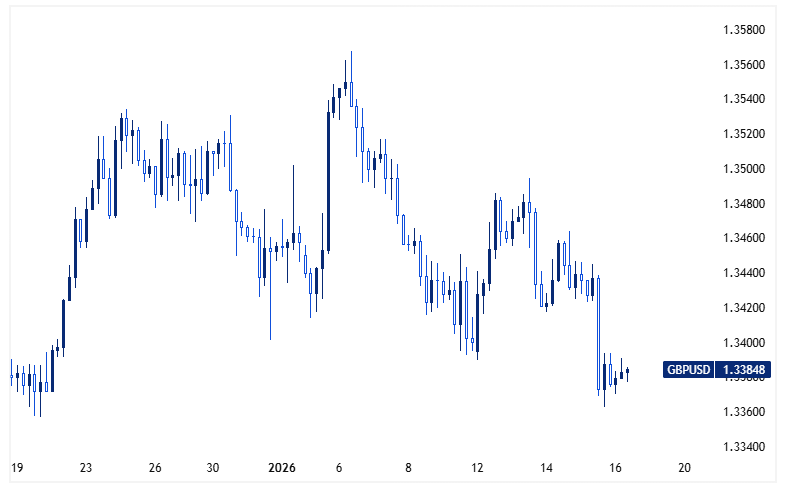
GBP/USD 4H Chart / Source: TradingView
Threats of a Yen Intervention Rise
Finance Minister Katayama sat down with US Treasury Secretary Bessent this week to voice Tokyo’s growing alarm over yen weakness, and the threat of intervention is no longer just talk, it’s becoming a real possibility.
USD/JPY pushed above 158 for the first time since last year, driven by reports that Prime Minister Sanae Takaichi might call a snap election in February. Markets interpreted a potential election win as giving Takaichi a stronger mandate for expansionary fiscal policy, which would likely keep the yen under pressure. ⁽⁷⁾
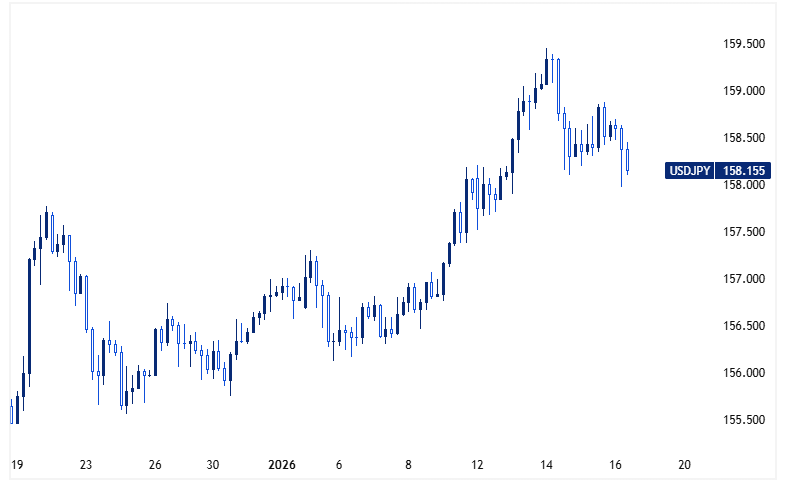
USD/JPY 4H Chart / Source: TradingView
The reports pushed down the yen as they stoked speculation that an election win would help Takaichi secure a mandate for her expansionary fiscal policy. But the weak yen has been a headache for policymakers as it inflates import costs, weighs on households and possibly affects Takaichi’s popularity ratings. ⁽⁸⁾
Oil Drops on Eased Fears of a Strike on Iran
Oil gave back its weekly gains, falling roughly 4% as Middle East tensions eased. This was due to President Trump’s decision to scale back plans for a strike on Iran, which ignited fears earlier this week.
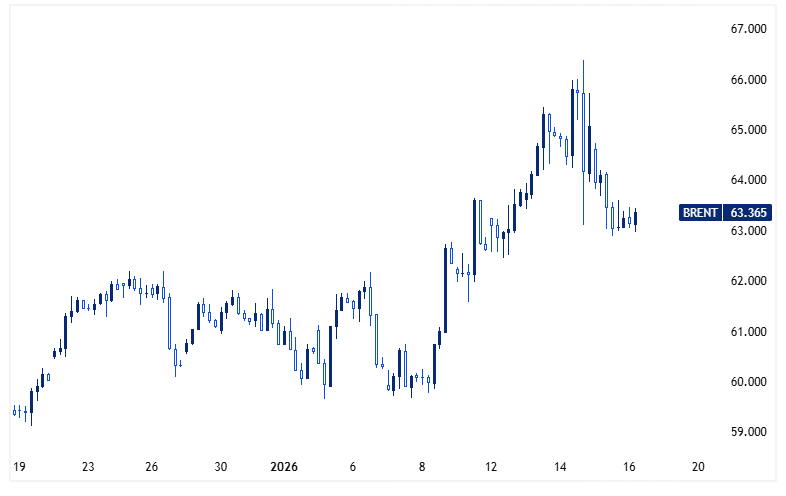
Brent Oil 4H Chart / Source: TradingView
Just a day before, traders had been bracing for the worst. Iran temporarily closed its airspace, reports surfaced of US troop movements, and Brent crude climbed on mounting strike concerns. ⁽⁹⁾
Oil prices climbed earlier in the year amid unrest in Iran, OPEC’s fourth-largest producer, and an escalating crisis in Venezuela. The situation culminated in a US military operation that removed President Maduro in early January, adding further uncertainty to the country’s already-decimated oil industry.


