

 ar
- Inflation in December showed a mixed picture, with headline CPI meeting expectations while core CPI showed a decline, pointing to reduced inflationary pressures.
- Rate cuts remained priced in for the year, but markets are split on whether the Fed should deliver two or three rate cuts.
- President Trump has been pushing for proposals that help reduce the cost of living, including banning investors from buying single family homes.
December’s US inflation report delivered mixed but important signals for markets.
Headline CPI met expectations, while core inflation softened slightly, hinting at easing underlying price pressures. However, housing and food costs continued to do most of the heavy lifting, according to the Bureau of Labor Statistics.
The data arrives at a delicate moment for the Federal Reserve, which is balancing still-sticky inflation against emerging labor-market risks and uncertainty surrounding new tariff policies.
Adding to the pressure, President Trump renewed his demands for interest-rate cuts, using the report to support his case, leaving investors cautious and uncertain about the Fed’s next move.
December CPI Figures Show Mixed Inflation Trends
Headline consumer prices rose in December, mainly due to higher rent and food costs. Temporary factors that held inflation down in November faded, reinforcing expectations that the Federal Reserve will keep interest rates unchanged this month.
CPI YoY came in at 2.7%, matching estimates, while the monthly report also matched estimates at 0.3%. Core US consumer prices rose less than expected in December.
Core CPI came in at 0.2% MoM, below its forecast of 0.3% while the yearly figure came in at 2.6%, also below its forecast of 2.6%. Though they examine both measures, Fed officials consider core inflation a better long-run indicator of where inflation is headed. ⁽¹⁾
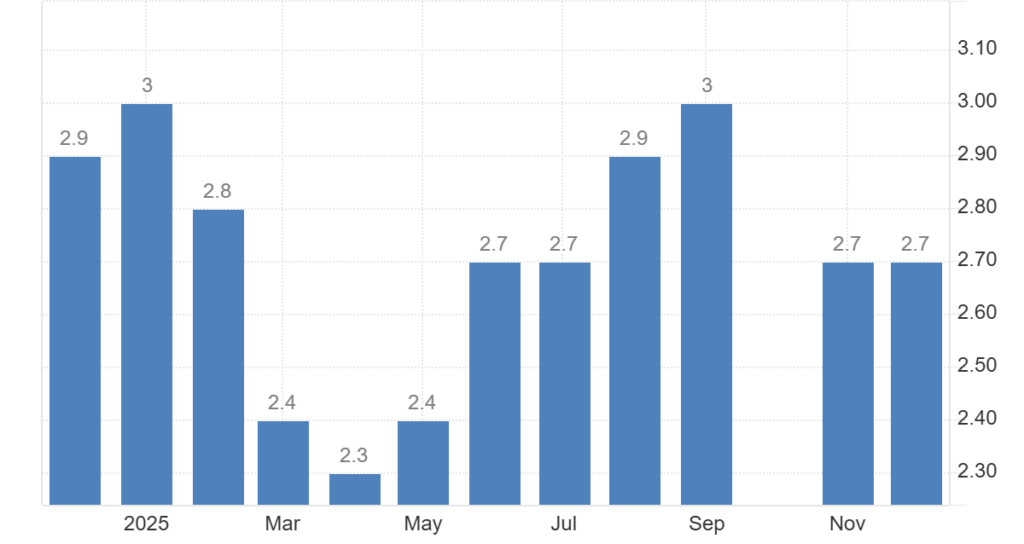
Headline CPI Chart / Source: TradingView
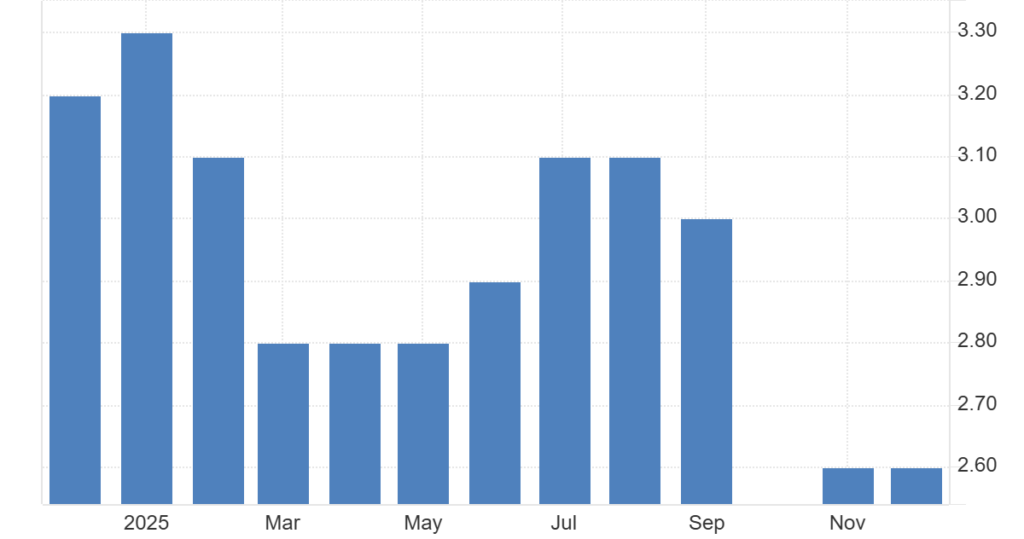
Core CPI Chart / Source: TradingView
Energy prices increased 0.3%, with a 4.4% jump in natural gas prices. Electricity prices fell 0.1% MoM but rose 6.7% YoY. This reflected increased demand from data centers during an artificial intelligence investment boom. ⁽²⁾
The 43-day government shutdown prevented the collection of prices for October. This resulted in the BLS using a carry-forward method to estimate data, especially for rents, to compile November’s CPI report.
While prices for November were collected, that occurred only in the second half of the month when retailers were offering holiday season discounts. The carry-forward estimation method treated October prices as unchanged. ⁽³⁾
Rate Cuts Remain Possible Despite Mixed Data
Rate cuts this year remain on the table, with the Bureau of Labor Statistics’ report showing moderate inflation pressures last month. Economists suggested that this indicated the effect of import tariffs on prices was slowing. Economists were divided on whether inflation had reached its peak. ⁽⁴⁾
Rising food and rent costs, with food prices at their highest increase in over three years, underscored the affordability pressures facing President Donald Trump. Economists partially attributed this crisis to White House policies. ⁽⁵⁾
Trump has made numerous proposals to reduce the cost of living. These include banning institutional investors from purchasing single-family homes and directing the Federal Housing Finance Agency to take action.
The agency, which oversees mortgage finance giants Fannie Mae and Freddie Mac, was instructed to buy $200 billion of bonds issued by the two companies in an effort to lower mortgage rates. ⁽⁶⁾
Federal Reserve’s Inflation Target and Policy Outlook
The Fed targets inflation at 2% annually. The report provides some evidence that the pace of inflation is moving back toward target but remains elevated.
President Donald Trump used the CPI report to renew his demands for Fed Chair Jerome Powell and his colleagues to ease monetary policy.
He also posted on Truth Social that inflation numbers are low in the USA and still demands rate cuts from the Federal Reserve. Fed officials are currently weighing risks to the labor market against the potential for inflation to persist.
Trump’s tariffs have added another complication to the equation. However, most policymakers view the impact on inflation as temporary. ⁽⁷⁾
Market Reaction
Financial markets remained somewhat steady after the release of the CPI report, with the US dollar rising near 2-month highs, while gold continued its surge upwards. Interest rate futures showed investors split between expectations of two or three Federal Reserve rate cuts this year, exceeding policymakers’ median projection of just one.
US stocks remained flat as the focus turned to Q4 earnings and geopolitical risks, around a possible US intervention in Iran, alongside President Donald Trump’s attacks on Federal Reserve Chair Jerome Powell.


