

 ar

- US PPI declined in September, easing inflationary pressures as the dollar steadied while gold reached a five-week high.
- The British pound rose on the release of the UK’s Autumn Budget, which showed tightened fiscal policy and more credible plans without sparking inflation concerns.
- AUD and NZD jumped, with Australia’s hot inflation supporting the RBA’s hawkish stance and the RBNZ signaling an end to its rate-cut cycle.
As this trading week and the month of November wrap up, markets reacted to key economic data, central bank commentary, and major policy changes that affected sentiment worldwide.
US PPI Shows Soft Numbers
The producer price index for September came in less than expected, indicating soft inflationary pressures. The report came in at 0.3% MoM and 2.7% YoY, aligning with estimates, while core PPI came in at 0.1% MoM and 2.6% YoY, coming up short on their forecasts. ⁽¹⁾
The September PPI release, like most other major official data, was delayed due to the government shutdown. The BLS may not release October PPI data and has already canceled the October Consumer Price Index report. November’s CPI is due out December 18th. ⁽²⁾
The US dollar remained steady, pausing its recent decline and looks on track to finish the month unchanged. Gold reached a five-week high and could be set for its fourth consecutive monthly gain.
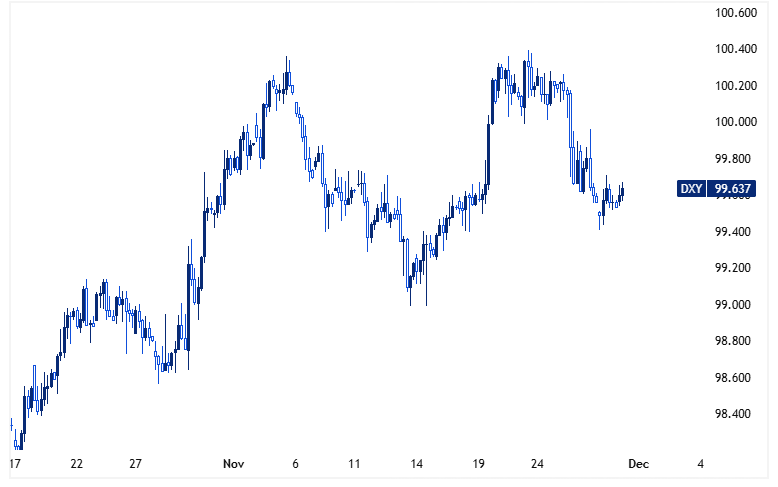
DXY 4H Chart / Source: TradingView
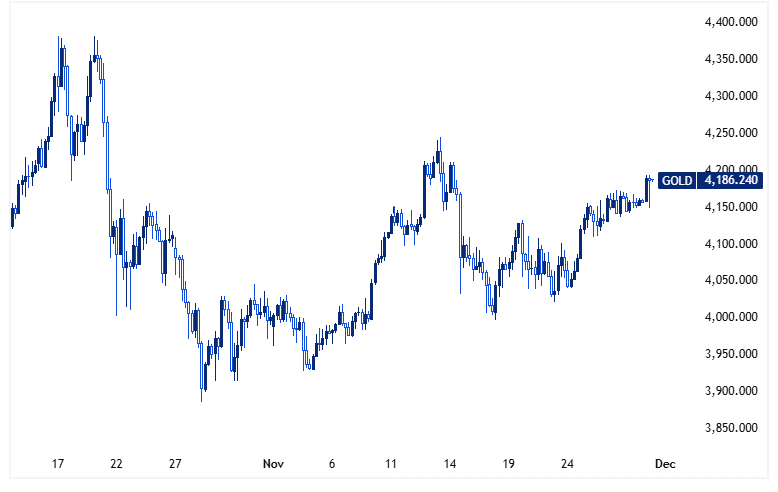
Gold 4H Chart / Source: TradingView
UK Autumn Budget Lifts the Pound
After the announcement of the Autumn Budget, the British pound rose as markets digested the UK government’s new fiscal tightening plans, which are more revenue-focused. The government also announced plans for ending austerity, referring to the UK’s long period of strict spending cuts and tight budgets.
Markets interpreted the budget as being more disciplined and less inflationary than expected, removing pressure on the Bank of England to delay rate cuts. ⁽³⁾
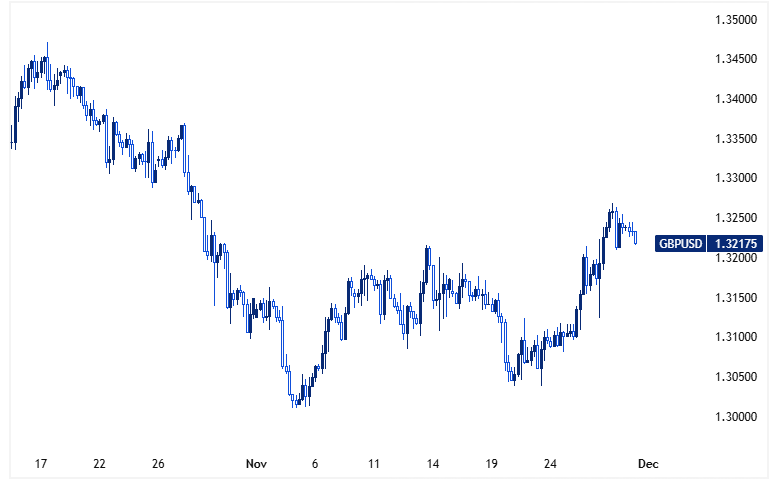
GBP/USD 4H Chart / Source: TradingView
The budget also showed improved fiscal credibility, which is focused on closing the budget gap of £20 billion and boosting investments. The Office for Budget Responsibility noted an increase in the government’s fiscal buffer to £22 billion, well above expectations, but downgraded growth forecasts due to weaker productivity, high inflation, and wage pressures. ⁽⁴⁾
Aussie Dollar Rises on Hotter Inflation
The Australian dollar reached a one-week high after the release of a stronger-than-expected inflation report, reaching a seven-month high and increasing expectations of a hawkish Reserve Bank of Australia.
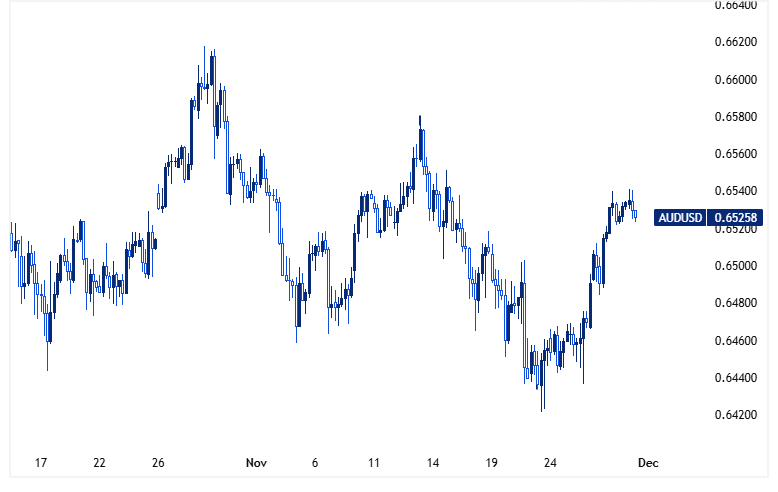
AUD/USD 4H Chart / Source: TradingView
CPI came in at 3.8% YoY in October, higher than its forecast of 3.6% and rose at its fastest pace since April 2024. The main driver was the housing sector, contributing an increase of 5.9% due to higher electricity costs and rents. Core CPI came in at 3.3%, also higher than its forecast of 3% and the previous month’s figure of 3.2%. ⁽⁵⁾
The strong inflation prints since August had already made the RBA cautious towards monetary policy. Assistant Governor Hunter said that the Australian labor market remains resilient, with the unemployment rate falling and wage growth remaining higher, supporting further monetary policy tightening. ⁽⁶⁾
RBNZ Signals End of Rate Cut Cycle, NZD Jumps
The Reserve Bank of New Zealand reduced interest rates by 25 basis points to 2.25% on Wednesday, reaching its lowest level since 2022, with policymakers signalling an end to the rate cut cycle as the economy showed signs of recovery. Future decisions will now depend on the outlook on inflation and the economy.
The RBNZ surprised markets by cutting rates more than expected by 50 basis points in October. The central bank has already delivered 325 basis points of cuts since August 2024 to support a weakening economy that contracted in three of the last five quarters. ⁽⁷⁾
The statement said risks to the inflation outlook are balanced, noting that while economic activity was weak over mid-2025, it is now picking up as lower interest rates are encouraging household spending. ⁽⁸⁾
The New Zealand dollar jumped to a three-week high as traders scaled back on expectations for any further rate cuts, with the RBNZ saying the board had debated between holding rates and delivering another cut. ⁽⁹⁾
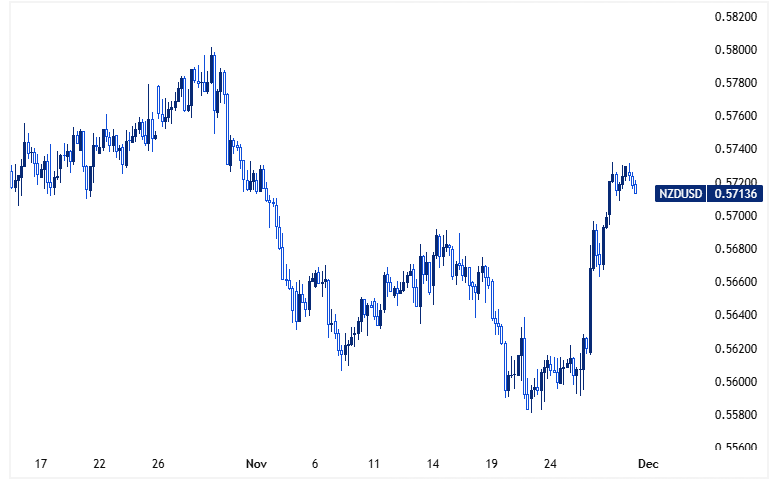
NZD/USD 4H Chart / Source: TradingView


