ar

- RBNZ cut rates by 50 basis points, a larger cut than expected.
- Inflation remains within the RBNZ’s target range, opening the door for more easing.
- NZD/USD fell by more than 1%.
The Reserve Bank of New Zealand (RBNZ) has cut its Official Cash Rate by 50 basis points today to 2.5%. The decision has brought interest rates in New Zealand to their lowest level since 2022.
The rate cut was larger than anticipated, as economists were expecting a 25-basis point cut. The larger-than-expected rate cut reflected weak economic activity in 2025 and the central bank’s commitment toward more monetary policy easing.
Domestic Economic Challenges and Inflation
New Zealand’s economy faced contraction in Q2, declining 1.1% YoY, lower than the expected figure of 0.9%. Slow growth in housing and other sources of income continues to weigh heavily on economic activity. Lowering interest rates is the central bank’s response to support consumer spending.
The RBNZ also stated that global uncertainty and supply chain constraints have been impacting the economy. ⁽¹⁾
Potential growth could slow due to low investment activity and productivity. Global concerns such as geopolitical tensions and tariffs add more uncertainty for the global economy.
Inflation reached 2.7% YoY in Q2, almost hitting the ceiling of the RBNZ’s 1%-3% target range. Domestic inflationary pressures have been subdued, leaving more room for the RBNZ to cut rates. The central bank expects inflation to rise to 3% in Q3 and return near the 2% target in 2026. ⁽²⁾
Global Developments and Trade Resilience
Growth forecasts for 2025 have been raised for New Zealand’s trading partners, mainly China. The World Bank has revised its 2025 growth forecast for China up from 4% in April to 4.8%. Global trade remains resilient, despite trade tariffs. ⁽³⁾
However, global growth is expected to slow in 2026, as the RBNZ stated that tariffs on New Zealand could lead to more disinflation. A lower exchange rate and higher commodity prices could provide some support for the economy. ⁽⁴⁾
Market Reaction and Future Outlook
The New Zealand dollar tumbled -1% against the US dollar, hitting its lowest level since April after the announcement.
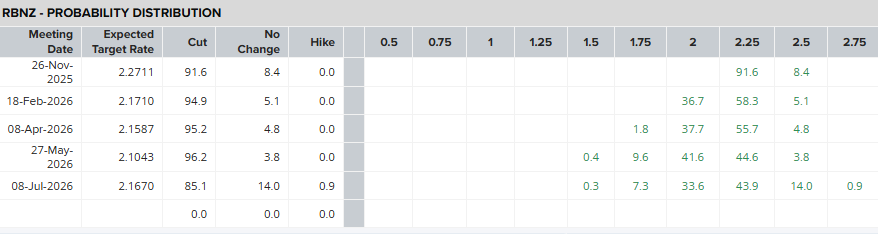
Since last year, the RBNZ has slashed rates by 300 basis points. Although it considered easing by just 25 basis points this time around, the committee opted for a bigger cut to minimize the risk of a long economic slump. It also remained open to further reductions in the cash rate as needed. ⁽⁵⁾