

 ar
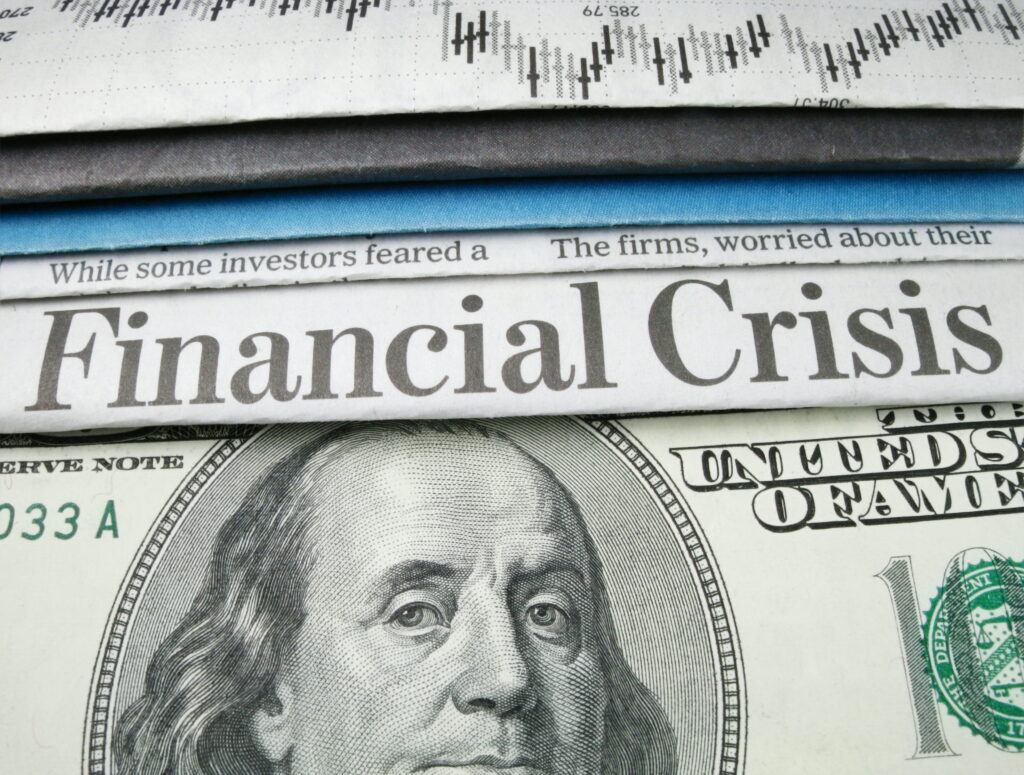
- When financial stress rises, capital typically moves away from risk assets and into assets perceived as stable, a process known as a flight to safety.
- Gold, the US dollar, and government bonds each attract capital during a crisis for different reasons. Oil markets respond according to whether the shock hits supply or demand.
- Safe haven status is conditional, not permanent. In an acute liquidity crisis, even traditional safe assets can sell off.
When financial markets panic, money does not disappear. It moves.
Investors usually reduce exposure to assets they see as risky and shift toward assets they believe can preserve value, provide liquidity, or protect capital during uncertainty. This is known as a flight to safety.
Where capital goes depends on the nature of the crisis, whether it is financial, geopolitical, or a combination of both.
The Classic Flight-to-Safety Trade
Three assets often attract capital during periods of stress. These include gold, the US dollar, and US Treasury bonds. Each draws demand for a different reason.
Gold holds no credit risk and is not tied to any single government or economy. During geopolitical crises, investors treat it as a store of value outside the financial system.
When Russia invaded Ukraine in February 2022, gold rallied sharply, with spot prices climbing above $2,000 per ounce ⁽¹⁾ within days of the invasion, as investors moved toward safe-haven assets.
US Treasury bonds and the US dollar attract capital for a structural reason. They represent the world’s deepest and most liquid sovereign debt market.
During the 2008 financial crisis, demand for Treasuries surged even as the crisis originated in the United States itself. Long-term Treasury yields fell from roughly 4% in mid-2008 to around 2% by December ⁽²⁾.
That outcome shows how deeply embedded dollar assets are as the global default safe haven.
Oil’s Role in a Crisis
Oil does not follow the flight-to-safety logic. Its behaviour depends entirely on which side of the supply-demand equation the shock hits.
Supply-side crises push prices higher. In September 2019, drone attacks on Saudi Aramco’s Abqaiq and Khurais facilities removed approximately 5.7 million barrels of daily output from the market, roughly 5% of global supply ⁽³⁾, triggering an immediate price spike.
When a supply disruption threatens physical output, markets price in scarcity risk before the full picture is known.
Demand-side crises push prices in the opposite direction. In the early months of the COVID-19 pandemic, economic activity collapsed globally, and Brent crude fell below $20 per barrel in April 2020 ⁽⁴⁾.
Oil is not a safe haven. It is simultaneously a barometer of economic activity and a gauge of supply-chain risk.
When Safe Havens Stop Being Safe
Safe haven status is not a permanent property of any asset. It reflects collective market consensus. That consensus can break under acute stress.
In March 2020, US Treasury prices fell alongside equities in an unusual reversal of the typical pattern where bonds rise when stocks fall. Investors sold Treasuries to raise cash as liquidity demands surged across portfolios.
Between 9 and 18 March 2020, the 10-year Treasury yield spiked by 64 basis points ⁽⁵⁾ even as equity markets were in freefall. The Federal Reserve intervened with large-scale bond purchases, stabilising the market within days.Gold followed the same pattern.
Prices fell approximately 12% between 9 and 19 March 2020 ⁽⁶⁾ as investors liquidated liquid assets to cover losses and meet margin calls elsewhere. The rally in gold came only once the immediate liquidity pressure had passed.
The flight-to-safety mechanism had not disappeared. It had been temporarily overwhelmed by a global dash for cash.
What Brings Capital Back
Safe haven flows usually reverse when the acute phase of a crisis passes. Central bank intervention, a ceasefire, or a stabilisation in the event driving geopolitical risk can each shift market sentiment from risk-off toward recovery.
The timing of that shift cannot be predicted. What can be mapped is the sequence. Capital moves to safety first, stabilisation follows, and rotation back toward higher-yielding assets comes once confidence returns.
The pattern can repeat across very different crisis types. The trigger changes, but the mechanism does not.
Conclusion
Capital flight during a crisis follows an often recognisable economic logic:
- Gold draws demand as a non-sovereign store of value, most strongly during geopolitical stress
- Dollar assets and Treasuries absorb capital as the world’s default liquidity refuge during systemic shocks
- Oil is a risk barometer, not a safe haven: supply shocks and demand collapses push it in opposite directions
- All three behaviours are conditional on market consensus holding. In an acute liquidity crisis, that consensus can temporarily break
Understanding where capital moves during stress is not the same as predicting market direction. It is just a map of the mechanisms at work.


