ar
ar
Markets are shifting focus from last week’s central bank meetings to a data-heavy week ahead.
There is plenty for traders to track, from US-Iran peace talks and bank stress test results to a US PCE print that could shape Fed rate expectations, alongside Australia’s latest CPI numbers.
PMIs round out the calendar, testing whether US momentum can hold and whether Europe remains stuck in contraction.
Calendar Events
- Canada CPI – Jun. 22
- Eurozone Flash PMI – Jun. 23
- UK Flash PMI – Jun. 23
- US Flash PMI – Jun. 23
- Australia CPI – Jun. 24
- US Bank Stress Test – Jun. 25
- Australia Unemployment Rate – Jun. 25
- US PCE Index – Jun. 25
- US Q1 Final GDP – Jun. 25
- Japan Tokyo CPI – Jun. 26
Top Things to Watch
US-Iran Talks Advance Toward 60-Day Deal
The US and Iran made progress during talks in Switzerland earlier today, moving closer to a final deal within 60 days after agreeing to form a high-level committee and continue technical negotiations.
The talks also produced a de-confliction mechanism aimed at ending hostilities in Lebanon, which Iran called the first real test of the agreement.
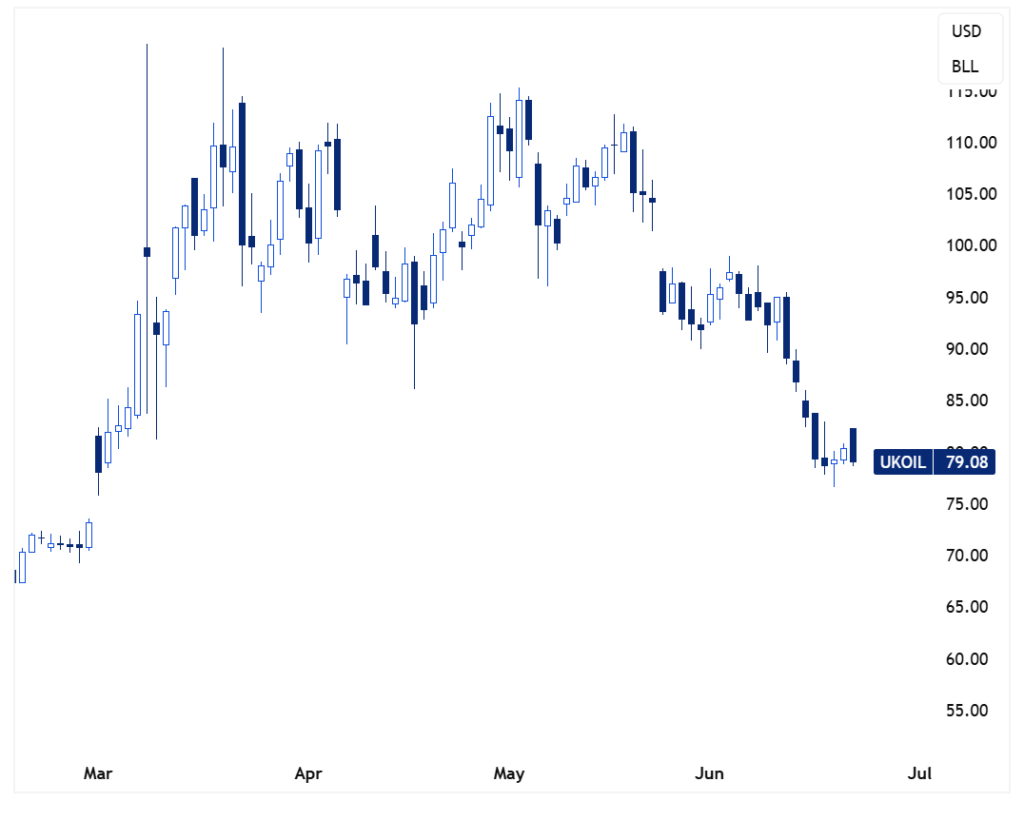
Oil markets had initially shrugged off the diplomatic uncertainty. Brent fell around 8% last week, dropping to its lowest level since early March. It is also down around 38% from April’s high, as shipping conditions through the Strait of Hormuz improved under the new deal.
America’s Biggest Banks Face Their Annual Stress Test
The Federal Reserve releases its annual bank stress test results on Thursday, a key gauge of whether the US financial system can absorb shocks without curbing lending or requiring capital buffers to be raised.
Last year, 22 of the largest US banks passed, maintaining strong capital levels even after absorbing severe hypothetical losses. This year, the pool expands to 32 banks, tested against a scenario involving a sharp global recession, collapsing real estate values, and stressed corporate debt markets.
While results won’t directly alter capital requirements this cycle, they will shape investor expectations around dividends, share buybacks, and each bank’s lending capacity heading into the second half of the year.
US Inflation and Growth Return to Focus
Thursday’s US PCE Index and final Q1 GDP estimate will offer another look at inflation pressures and the strength of the economy during the first quarter.
Headline PCE inflation reached 3.8% YoY in April, while core PCE rose to 3.3%. The second GDP estimate showed the economy expanding by 1.6% in Q1, down from the initial reading of 2%.
With the Fed keeping the possibility of a rate hike on the table, both releases will be closely watched for signs of persistent inflation and resilient economic growth.
Global PMIs: Will Europe Stay Stuck While the US Pulls Ahead?
Flash PMI data will be released globally, with the focus will be on the EU, the UK and the US, which will provide an early estimate on how business activity performed in June, covering both manufacturing and services sectors.
May’s composite readings showed a mixed picture. Activity in the US remains strong, while the eurozone and UK both recorded readings of contraction.
The latest figures will show whether weakness in Europe continued into June and whether the US economy maintained its momentum as businesses faced higher costs and continued global uncertainty.
Inflation and Jobs Data Could Sway the RBA
With the RBA still working to bring inflation back to target, this week’s data releases will test whether that progress is holding. Annual CPI eased to 4.2% in April, down from 4.6%, though trimmed mean inflation ticked up to 3.4%, keeping the door open to further rate hikes.
The labor market adds another layer of uncertainty. The unemployment rate recently climbed from 4.3% to 4.5%, with the economy shedding 18,600 jobs, a sign that higher rates are beginning to bite.
Wednesday brings the latest CPI figures, followed by labor market data on Thursday. Together, they will give markets the clearest read yet on whether the RBA’s next move is a cut or another hike.