ar
ar
Markets face a pivotal week, with a full run of US labor data set to reveal whether hiring is genuinely losing momentum or holding steady, which could reshape expectations for the Fed’s next move.
Earnings from AMD and Palantir will test the strength of the AI trade, while New Zealand’s jobs report could sharpen the RBNZ’s rate debate.
Here’s what to watch.
Calendar Events
- US ISM Manufacturing PMI – Aug. 3
- US JOLTS Job Openings – Aug. 4
- New Zealand Unemployment Rate – Aug. 5
- US ADP Employment Change – Aug. 5
- US ISM Services PMI – Aug. 5
- Canada Unemployment Rate – Aug. 7
- US Non-Farm Payrolls – Aug. 7
- US Unemployment Rate – Aug. 7
- US Average Hourly Earnings – Aug. 7
Top Things to Watch
1. A Possible Ceasefire Deadline With No Details Yet
President Trump said talks with Iran would begin today, then promptly declined to say where they would take place, who would be involved, or when they would need to wrap up.
It is a striking pivot after a weekend Truth Social post urging Iran to “rapidly make a DEAL” to reopen the Strait of Hormuz and resolve the standoff over its nuclear program. Iran has kept the strait largely closed for weeks, driving oil prices and inflation higher.
This is not the first time the on-again, off-again war has swung toward talks. Trump has threatened escalation and then pulled back before, while fighting has continued to spread across the Gulf, into the Red Sea, and as far as Egypt.
What is new this time is that Iran’s foreign minister spent the weekend holding calls with Saudi and Pakistani officials, suggesting that real diplomatic groundwork is taking place in parallel.
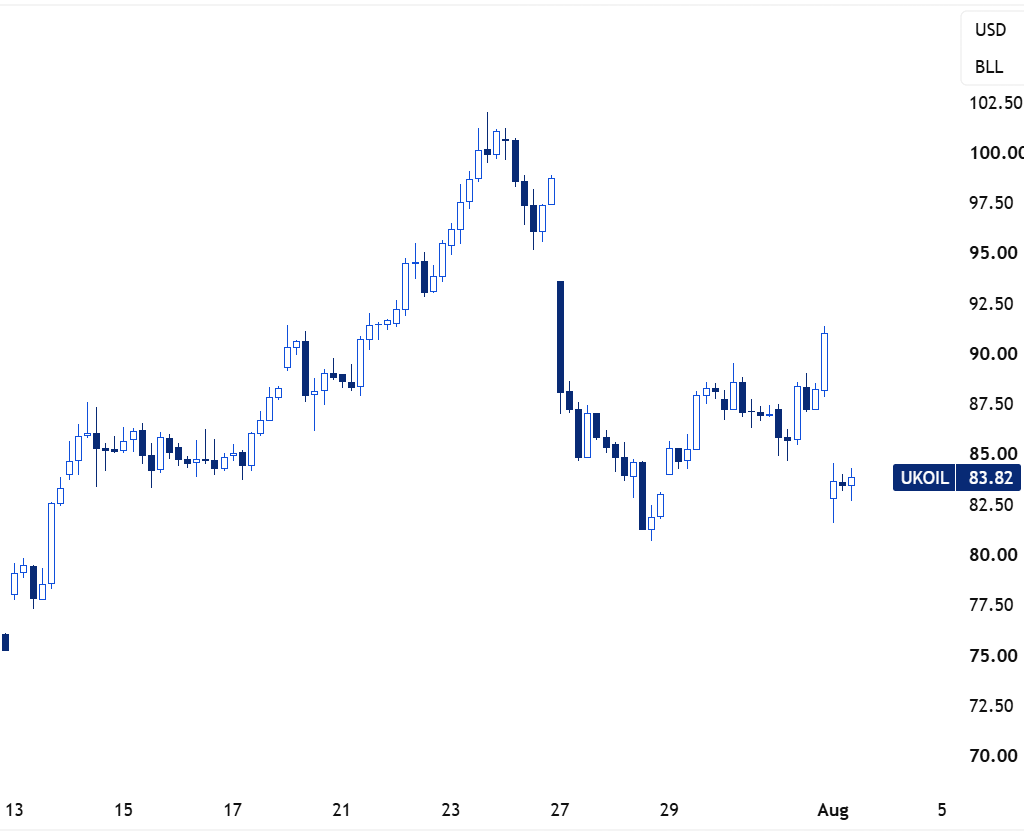
Markets did not wait for confirmation. Oil dropped by more than 5% within hours, the clearest sign yet of just how much war-risk premium had been priced into crude.
2. US Labor Market Data and ISM PMI
This week brings the heaviest data stretch of the summer, five separate releases that will shape how the Fed reads the labor market into its next meeting.
ISM Manufacturing PMI kicks things off on Monday, coming off June’s 53.3 reading, its sixth straight month of expansion, with production growth cooling and exports dipping. JOLTS follows midweek with June job openings data, as May’s report held steady at 7.6 million openings and 5.2 million hires, a sign of a labor market that’s cooling gradually rather than cracking.
ADP’s private payrolls report lands Wednesday, typically a preview of Friday’s bigger release, though the two have diverged sharply at times this year.
The main event is Friday’s labor market data report for July, where nonfarm payrolls take center stage after June’s shock print of just 57,000 jobs added, well below the 110,000 forecast. Markets will be watching closely whether July’s NFP confirms a real slowdown or bounces back toward trend, alongside unemployment, which held at 4.2% in June.
Taken together, this week gives the clearest read yet on whether hiring is genuinely cooling or just moderating from an unusually strong spring season, a distinction that matters directly for how the Fed decides its next move.
3. Palantir and AMD Earnings
Palantir starts the week with its Q2 earnings on Monday after the closing bell, with EPS expected to more than double and revenue projected to rise roughly 80–81% YoY.
Q1 delivered 85% revenue growth and a 60% adjusted operating margin. Recent momentum has been fueled by an expanded NVIDIA partnership and government contracts, though the stock has still lagged the broader market this year on valuation concerns.
AMD will report its Q2 results on Tuesday, after the closing bell, guiding revenue to roughly $11.2 billion, up around 46% YoY. Data Center revenue jumped 57% last quarter as demand for AI server chips accelerated.
Both reports will show whether AI-driven demand, on the hardware side for AMD and the software side for Palantir, still has room to run.
4. New Zealand Labor Market Data
New Zealand’s Q2 labor market data is due on Wednesday, following its mixed Q1 performance. The unemployment rate actually eased to 5.3% in Q1, better than the 5.4% expected, but only because a drop in labor force participation reduced weak employment growth.
Westpac expects the unemployment rate to tick back up to 5.4% for Q2, with employment growth staying soft and wage growth remaining subdued given existing slack in the labor market.
Because labor data tends to lag, economists do not expect this release to fully reflect the second-round effects of this year’s oil-driven inflation spike. Even so, the figures will give the RBNZ an updated view of labor market conditions as it considers the future path of interest rates.