ar
ar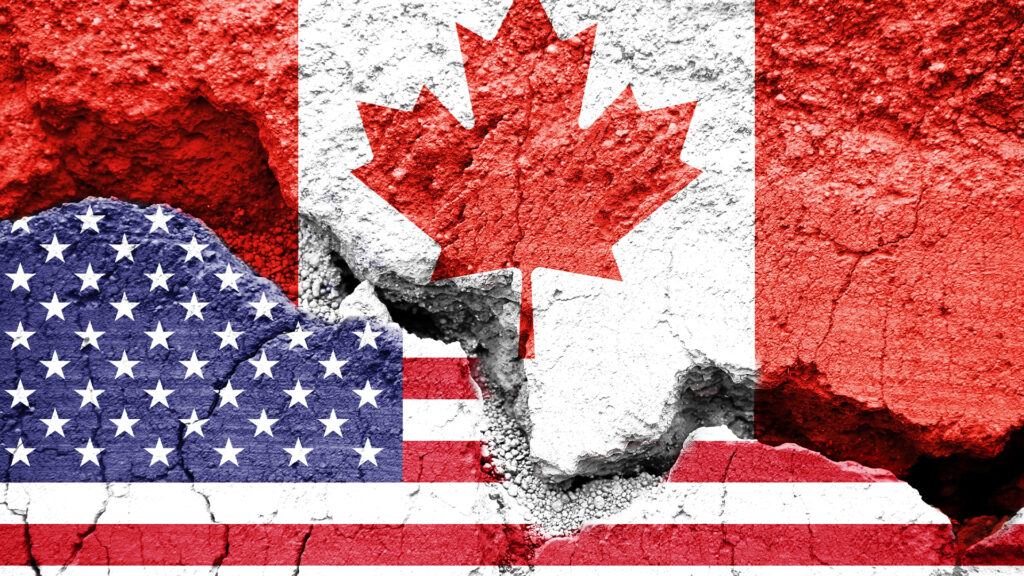
- Trump delayed planned 50% tariffs on Canadian imports for three days as Washington and Ottawa work to finalize a preliminary trade agreement.
- The tariffs would affect around $20 billion worth of Canadian goods and could severely disrupt smaller exporters, supply chains and US consumer prices.
- Auto tariffs and vehicle-content rules remain unresolved, leaving markets focused on whether the temporary truce becomes a lasting agreement.
The United States and Canada stepped back from a fresh trade escalation just hours before new tariffs were due to take effect. President Donald Trump announced a three-day suspension after saying the two countries had reached an agreement subject to final documentation.
Canadian Prime Minister Mark Carney was more cautious, saying substantial progress had been made but important work remained. The short reprieve removes the immediate tariff threat, but it gives negotiators little time to turn the preliminary agreement into a finalized deal.
A Deal, But Not Yet Finalized
Trump announced the pause in a social media post late yesterday, stating that the decision was based on the fact that Canada and the US have reached a deal. Canadian Prime Minister Mark Carney responded by saying that progress had been made, though more work still needs to be done.
The US Trade Representative‘s office said the emerging deal would include comprehensive market access for American goods, economic security commitments, and digital trade alignment. ⁽¹⁾
Trump said he had received Canada’s commitment to address US concerns tied to duties on dairy products, alcoholic beverages, and motor vehicles. Neither government has confirmed the full details of the agreement. ⁽²⁾

A 50% Tariff Threat on $20 Billion of Goods
The tariffs that were paused would have applied under Section 338 of the Tariff Act of 1930, a Depression-era law that was never previously invoked by a US president. They were unveiled last month in response to what the Trump administration described as unfair Canadian trade practices in the auto, alcohol, and dairy sectors. ⁽³⁾
The new duties would have covered around $20 billion worth of Canadian goods, including products like hockey sticks and wine.
While that is a small share of the $382 billion in goods the US imported from Canada last year, the size of the tariff, 50%, would have made many of the targeted products too expensive to sell profitably in the US market. ⁽⁴⁾
Businesses Warned of Severe Disruption
Industry groups warned the duties could bring US sales to a near halt, and some businesses had already seen American buyers delay orders in anticipation. ⁽⁵⁾
The US Chamber of Commerce also warned that higher tariffs could raise costs for American families, disrupt supply chains and threaten the 13 million US jobs connected to the broader North American trading relationship under the USMCA. ⁽⁶⁾
Auto Tariffs and Unresolved Issues
Even with the pause, several disputes remain unresolved. Auto tariffs have been a major sticking point in the talks. Negotiators have reportedly discussed lowering US tariffs on Canadian vehicles from 25% to 15%, with further cuts tied to how much US content each vehicle contains. ⁽⁷⁾
However, the two sides disagree on how that content should be measured, with the US wanting to count only American-made parts, while Canada wants all North American content, including Mexican and Canadian parts, included.
Separately, the US Commerce Department introduced new rules requiring automakers to recertify their US content levels by September 30 in order to qualify for tariff deductions starting in December. ⁽⁸⁾
A Surprise Mention of Keystone XL
In the same social media post announcing the tariff pause, Trump raised the possibility of reviving the Keystone XL pipeline, a cross-border project that was cancelled by the Biden administration in 2021 after years of environmental and indigenous opposition. Trump gave no further details on what reviving the pipeline might involve. ⁽⁹⁾
Three-Day Deadline Keeps Markets on Alert
For now, the truce buys both sides time. Canadian officials, including trade minister Dominic LeBlanc, have been in Washington for talks with US Trade Representative Jamieson Greer and Commerce Secretary Howard Lutnick.
With documents still being finalized, markets will be watching closely for confirmation that the truce holds beyond the initial three-day window. The Canadian dollar rose slightly against the US dollar after the announcement of the deal.