

 ar

The Russell 2000, the benchmark index which tracks 2,000 small cap US stocks, has been the main focus of stock market traders and investors in recent weeks. With shifting interest rate expectations, stabilizing energy markets, and evolving macro conditions, the index continues to draw attention from analysts and investors.
Why Small Caps are in the Spotlight
The Russell 2000 is now up more than 5% YTD, holding up well against the broader market while the S&P 500 is trying to break even after a 7% drawdown. Small cap companies usually produce most of their revenues domestically compared to large multinational corporations.
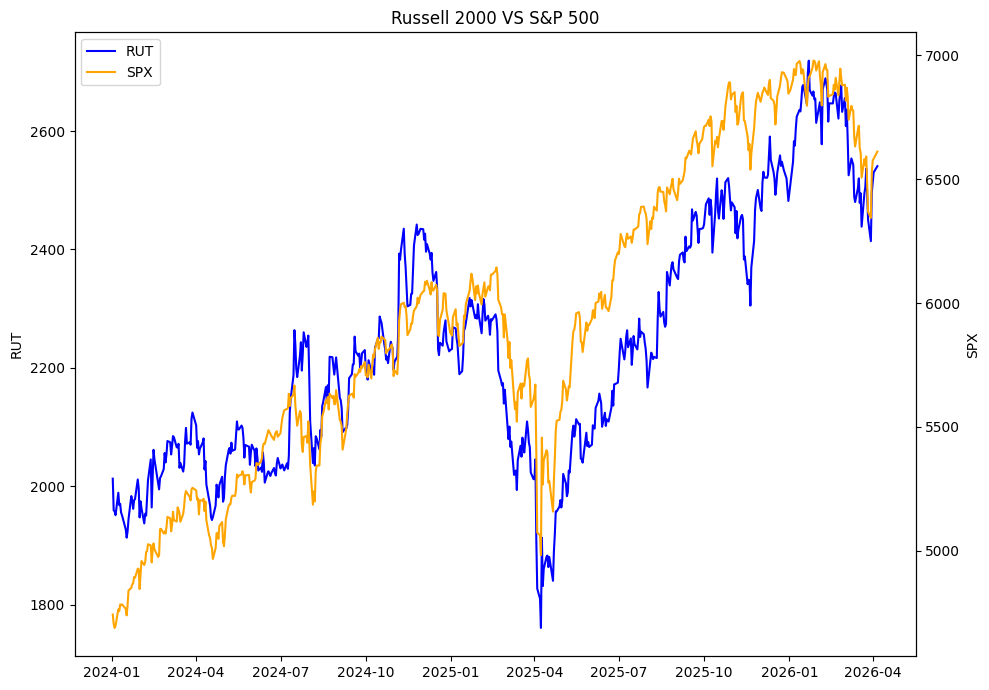
In the current environment, where global markets were impacted by the Middle East conflict which previously sent oil prices above $100 per barrel for the first time since 2022, that domestic revenue profile has drawn interest from market participants monitoring exposure to global supply chain risk and currency fluctuations.
The Russell 2000 is trading at a lower valuation than the S&P 500, with a P/E ratio of around 18 versus roughly 26, meaning investors are paying significantly less for small-cap earnings.
This gap is considered historically wide, as the difference between small-cap and large-cap valuations is larger than usual. However, lower valuations do not automatically signal buying opportunities, as cheap assets can remain discounted without a clear catalyst such as improving growth or easing financial conditions.
Federal Reserve and Interest Rates Context
The Federal Reserve’s monetary policy is a recurring theme in discussions that involve small-cap stocks, where they tend to carry more variable rate debt than large companies which makes them more sensitive to changes in the Fed Funds Rate.
In its previous meeting, the Federal Reserve kept interest rates unchanged at 3.75% due to inflation expectations from higher oil prices. Before the conflict in the Middle East, financial markets were pricing a 61% chance of a rate cut in April.
Fed Chair Powell has flagged recent weaknesses in the labor market, though officials have also signaled caution around persistent inflationary pressures. With energy prices now stabilizing due to the ceasefire, expectations might begin to shift again toward how quickly inflation pressures may ease.
However, the latest labor market report showed that the US economy added 178K jobs, with the unemployment rate ticking back down to 4.3%, following a revised decline of 133K in February. This combination of mixed employment and inflation risks will be a key driver of policy expectations, and by extension, the operating environment for small caps.
Yields and Correlation: A Regime-Driven Signal
Here, we break down the relationship between the Russell 2000 and US 10-Treasury yield, which has remained dynamic as shown in the chart below.
Instead of moving in a fixed path, the correlation between the two assets has been swinging wildly between positive and negative territories over the past 5 years, which highlights the sensitivity of small caps to major changes in macroeconomic factors.
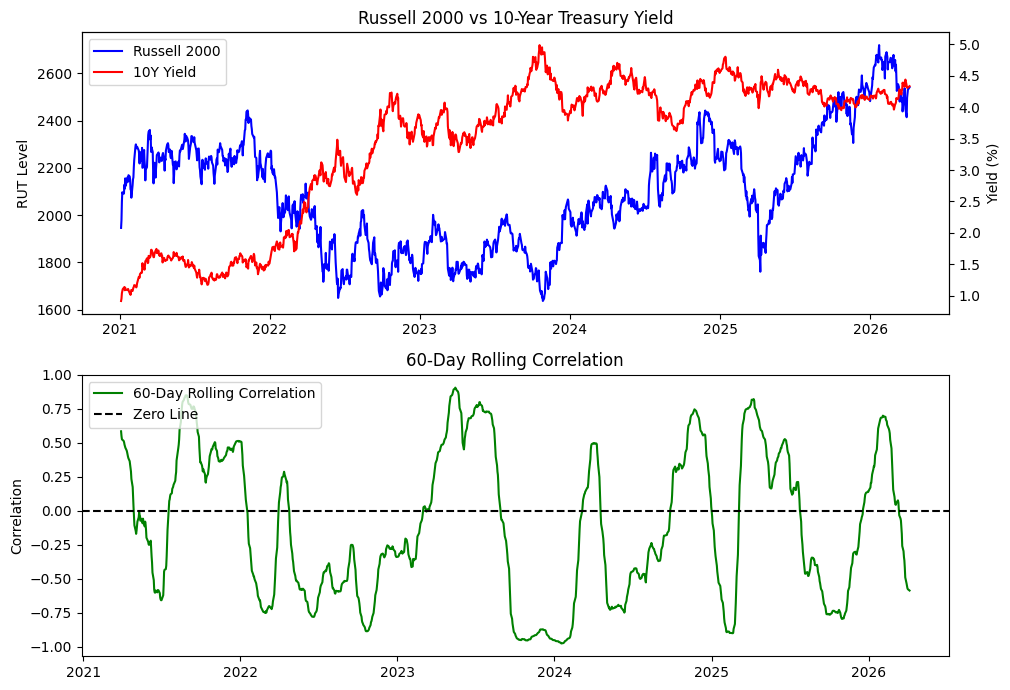
US Treasury yields are considered relevant macro indicators, especially nowadays when the Fed changed its tone during its recent meeting as it now is assessing inflation risks, which could keep rates elevated. Small cap stocks are sensitive to rate changes.
The correlation has turned negative recently, indicating that higher yields are pressuring small caps. At the same time, the Russell 2000 doesn’t just react to yield changes, but also to their main drivers. During times of growth and optimism, yields and stocks move up while in an inflationary environment or policy tightening, the relationship breaks between them.
Looking Ahead
Markets will now focus on the upcoming CPI report, which is due on Friday and will indicate how high energy prices are feeding into broader price pressures. With geopolitical risks easing following ceasefire developments, the focus is increasingly shifting back toward inflation data and Federal Reserve policy expectations as the primary drivers of market direction.


