

 ar
The US economy is facing a growing set of challenges. Rising oil prices, a weakening job market, and the current Middle East conflict are all pushing economists to raise their recession warnings.
While a downturn is not certain, the risks are higher than they have been in years, and policymakers are running out of easy answers.
Recession Odds Are Rising
Due to past data, economists are now raising their expectations of a possible recession in the next 12 months, averaging around 20%.
Moody’s Analytics said that the risk of a recession is at 48%, with a warning that this number could go even higher if the Middle East conflict drags on. ⁽¹⁾
Goldman Sachs recently raised its estimate to 30%, up from 25% just weeks earlier, a sign of how quickly the picture is changing. These are not certainties. But they are a clear signal that something has shifted. ⁽²⁾
Geopolitical Risks Add Pressure to the Economy
History tends to show a repeated pattern. Nearly every US recession since the Great Depression was preceded by an oil shock, except during COVID, when oil prices fell sharply.
Gas prices have risen by more than a dollar per gallon in the past month alone. That represents a jump of 35%, according to the AAA Gas Prices institution. When energy costs go up, businesses and consumers feel it across the board. ⁽³⁾
Goldman Sachs points to a combination of forces hitting the economy at the same time: geopolitical tensions, slowing growth, and fading policy support. The bank does not call it a single trigger, but instead, a pile-up.
The Job Market Is Showing Cracks
Beyond the oil crisis, the US labor market remains a headache for the US economy, with only 181,000 jobs added in 2025, which is considered very weak.
In February alone, the economy lost 92,000 jobs. The unemployment rate ticked up to 4.4%, but economists note that this is largely because fewer people are being fired rather than because hiring is strong.
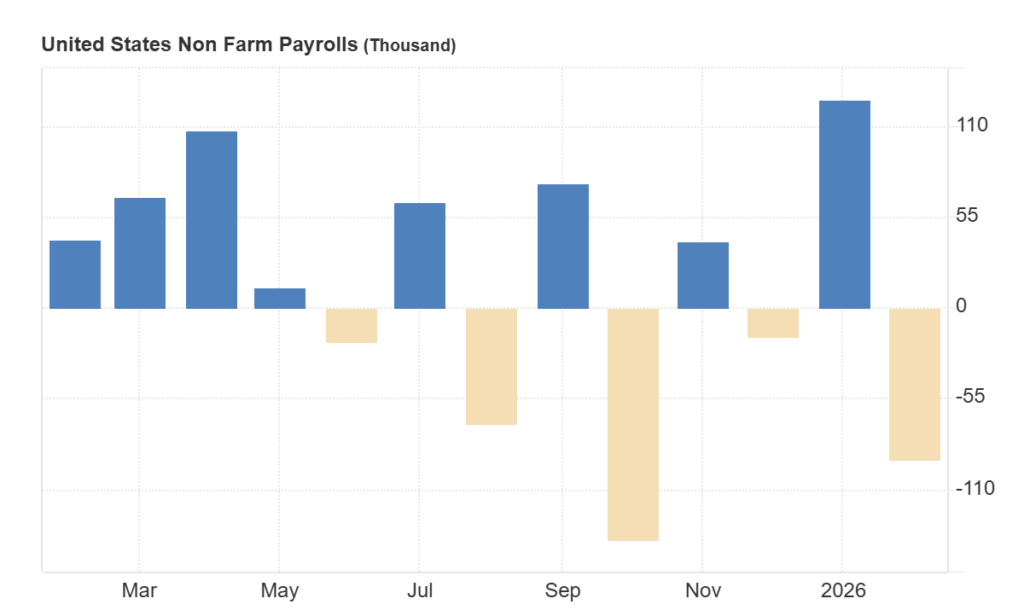
That kind of narrow job growth is fragile, and consumer spending, which drives more than two-thirds of all economic growth, depends heavily on people staying employed.
Is This Stagflation?
The combination of rising prices and slowing growth has revived a word that many Americans associate with the difficult 1970s period of stagflation. Federal Reserve Chair Jerome Powell pushed back against that label after the Fed’s most recent meeting, where it held its interest rate steady at 3.75%.
Consumer sentiment is poor, especially among lower-income households hit hardest by higher prices. GDP grew at just 0.7% in the fourth quarter of 2025. ⁽⁴⁾
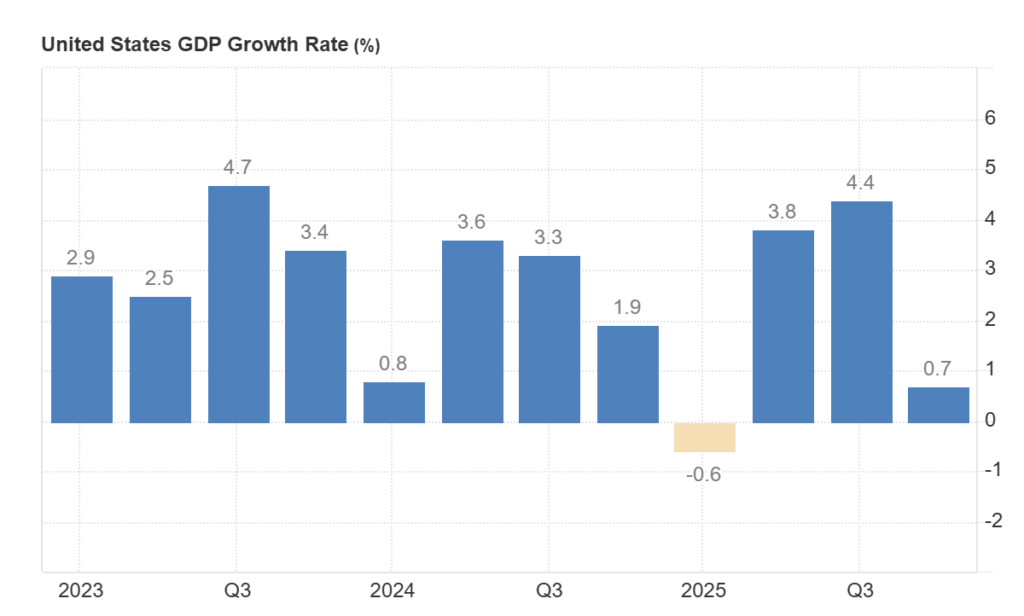
The Atlanta Fed’s GDPNow tracker puts first-quarter 2026 growth at around 2%, a modest rebound, but not enough to put concerns to rest. ⁽⁵⁾
Inflation is still above the Fed’s 2% target, with CPI recently coming in at 2.4% YoY, while core CPI hit 2.5% YoY.
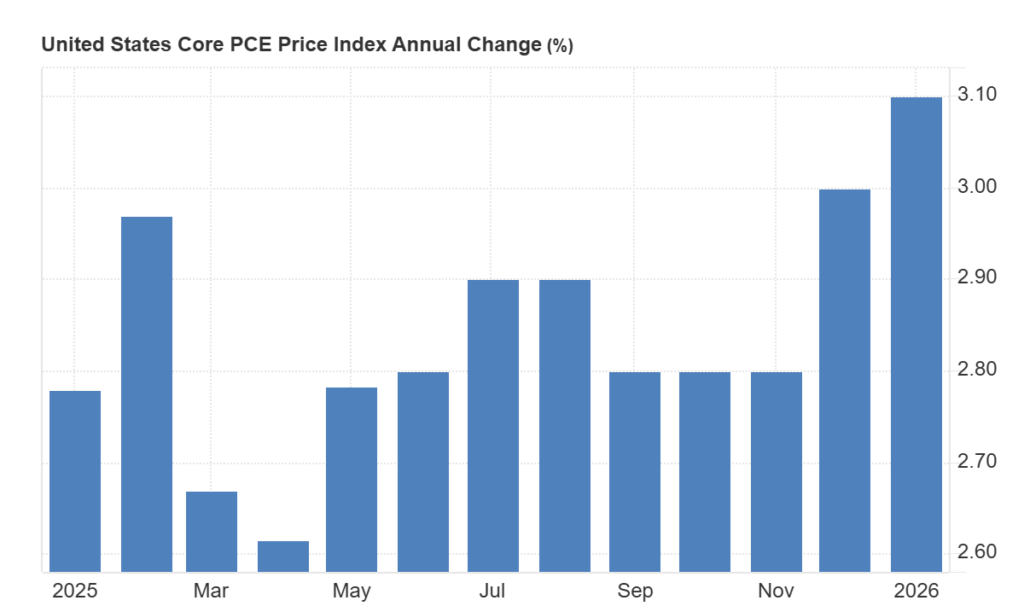
Some economists already see the latest CPI report as backward-looking and outdated, capturing a period of relative calm before the effects of oil prices on inflation. The Fed’s preferred measure, the PCE index, came in at 2.8% YoY, with core PCE at 3.1% YoY in January. ⁽⁶⁾
Goldman Sachs argues that the US economy was already losing momentum before the oil shock hit. Add in labor market weakness and the fading impact of earlier fiscal stimulus, and the backdrop becomes noticeably fragile. Goldman now expects US growth to slow to between 1.25% and 1.75% in the second half of 2026. ⁽⁷⁾
Is There a Way Out?
Not everything points downward. Goldman Sachs still puts the odds of avoiding a recession at 70%, as potential rate cuts in the second half of the year could provide some relief. If a peace deal in the Middle East comes together quickly, much of the pressure on oil prices could ease. ⁽⁸⁾
The One Big Beautiful Bill passed in 2025 is expected to provide some economic lift through lower regulations and stronger tax refunds. A sustained rise in domestic energy production also works in the economy’s favor.
The outlook has clearly become more complicated. Recession is not the base case, but the margin for error is shrinking.
With oil prices rising, hiring losing momentum, and inflation still limiting the Fed’s flexibility, the US economy is entering a period where shocks may carry more weight than they did a few months ago.


