

 ar
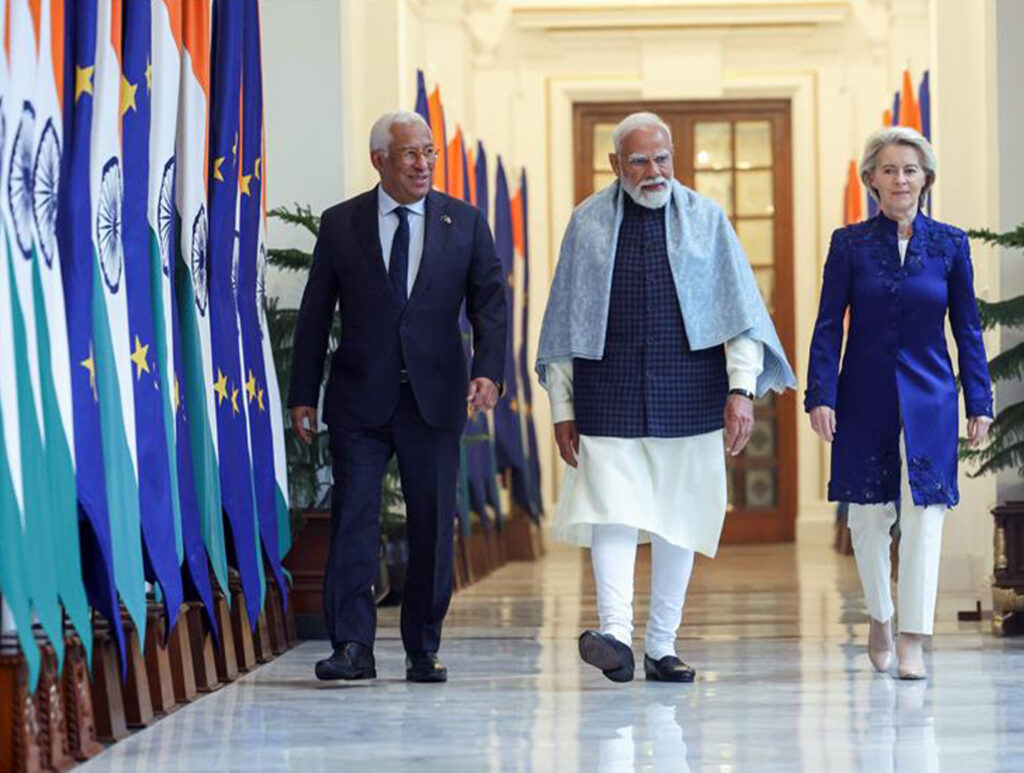
- India and the European Union have reached a major trade deal, ending negotiations that spanned almost twenty years.
- The trade deal includes the removal or reduction of tariffs on European exports to India, in exchange for an open market from India.
- After the US hit India with tariffs last summer, India has found alternative trading partners, easing the pressure from US tariffs.
India and the European Union have reached a major trade agreement after nearly twenty years of negotiations.
India’s Prime Minister Modi and EU Commission President von der Leyen announced the development on Tuesday, describing it as a landmark deal that connects economies representing about one-quarter of global output.
The deal lands as governments worldwide look to diversify trade ties, with relations with the United States growing less predictable.
Background and Economic Impact
The negotiations between India and the EU began almost two decades ago, before finally reaching completion.
Now finalized, the deal will allow India to open its large, protected market to free trade with all nations in the European Union.
Trade between India and the EU reached $136.5 billion in the fiscal year ending March 2025. The deal creates a combined market of 2 billion people and represents about 25% of global GDP and roughly one-third of global trade. ⁽¹⁾
The deal would reduce India’s tariffs on European products by around 4 billion euros ($4.7 billion) a year. The deal has also reduced or removed high tariffs on agricultural products exported from Europe, such as wine and olive oil. It also keeps European agricultural sectors like beef, chicken meat, rice and sugar protected from imports from India. ⁽²⁾
Key Sectors and Benefits
Prime Minister Modi highlighted several Indian industries that look to gain from this agreement. Those sectors include textiles, gems and jewelry, leather products, and shoes.
India’s main exports to the EU consist of machinery and appliances, chemicals, base metals, mineral products, and textiles. Meanwhile, the EU primarily exports machinery and appliances, transport equipment, and chemicals to India. ⁽³⁾
India also plans to reduce tariffs on European cars gradually from 110% to 10% and remove tariffs on car parts after five to ten years. Some major European automobile companies in India include Renault, Volkswagen, BMW, and Mercedes. ⁽⁴⁾
The United States Factor
The rush to complete these trade agreements also reflects concerns about trade relations with the United States. President Trump imposed a 50% tariff on goods from India in August of last year.
An India-US trade deal fell apart last year after communication between the two governments broke down. For India, this EU deal provides important relief from American tariffs.
Since the US imposed its tariff, India has actively sought alternative markets and completed trade agreements with Britain, New Zealand, and Oman.
Trade Comparison
According to trade data, India’s exports to six major EU markets totaled $43.8 billion in nine months last year, compared to $65.88 billion in exports to the US alone.
In 2024, India’s trade surplus with the US stood at $45.8 billion, while the surplus with the EU was smaller at $25.8 billion. India ranks as the ninth largest trading partner of the EU, accounting for 2.4% of the bloc’s total goods trade in 2024. ⁽⁵⁾
Final Thoughts
The India-EU free trade agreement marks a turning point in global trade relationships. After two decades of negotiations, the deal brings together economies that represent a quarter of world output. The formal signing will happen after a legal review process, which is expected to take five to six months.
Trade experts note that while the deal represents a major achievement, it does not eliminate India’s need for a trade agreement with the United States, which still remains India’s largest export market. ⁽⁶⁾


