ar
ar
For investors in the UAE, crude oil is more than just another market to watch. Oil sits at the heart of the region’s economy, making its price movements closely tied to the events, policies, and global forces that shape financial markets.
But you don’t need to be an energy expert or work in the oil industry to understand how to trade crude oil.
From OPEC decisions and geopolitical events to movements in the US dollar and economic sanctions, several factors can send oil prices sharply higher or lower, sometimes within hours. For beginners, the challenge is knowing which developments actually matter and how to translate them into what you see on an oil price chart.
In this guide, we’ll explain how crude oil trading works, what drives prices, how to read an oil chart, and what to consider when choosing a UAE-regulated trading platform.
We’ll cover:
- Why UAE traders are interested in oil trading
- How does crude oil trading work in the UAE?
- Fundamental analysis: Factors that affect oil prices
- Reading an oil chart: The importance of technical analysis
- How to trade crude oil in the UAE: Practical steps to get started
Do you want to learn more about the financial markets, including oil markets? Join Daman Markets Academy today to access expert-created tutorials and courses.
Why UAE Traders are Interested in Oil Trading
Before considering why UAE traders in particular are interested in oil trading, let’s explore why oil is a popular asset among traders generally.
Two factors are important to traders when selecting an asset class: liquidity and volatility. In other words, the asset must exhibit significant buying and selling activity, and its price must be responsive to supply and demand.
Crude oil qualifies on both grounds.
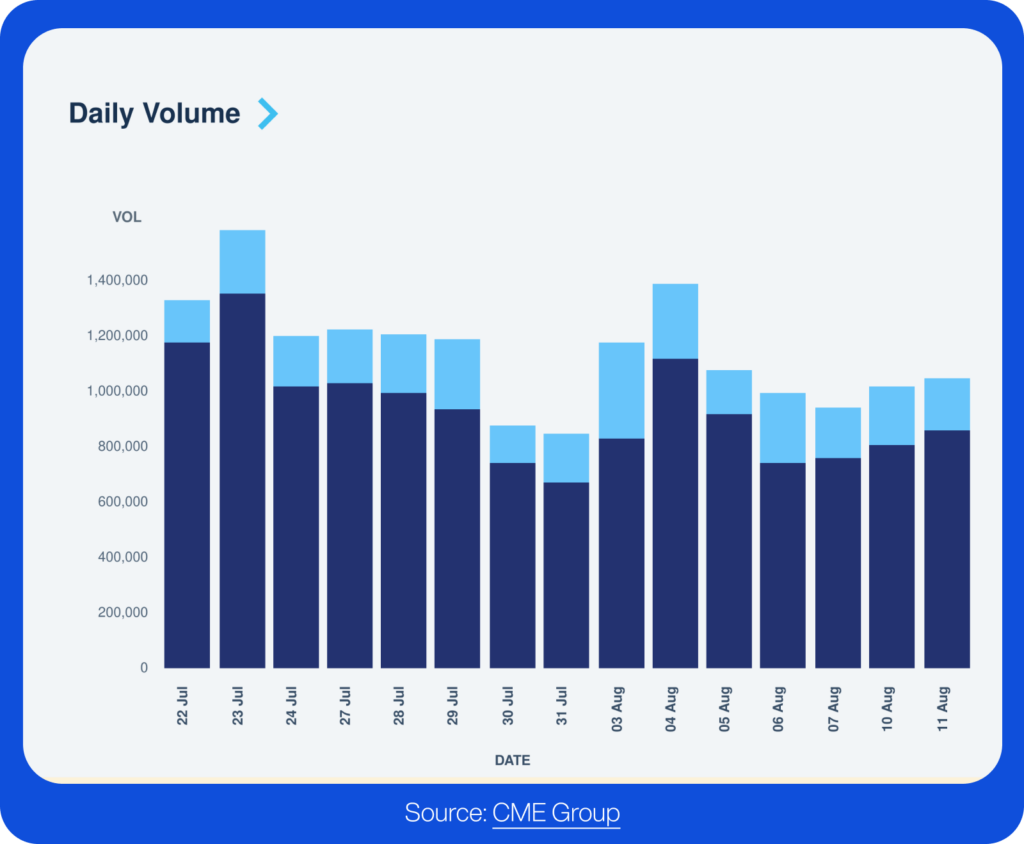
Regarding liquidity, crude oil futures are among the most actively traded commodities in the world. More than 1 million West Texas Intermediate (the benchmark for US oil) oil futures and options are traded every day, according to the Chicago Mercantile Exchange (CME) Group, a global financial exchange operator.
Daily Traded Volume of WTI Futures and Options
Similarly, crude oil is well known for its price volatility, as its price depends on global geopolitical and economic factors.
“Crude oil’s volatility is famously high,” according to Quantified Strategies, a platform for backtesting trading strategies. “CME analysts note that oil’s price reacts strongly to small shifts in supply/demand expectations. When inventories deviate slightly from trend, or OPEC announces surprises, prices can swing dramatically.
Now that we have established these two points, let’s turn to why crude oil is especially of interest to UAE traders:
- Impact of crude oil on the local economy: The UAE is an oil-producing country that has built part of its prosperity on the export of Murban crude oil and Upper Zakum crude oil.
Consequently, oil prices can influence government revenue, economic activity, business conditions, and investor sentiment across the nation.
Also, crude oil is priced in US dollars (USD), which means movement in the price of the dollar can affect crude prices. There is an additional factor: the UAE dirham is pegged to the USD, which makes changes in the dollar’s price especially important to the local economy.
In other words, crude oil is not just another asset for UAE traders; it is a fundamental determinant of how other asset classes might behave. Those who can improve their understanding of how to trade crude oil can find other opportunities in other financial markets (currencies, equities, bonds, etc.).
- Access to a local benchmark: There are two main international oil benchmarks: Brent Crude Oil, which originates in the North Sea and is used to price about two-thirds of global oil trade, and WTI, which originates in the US and is the benchmark for North American oil markets and CME Group futures.
UAE traders also have access to Murban crude oil contracts through ICE Futures Abu Dhabi, a key exchange for the Middle Eastern energy markets. This means they are not limited to Brent Crude Oil and WTI and can create crude oil trading strategies adapted to the local benchmark
- Strategic location: The UAE is positioned between Asia and Europe, which gives UAE traders exposure to Asian demand for and Western supply of oil. In addition, as we have seen, UAE traders have access to local benchmarks like Murban crude oil.
Thus, they can hedge one benchmark with another or explore arbitrage opportunities across Western and Eastern markets.
- Regional hub: The UAE has become a regional hub for energy trading due to a combination of advanced trading platforms, strong regulations, and ADNOC’s modernization efforts.
The ICE Futures Abu Dhabi offers access to Murban crude futures, while the Gulf Mercantile Exchange (formerly Dubai Mercantile Exchange) lists Oman crude futures. Also, financial centers in Abu Dhabi Global Market and Dubai International Financial Centre host brokers, clearing houses, and commodity funds.
Time-zone overlap between Asian and European markets also supports nearly 24-hour trading cycles.
How Does Crude Oil Trading Work In the UAE?
UAE traders interested in crude oil trading have to select a financial instrument through which they would gain exposure to crude oil prices. The instrument they select will determine what the rest of the process would look like.
Trading Crude Oil Futures and Options
Crude oil futures are standardized contracts that allow traders to buy or sell crude oil at a predetermined price (instead of the spot price) on a future date. A futures contract is an agreement to take delivery (or settle in cash) of a specific quantity of crude oil (typically 1,000 barrels per contract) at a set price and date.
Traders buy or sell futures contracts based on their expectations of the path of crude oil prices. If prices rise, the buyers profit, and vice versa. Also, futures are marked-to-market each trading day, meaning gains and losses are reflected in the trader’s margin account. Positions can also generally be offset before expiry, allowing traders to exit without proceeding to settlement.
UAE traders can buy and sell crude oil futures through the following exchanges:
- ICE Futures Abu Dhabi (IFAD), for Murban Crude
- Dubai Mercantile Exchange (DME), for Oman Crude
- Intercontinental Exchange, for Brent Crude Oil
- CME Group (which acquired New York Mercantile Exchange(NYMEX), for WTI Crude
Similar to futures are option contracts. An option contract gives the buyer the right but not the obligation to buy or sell crude oil at a set price before or on a specific date. The option buyer can exercise the right or allow it to expire worthless (losing the option fee paid). Consequently, the responsibility of the option seller (or option writer) depends on whether the buyer exercises the option or not.
Oil options can be used for hedging or speculation. Buyers pay a premium for the right, but not the obligation, to exercise the option, while sellers receive the premium in exchange for taking on the corresponding obligation if the option is exercised.
UAE traders can purchase oil options on WTI crude through CME Group and on Brent Crude Oil through ICE.
To access these exchanges (for options and futures contracts), UAE traders use both local and international brokers.
Trading CFDs on Crude Oil
Contracts for difference (CFDs) are financial derivatives that mirror the price of an underlying asset. With crude oil CFDs, UAE traders can gain exposure to oil price movements without owning or delivering physical barrels.
Also, traders use CFDs to speculate on price direction, going long when they believe the price will rise and going short when they believe it will fall. The profit or loss on a CFD is based on the difference between the opening and closing price of the contract.

Furthermore, CFD brokers offer leveraged exposure, which can amplify returns, even though it can also magnify losses.
CFD brokers in the UAE (local and international) offer exposure to WTI and Brent Crude Oil.
Trading Crude Oil Stocks
Some UAE traders who can’t deal with the complexity of financial derivatives prefer to purchase the stocks of energy companies. Since the stock price of these companies depends heavily on crude oil prices, exposure to their stock is one way, albeit indirect, to bet on crude oil.
There is a similar tendency even in the US.
“I’ve found that many investors in the US use major oil company shares, like XOM, CVX, or BP as their proxy, or even pipeline companies or drillers rather than being directly in the crude markets,” according to Andrew Fately, Principal at FXP Hedge Consulting, a foreign currency hedging consultancy firm. “This is because unless you are a sophisticated investor, futures can be difficult, especially as different contracts have different terms, and you must continuously post margin, which for retail traders can be quite difficult.”
Many local and international trading platforms offer access to the stocks of both local and international oil companies.
Trading Crude Oil ETCs or ETFs
To minimize company-specific risk, some UAE traders invest in a basket of energy companies (through exchange-traded funds) rather than selecting a few. Most platforms that offer access to energy stocks also list energy ETFs.
Similar to ETFs are crude oil exchange-traded commodities (ETCs). These are debt securities that track the price of crude oil by trading crude oil futures or swaps. In other words, investors own a share of the ETC while the ETC itself owns crude oil futures or swaps that mirror oil’s price movements.
ETCs are listed on stock exchanges, and they can be bought or sold like every other stock. Also, when investors sell their shares in an ETF, they receive fiat money rather than barrels of crude oil.
Brokers that offer access to international crude oil stocks and ETFs also list popular ETCs (usually from iShares, Invesco, and WisdomTree).
Fundamental Analysis: Factors that Affect Oil Prices
As said above, oil is a volatile commodity. This is because oil prices (whether Brent, WTI, Murban, or Oman) are influenced by a complex mix of global, political, and economic forces.
UAE traders interested in oil must, therefore, get a good grasp of what these forces are and how they usually affect oil prices.
Below are the most important:
- Supply and demand forces: When OPEC+ cuts production, prices can surge, depending on the volume. Also, a surge in demand (which we are seeing from Asia, especially China, as reported by Reuters) can cause prices to rise.
Conversely, oversupply by oil-producing countries or weak demand (the kind we experienced during the pandemic) can cause prices to fall.
- Geopolitical tensions: Conflicts in major producing regions (the Middle East, Russia, and Africa) can cause supply disruption, which can also cause prices to rise.
Recently, we saw how this played out when Iran closed the Strait of Hormuz due to regional tensions.
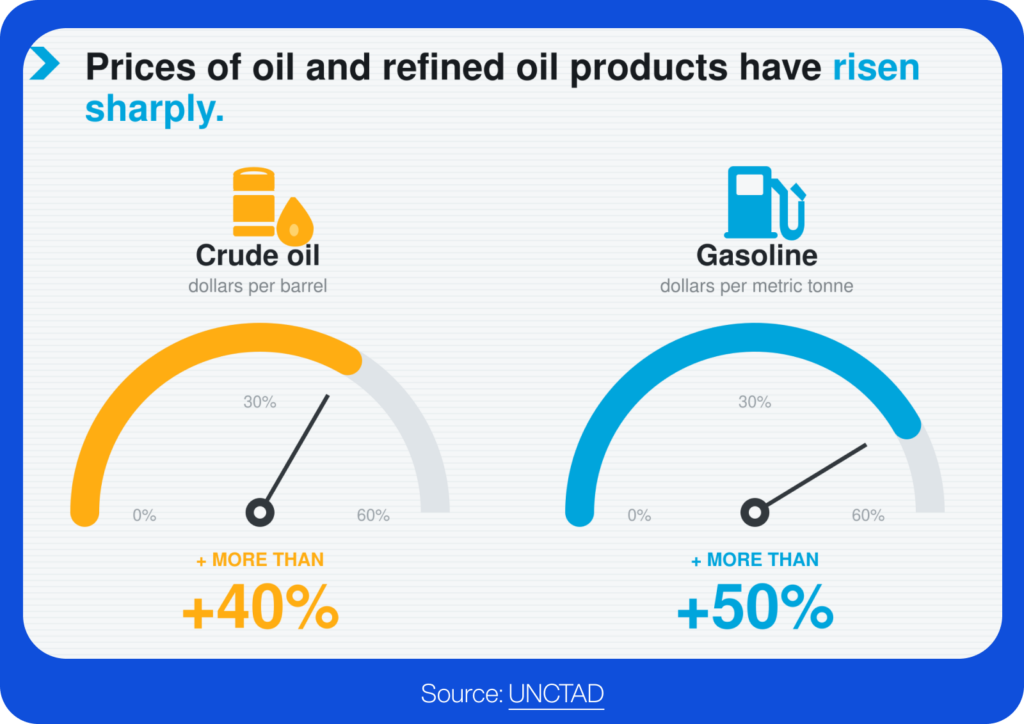
Average oil prices increased by 40% from the period between 1 January 2024 and 27 February 2026 to the period following the military escalation (28 February 2026 – 28 May 2026), according to the UN Conference on Trade and Development (UNCTAD).
Effect of the Closure of the Strait of Hormuz on Oil Prices
- Currency fluctuations: Oil is priced in USD, so USD volatility can also drive oil prices. When the dollar strengthens (for whatever reason), oil becomes more expensive in other local (weaker) currencies, and vice versa.
- Market speculation: Speculative trades by futures traders and large hedge funds can also amplify volatility in both directions.
- Inventory and storage: Oil prices are also influenced by how much crude is stored and where. When oil inventories rise, it signals that supply exceeds demand, which puts downward pressure on price. On the other hand, lower inventories signal that demand exceeds supply, which puts upward pressure on prices.
This is why traders monitor weekly inventory reports from the US Energy Information Administration (EIA) and S&P Global Platts.
- Demand by refiners: When crack spreads (margins earned by refiners when they turn crude oil into other products) are high, demand for crude oil increases as refiners want to boost their production. On the other hand, when the crack spread falls, demand for crude oil can fall. This rise and fall in demand can affect prices, depending on inventory levels.
However, the capacity of refiners is a relevant factor in this relationship.
“Recent record high crack spreads have led to a significant increase in crude production so that refiners can take advantage, but the problem is refineries around the world are maxing out already,” noted Fately.
If crack spreads are rising, but refining capacity is maxed out, refiners cannot absorb the higher crude oil supply, which can lead to higher inventories.
- Economic indicators: Oil prices often move in tandem with broader economic trends like GDP growth, inflation rates, interest rates, employment data, manufacturing and PMI reports, and consumer confidence data. For example, strong economic expansion increases industrial activity and transportation needs, which boosts oil demand.
- External shocks: Natural disasters, pandemics, and technological disruptions can also affect supply chains and lead to volatility in oil prices. For example, the COVID-19 pandemic caused oil demand to fall, leading to excess supply and a drop in oil prices.
Reading An Oil Chart: The Importance of Technical Analysis
Beyond these fundamental factors, oil traders also monitor technical charts to understand past price movements and forecast future ones.
Though commodities markets are volatile, they also reveal patterns that are visible on a price chart.
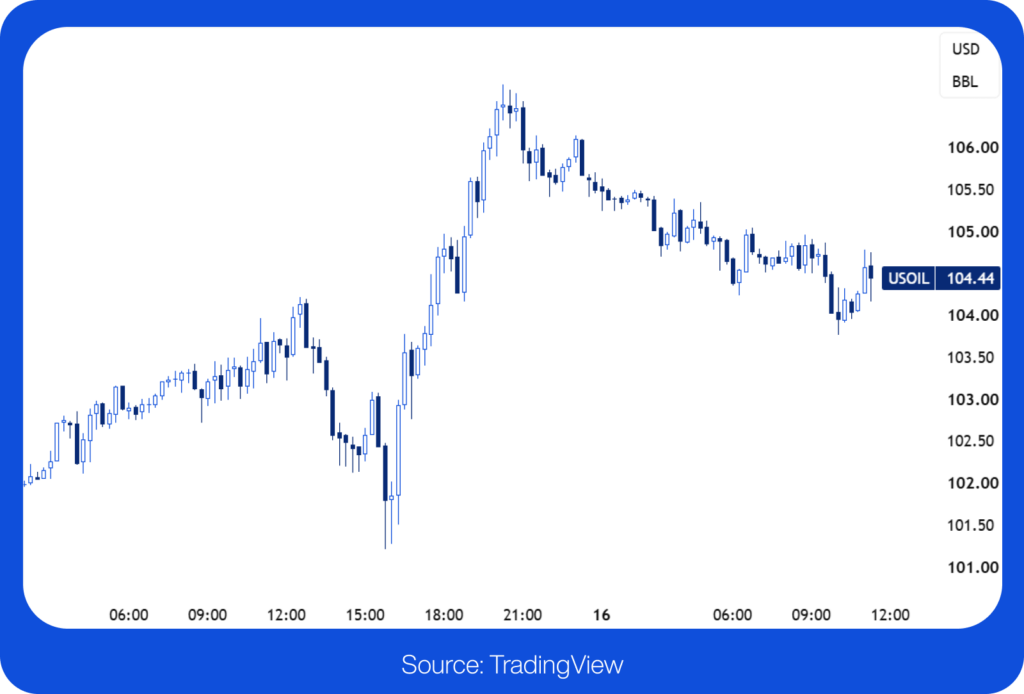
Below is the chart of the spot price of WTI crude oil at the time of writing:
WTI Price Chart
Below are some popular ways traders use technical analysis for crude oil trading:
- Understanding broader market direction: The oil market (irrespective of the benchmark) can be in an uptrend, downtrend, or consolidation.
Uptrending, Downtrending, and Consolidating Markets
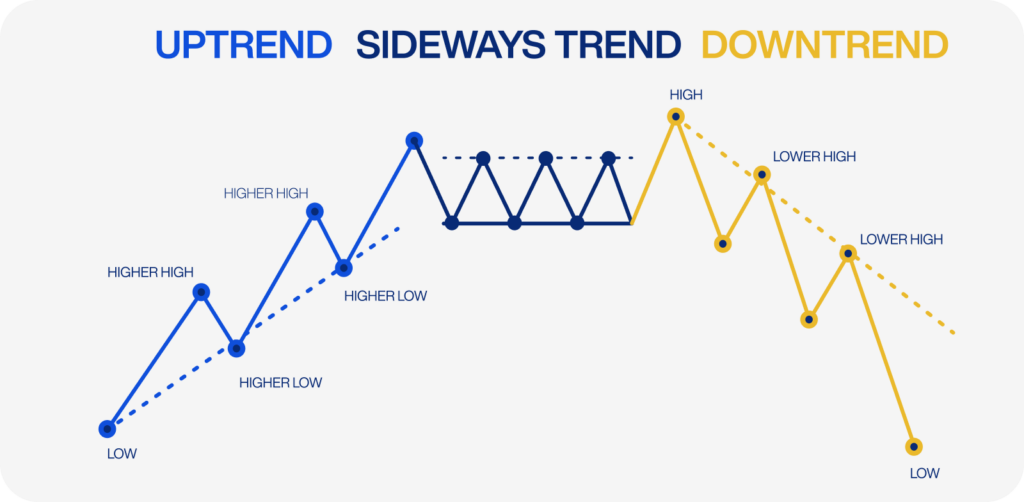
The first step in technical analysis is usually to determine which of these market structures currently dominate.
One way to do this is to inspect the price chart. Prices make higher highs and higher lows in an uptrend, lower highs and lower lows in a downtrend, and equal highs and lows in a consolidation.
Traders also rely on indicators like moving averages to identify market direction. When MAs trend upward, we are in an uptrend, and vice versa.
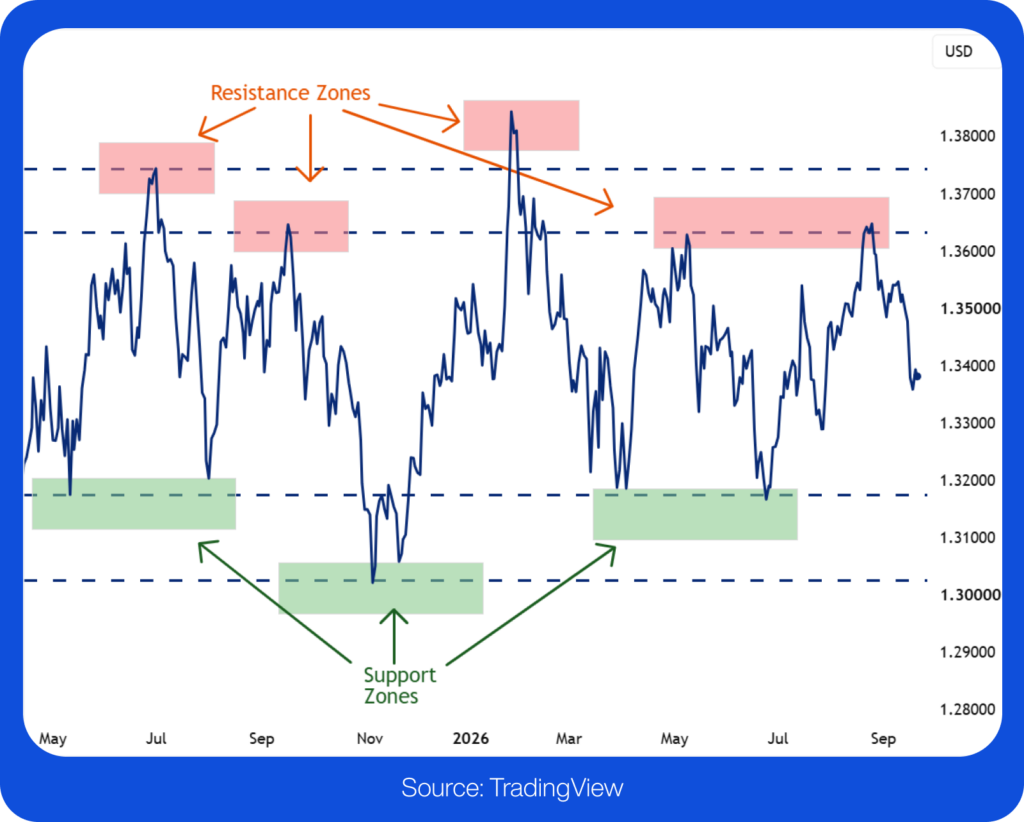
- Identifying key levels: Support and resistance levels are the most popular key levels in trading. They are usually horizontal levels (or zones) in consolidating markets and trendlines in trending markets.
Horizontal Support and Resistance Levels
Support and Resistance Trendlines
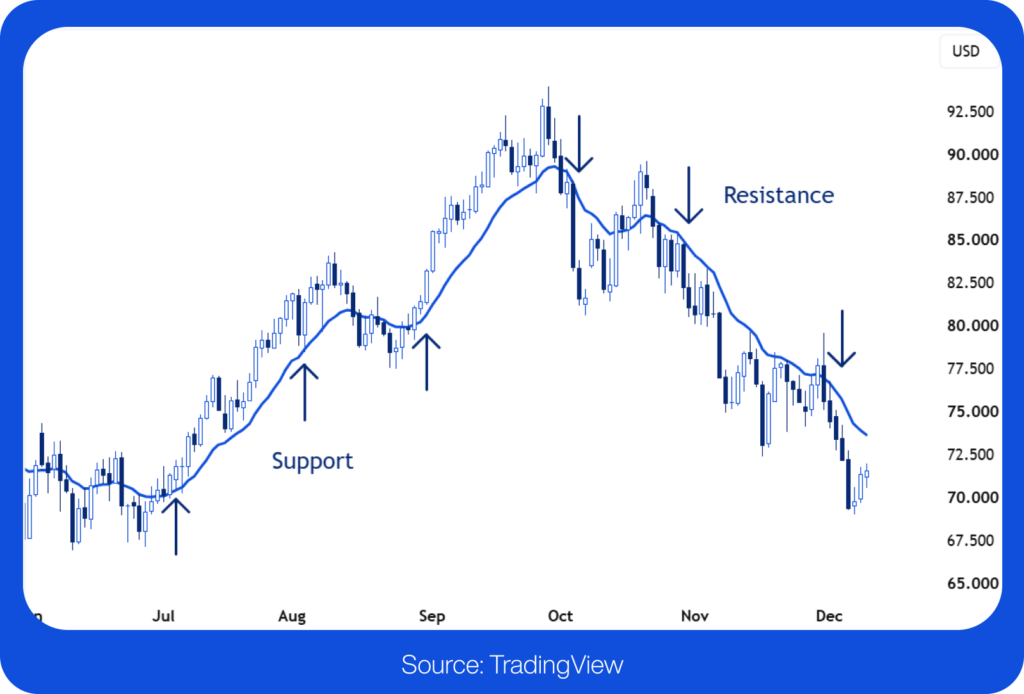
Support levels or zones are turning points where buyers step in to stop further downward pressure on price, while resistance zones are turning points where sellers step in to stop further upward price pressure.
- Verifying key levels: Before concluding that a support or resistance zone is a key level, experienced traders might confirm with volume data (rising volume at that level), candlestick chart patterns (showing continuation or reversal patterns at that level), chart patterns, and technical indicators (like RSI, Bollinger Bands, and MACD).
- Creating trading strategies: Some traders rely mostly on fundamental factors when designing their trading strategies. Here, you will find news trading, inventory reversal, and energy transition hedging strategies.
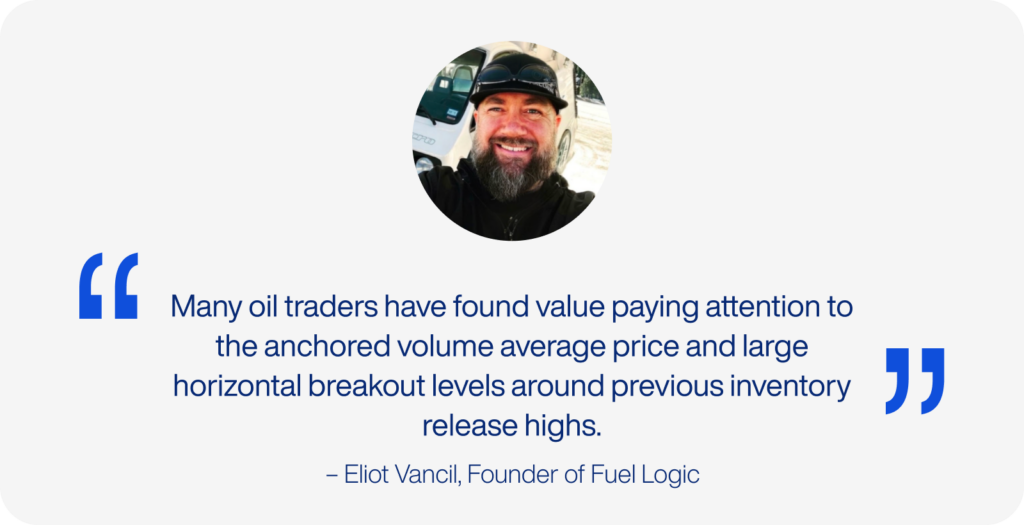
Others explore hybrid strategies that combine fundamental factors with some chart reading. For example, Eliot Vancil, the founder of Fuel Logic, an American fuel distribution company, combines inventory data with key levels on price charts.
“Many oil traders have found value paying attention to the anchored volume average price and large horizontal breakout levels around previous inventory release highs,” he said.
Other examples of hybrid strategies are mean reversion trading and arbitrage trading.
Yet, other traders prioritize standard chart-based strategies like range trading, breakout trading, trend-following trading, reversal trading, and momentum trading, among others. However, though these strategies are mostly chart-based, they can be combined with fundamental factors, especially for volume confirmation.
- Executing sound risk management: Technical oil traders also execute risk management strategies like position sizing and stop-loss orders to minimize risk exposure and avoid losing their trading capital to a few bad trades.
How to Trade Crude Oil In the UAE: Practical Steps to Get Started
Now that we have covered how crude oil trading works and how to research crude oil before trading, we can now consider how to practically trade crude oil in the UAE.
1. Select the instrument of choice
We have already covered the major financial instruments for gaining exposure to crude oil prices: CFDs, futures, options, stocks, ETFs, and ETCs.
CFDs are especially popular in the UAE due to the combination of flexibility, accessibility, and simplicity.
Unlike futures, they are purely cash-settled instruments, which eliminates the logistical difficulties and cost of physical settlement. Also, though both CFDs and futures offer leveraged exposure, the former tends to offer higher leverage and lower capital requirements.
In terms of flexibility, CFDs allow traders to take long and short positions, and they can access the market 24 hours a day, 5 days a week. Risk management is also simplified, as traders can use stop-loss and take-profit orders.
However, there is an overnight financing fee for holding a leveraged CFD trade past the end of the trading day. For lengthy holding periods, this can become a “useless overhead,” according to Vancil, which is why he prefers futures to CFDs, especially for non-day traders.
2. Select a broker
UAE traders have many options when it comes to brokers. However, choosing the best online trading platform is not as easy as selecting the broker with the cheapest fees or the loudest marketing.
Experienced traders tend to prioritize the following factors when selecting brokers: regulated by the appropriate authorities, high liquidity and low spreads, competitive trading costs, AED-denominated accounts, quick execution, risk management tools, educational resources, fundamental and technical analysis tools, and personalized customer support.
For CFDs, many have found a broker like Daman Markets valuable for providing all of these features and more.
3. Register a trading account
A quality broker will also have a simplified registration and onboarding process that makes it seamless to start trading.
4. Create a trading strategy
As we have seen, there are many crude oil trading strategies out there. Experienced traders create their versions of a popular strategy that align with their trading style, risk tolerance, and market knowledge.
Some will lean towards fundamentals-heavy strategies, while others will prioritize the price charts.
Demo accounts and backtesting are often important at this stage. The former allows traders to develop strategies without spending real money, while the latter gives a sneak peek into how that strategy would have performed historically.
5. Execute trades with risk management
There is no perfect strategy, which is why experienced traders still execute trades with sound risk management protocols.
Interestingly, ignoring risk management is often the biggest mistake new traders make in oil markets.
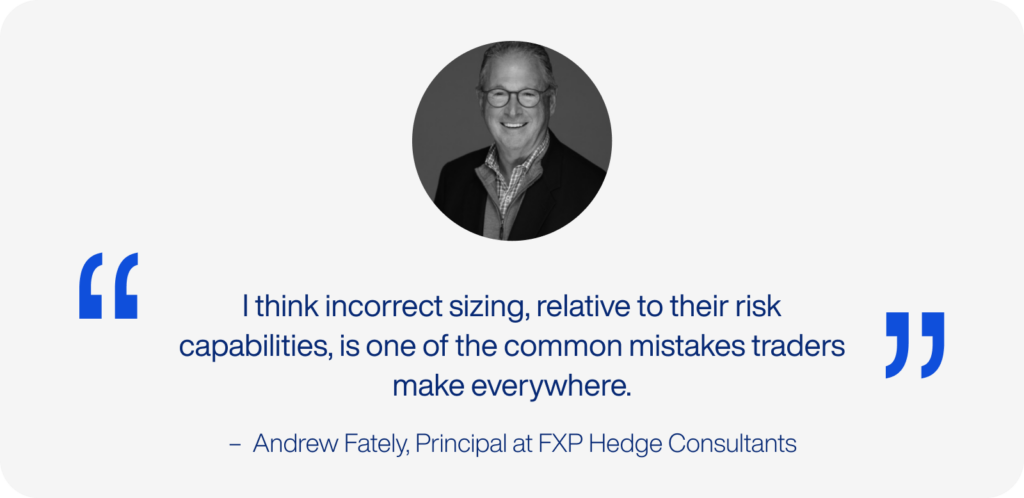
“I think incorrect sizing, relative to their risk capabilities, is one of the common mistakes traders make everywhere,” said Fately. “Crude markets can be highly volatile, as we have seen over the past six months, and it is important to determine your view AND your timeline and size accordingly so you can withstand the ups and downs. As well, stop-loss orders are key to staying in business.”
6. Keep learning about oil markets
A good broker provides educational resources that help traders improve their knowledge of the financial markets in general and specific asset classes in particular.
For example, users of Daman Markets can better understand the financial markets by taking the courses and tutorials available on Daman Markets Academy. They can also better understand current market developments through the articles available via their markets analysis section.
7. Continue adapting trading strategies to fundamental and technical information
Experienced traders continue reviewing and adapting their strategies as market conditions, volatility, and available information change.
If you are interested in trading crude oil CFDs in the UAE, Daman Markets provides you with the tools that will help you better understand the oil market dynamics.
Through our AI-powered Acuity Research Terminal, you gain access to market news, market sentiment analysis, economic calendars, a preview of macroeconomic trends, and a summary of technical analysis.
We also provide MetaTrader 5 integration, which gives you access to many technical analysis tools.
Are you ready to explore CFDs on crude oil? Register an account with Daman Markets for a seamless trading experience in the UAE.
Takeaways
- Crude oil is particularly relevant to UAE traders because of the country’s role as a major oil producer, its access to local benchmarks such as Murban Crude Oil, and the importance of oil to the UAE economy.
- Multiple fundamental factors like OPEC+ production decisions, supply and demand, geopolitical tensions, USD movements, inventories, market speculation, and unexpected external shocks drive oil prices.
- Technical analysis can help traders interpret oil price movements by identifying trends, support and resistance levels, chart patterns, volume, and momentum indicators.
- Choosing the right trading instrument and broker matters when learning how to trade crude oil.
Frequently Asked Questions (FAQs)
- Can I trade crude oil without buying physical oil?
Yes. CFDs, ETFs and ETCs give exposure to oil prices with no physical delivery involved at any point. Futures and options can also be traded without delivery. Some contracts, including Brent and the micro oil futures, are cash settled by design. On physically delivered contracts such as WTI and Oman crude, traders can close or roll their position before the delivery period begins.
- What is the difference between Brent, WTI, and Murban crude oil?
Brent, WTI, and Murban are different crude oil benchmarks used to represent prices in different parts of the global oil market. Brent is widely used as an international benchmark; WTI is the main benchmark for North American oil, while Murban is an important UAE benchmark traded through ICE Futures Abu Dhabi.
- What is the best time to trade crude oil?
There is no single best time to trade crude oil. Market activity can increase when major economic data, OPEC+ announcements, inventory reports, or geopolitical developments are released. Traders should therefore consider both market liquidity and the events that could cause significant price movements.
- Is crude oil trading risky for beginners?
Crude oil can be particularly volatile, meaning prices can move significantly in response to unexpected developments. The risks can be greater when using leveraged instruments such as CFDs, where both potential gains and losses are amplified.
Beginners should understand the instrument they are trading and use appropriate risk-management techniques before trading with real money.