

 ar

- Global bond yields have climbed as higher oil prices and Middle East supply risks force markets to rethink inflation and rate-cut expectations.
- Currency markets are reacting unevenly, with the dollar finding support, sterling hit by UK political risk, and the yen giving back intervention-driven gains.
What began as geopolitical uncertainty, pushing oil prices and inflation higher, has now spread into global bond markets.
Investors are now being forced to rethink hopes for rate cuts and prepare for borrowing costs to stay higher for longer.
With energy disruptions continuing and the Strait of Hormuz still closed, the focus is shifting to how far central banks may need to go to contain inflation.
G7 Borrowing Costs Climb to Multi-Year Highs
Global bond yields have been on the rise since the Middle East conflict began in late February. The US 10-year Treasury yield rose to 4.6%, marking its highest level since February of last year.
Because bond prices move inversely to yields, this rise also shows a decline in bond prices as investors demand higher returns to hold government debt.
The 10-year rate plays an important role in determining borrowing costs throughout the US and is closely watched by markets.
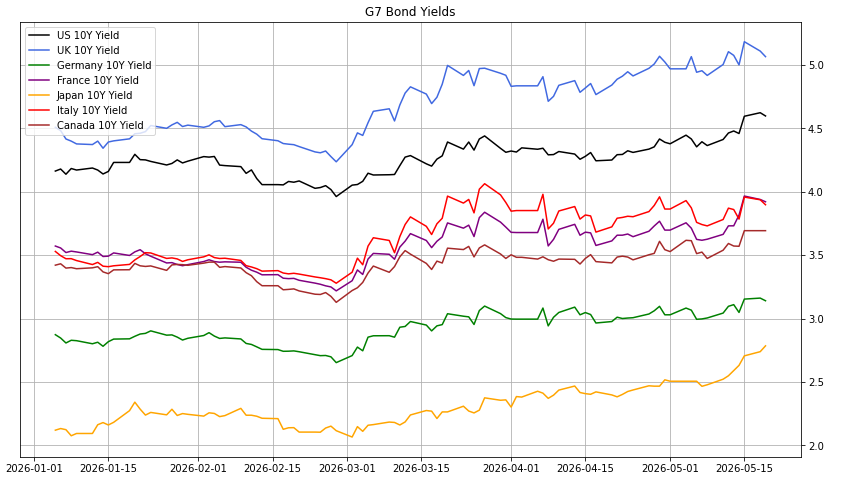
Climbing yields reflect growing anxiety that inflation may prove more durable than previously anticipated.
This has sparked worries that central banks may be forced to raise interest rates, potentially worsening economic conditions and leaving G7 policymakers with limited room to maneuver.
Dollar Stabilizes After Trump Pauses Iran Attack Plans
The US dollar regained some ground earlier today after yesterday’s decline. This followed President Trump’s announcement to pause military operations against Iran to allow room for negotiations. ⁽¹⁾
The dollar strengthened last week on escalating Middle East tensions, where global bond markets sold off sharply.
Fed funds futures now show that markets are pricing a meaningful chance of a rate hike by December, marking a sharp shift from earlier expectations for rate cuts. ⁽²⁾
Yuan Holds Steady Despite Geopolitical Tensions
The Chinese yuan held steady earlier today, as investment banks remained optimistic about further appreciation in the currency. This optimism is supported by China’s export competitiveness and stable trade relations with the US following last week’s summit. ⁽³⁾
The yuan recently touched its strongest level in more than three years against the dollar, supported by strong exports and China’s large trade surplus, while analysts continue to point to external surpluses as a key source of appreciation pressure. ⁽⁴⁾
China is expected to keep interest rates unchanged for a 12th consecutive month during its meeting tomorrow, as strong interbank liquidity makes rate cuts less urgent, even as economic activity remains weak. ⁽⁵⁾
Sterling Struggles Amid Political Crisis and Inflationary Pressures
The British pound witnessed a 0.80% rise yesterday after facing a fierce 2% sell-off last week. Now, the pound is trading steadily near its lowest level since early April. Sterling is caught between rising inflation fears driven by higher oil prices and a deep political crisis surrounding Prime Minister Kier Starmer.
Starmer is facing growing pressure to resign after Labour’s poor performance in recent local elections. UK gilt yields have surged to multi-decade highs, as investors worry that a more left-wing successor could increase government borrowing and place further strain on the UK’s already fragile public finances.
Money markets now expect the Bank of England to raise interest rates at least twice this year, a dramatic reversal from expectations of two rate cuts before the Iran conflict erupted in late February. ⁽⁶⁾
Yen Gives Back Intervention Gains as Dollar Recovers
Earlier this month, Japan intervened in the FX market to slow yen weakness after USD/JPY approached the 160 level. The move briefly strengthened the yen, with Tokyo reportedly spending nearly 10 trillion yen to support the currency. ⁽⁷⁾
However, the yen has since surrendered more than half of those gains as the US dollar recovered and rising Treasury yields kept pressure on the currency. USD/JPY is now moving back toward the 160 level, keeping markets alert to the risk of further intervention.
Japan’s finance minister Katayama said authorities remain ready to act against excessive FX volatility, while also trying to avoid intervention methods that could push US Treasury yields higher. Selling Treasuries to fund yen-buying intervention could lift US yields and indirectly support the dollar. ⁽⁸⁾
On the domestic front, Japan’s economy expanded 0.5% QoQ in the first quarter, beating forecasts and marking its fastest growth since Q3 2024.
However, higher energy prices and planned new debt issuance to fund support measures could add pressure to Japanese bond markets, with 10-year JGB yields rising as bond prices decline. ⁽⁹⁾


