ar
- October’s stronger-than-expected CPI reinforced December hike expectations and raised the possibility of a larger increase.
- Persistent price pressures could push the tightening cycle into next year.
- Higher rate expectations lifted the dollar and bond yields, while falling oil prices could provide some inflation relief.
The October CPI has added weight to the argument for another rate hike from the Federal Reserve at its final meeting of the year. While a rate hike was expected in December, the new data has made a December hike near-certain and raised the chance the Fed goes further in 2027.
The Fed Funds Rate currently stands at 3.75%-4.00% after an increase in September and a pause in October.
There is discussion about the magnitude of the increase and how much tightening is needed to reduce inflation. Recent bank updates show there is broad agreement on a December hike, but disagreement over its size and the rate path afterward.
Inflation Slowed, But Exceeded Forecasts
Although there were some positive details in the report, overall inflation was higher than expected (0.4% vs 0.3%) but lower than September (0.6%). ⁽¹⁾
Energy inflation fell significantly to 0.7% from 5.2% while core inflation increased by 0.3% for the third consecutive month, higher than its 0.2% forecast. Shelter costs increased by 0.3% and medical care, auto insurance and household furnishings became more expensive. ⁽²⁾
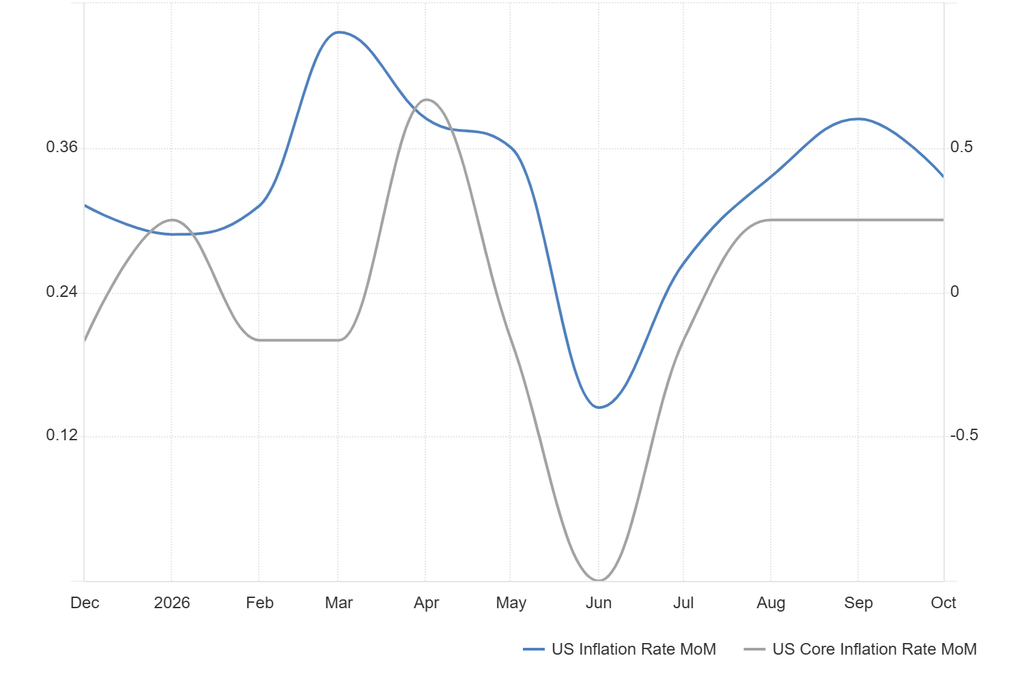
This creates a challenge for policymakers: underlying price pressures remained persistent despite slower energy inflation.
Annual headline and core CPI figures were unavailable because the October 2025 government shutdown prevented the collection of the data needed for comparison.
A Larger December Hike Enters the Debate
Fed Governor Christopher Waller raised the stakes before the data came out. Waller said he would support a 25 basis point increase in December even if October inflation data shows improvement. ⁽³⁾
He also said that if core inflation is around 0.3% or above, then there could be a 50 basis point increase. A half-point hike has not been on the table since 2022. The October data then hit that threshold. Waller was expressing his own view, but it gave traders good reason to reconsider how large the increase may be in December. ⁽⁴⁾
Markets were pricing in an 84% probability of a December rate hike. Following the CPI release and Fed comments, an increase of at least 25 basis points became almost fully priced in. Reuters reported a 13.5% probability of a larger, 50 basis point increase on November 11, leaving a quarter-point hike as the dominant expectation.
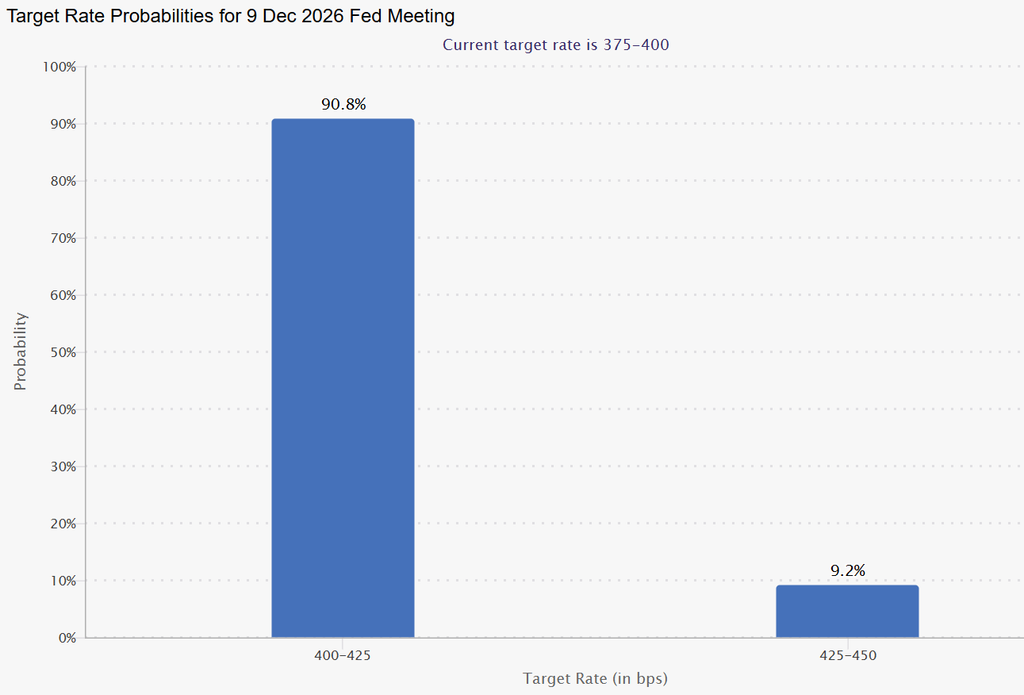
This is significant because the market was already expecting some tightening. The surprise has increased the perceived risk that the Fed would deliver more tightening than previously expected.
What Are Banks Expecting for 2027?
There are wider differences in expectations for 2027.
Goldman Sachs expects the target range to rise to 4.25%-4.50% with increases in December and March 2027. Previously, Goldman expected the cycle to end in December, however the bank revised its forecast to allow for inflation to ease towards the end of the year before rising again in early 2027 to justify another increase in March. ⁽⁵⁾
Deutsche Bank expects it to rise to 4.50%-4.75% with increases in December, January and March due to widespread inflationary pressure. They are expecting the Fed to be more hawkish and reach a higher peak quicker. ⁽⁶⁾
There is a difference of opinion on how much tightening should occur to reduce inflation. Both banks are expecting further increases but there are differing opinions on how quickly current inflationary pressures will fade.
Falling Oil Prices Complicate the Rate Outlook
Falling oil prices could reduce the need for further rate hikes. MarketWatch reported that oil prices had fallen more than 20% from their late-October peak, potentially easing future inflation. Goldman Sachs also expects fading energy and tariff effects to help bring inflation down in 2027.
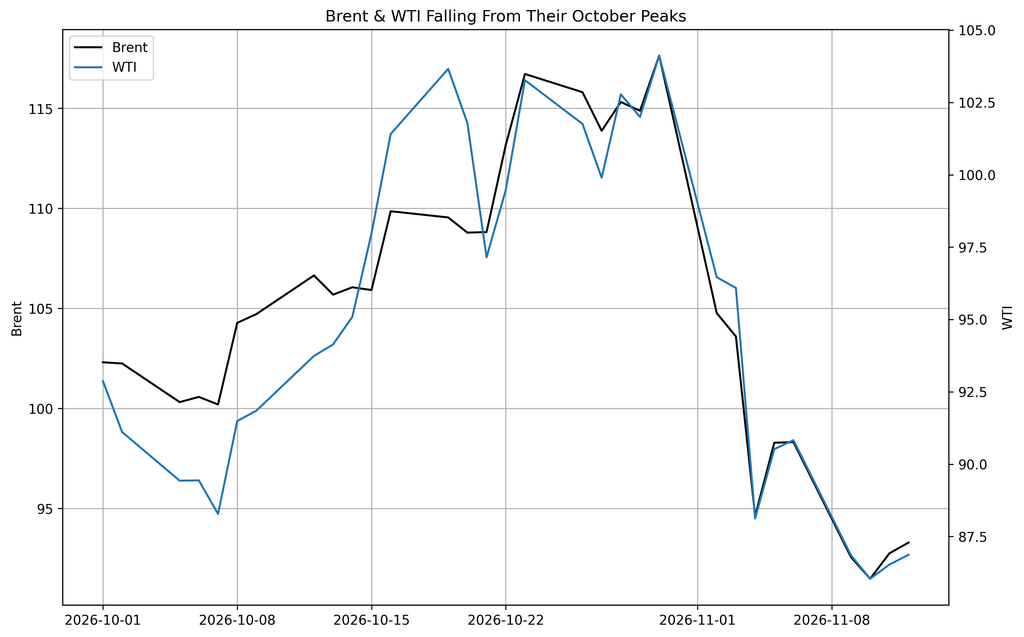
However, earlier increases in transport and production costs may still be feeding into selling prices even as crude falls. The Conference Board reported that October’s inflation pressures had broadened as the earlier energy-price spike filtered into other goods and services. ⁽⁷⁾
How quickly these pressures ease matters for the rate outlook. A sustained slowdown in underlying inflation could limit further hikes, while persistent price increases could support additional tightening in early 2027.
Dollar and Yields Rise on Higher Rate Path
The US dollar index jumped almost 0.5% on Tuesday and extended its gains on Wednesday, bringing its gain to more than 1% in two days to around 103. The 2-year Treasury yield rose 18 basis points to around 4.73% while the 10-year yield went back above 5%. The sharp move in the two-year yield reflected the adjustment in expectations for Fed policy.
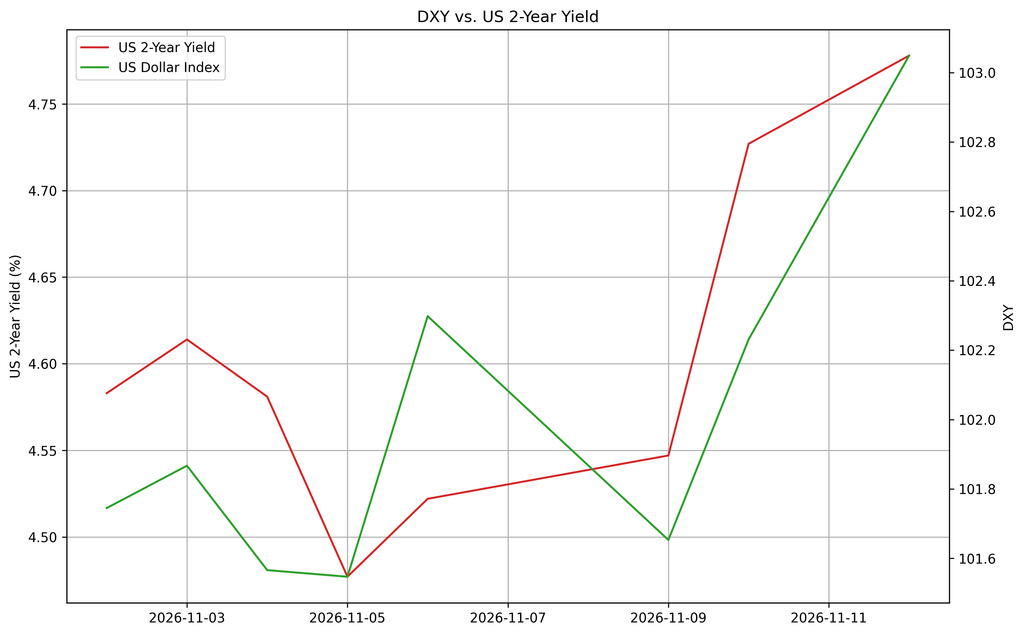
The euro fell 1% in two days, reaching its May 2025 lows at 1.109 while sterling also suffered losses, reaching 1.327 despite more expected tightening from the Bank of England.
The dollar’s strength reflected stronger-than-expected inflation and Fed comments reinforcing expectations of further tightening.
The changes in rate expectations extend the rate gap between the US and other economies. A widely expected December hike can still produce a substantial market adjustment when investors revise the decisions expected afterward.
Further inflation readings, including the Fed’s preferred PCE measure, will help determine whether easing energy costs produce sustained improvement or whether persistent goods and services inflation requires additional increases in early 2027.