ar
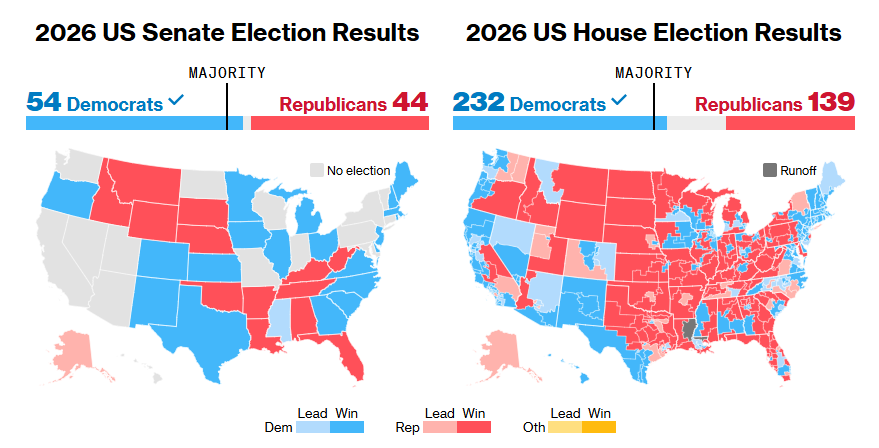
- Democrats’ victory in both chambers gives them more power to block President Trump’s tax and spending plans. His veto limits how much of their own agenda they can enact.
- Tighter state rules on data centers could delay AI projects and push chip and equipment sales into later quarters.
- Less room for fiscal stimulus could push Treasury yields lower and weigh on the dollar. Existing spending commitments and interest payments will keep federal borrowing needs high.
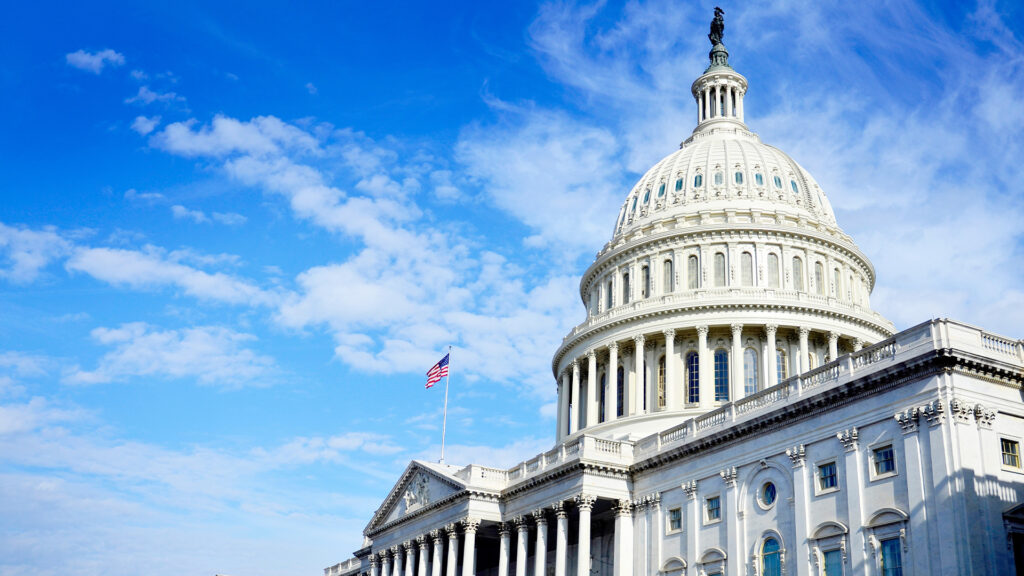
Democrats now control both the House and the Senate, which gives them more influence over the last two years of President Donald Trump’s term. His legislative plans will meet new roadblocks, and Democrats will have more room to investigate his administration.
Markets started to react before the final seat count was clear. Stocks fell before staging a strong rebound. Treasury prices went up and the dollar strengthened.
These moves fit with worries that AI spending could slow and that the government may add less fiscal stimulus. How long those effects last will depend on what the new majority is able to stop, negotiate and pass.
What Actually Changes After the Election?
Democrats have gained more power over legislation and oversight, where the new congressional terms begin on January 2027, so change won’t immediately be in effect. Financial markets are now reacting to expectations about future decisions.
Once the new Congress takes over, additional Republican tax and spending legislation would now require support from Democrats. Control of congressional committees also gives Democrats more power to investigate companies and oversee government agencies. ⁽¹⁾
However, passing a bill through Congress does not guarantee it will become law. President Trump can still veto legislation. Overriding his veto requires a two-thirds majority in both the House and Senate. Major changes that lack bipartisan support therefore face a substantial barrier. ⁽²⁾
That makes the ability to prevent new measures particularly significant. Democrats can constrain further Republican initiatives without necessarily having enough support to reverse existing policies. For businesses, this could mean fewer major legislative changes alongside more investigations and difficult negotiations.
Why Are Data Centers Under Pressure?
AI investment faces pressure through state decisions as well as federal oversight. Data centers require access to electricity, water and approvals from regulators. Political decisions can affect those resources and how quickly projects can proceed. ⁽³⁾
Texas is a clear example. Democrat Gina Hinojosa’s win in the governor’s race has drawn attention to her support for a moratorium on new data centers until lawmakers establish stronger protections for communities. Her campaign has also challenged subsidies and the costs that large developments can impose on households. ⁽⁴⁾
However, pressure on the industry came before the election. Back in September, Republican Governor Greg Abott directed the Texas Commission on Environmental Quality to halt permits sought by data centers pending audits of their resource requirements. ⁽⁵⁾
This issue matters because policy debate already exists across both parties. Hinojosa’s victory raises questions about how restrictions could develop and how difficult they might be to ease. It does not establish that a new ban has already been implemented.

For example, if a data center is scheduled to open in 2027, permit delays could push completion into 2028, and the developer could postpone orders for Nvidia-powered servers, cooling systems and electrical equipment.
Businesses supplying chips and other equipment could therefore face changes in the timing of expected sales.
A company can retain a strong long-term opportunity while facing a less favorable timetable for turning investment into earnings.
Can a Divided Government Control US Borrowing?
The recent rally in bonds doesn’t indicate that the borrowing outlook has improved. Political constraints on additional tax cuts or spending could reduce expectations for future borrowing compared to a more expansionary outcome. Concerns about weaker investment could increase demand for Treasuries.
Yet the government’s existing financing needs remain large. The US Treasury’s estimates projected $618 billion in privately held borrowing for October-December and $800 billion for January-March 2027 on November 2. ⁽⁶⁾
Combined, they amount to almost $1.42 trillion with gross issuance higher because maturing Treasury securities must also be refinanced.
The current estimate was $10 billion below August’s forecast. The Treasury began Q4 with more cash than expected. Without that extra cash, its borrowing estimate would have been $24 billion higher. The lower headline estimate offers little hope for improvement in financing needs. ⁽⁷⁾
Existing spending commitments and interest payments continue regardless of which party controls Congress. Stopping the deficit from growing is not the same as significantly reducing how much the government needs to borrow.
PIMCO’s Head of Public Policy Libby Cantrill stated before the election that neither outcome was likely to bring in immediate efforts to control debt, given both parties’ willingness to spend and reluctance to raise taxes. ⁽⁸⁾
Political disagreements can also create costs. Before the election, MarketWatch warned that disputes over government funding could continue after the vote. Budget talks could become more heated, even as major new tax and spending plans become harder to pass.
Funding disputes and debt-ceiling confrontations can create different risks. If Congress cannot agree on a spending bill, parts of the federal government can shut down and services stop, as they did last year. Shutdowns can delay official data releases and hurt confidence, which tends to make markets nervous.
A stalemate over the debt-ceiling could threaten the Treasury’s borrowing to meet existing obligations, leading to economic uncertainty.
What to Expect from the Dollar & Stocks
If US Treasury yields fall relative to yields elsewhere, dollar assets can lose some of their interest-rate advantage, weakening support for the currency.
After the Democrats won majorities in both chambers of Congress, the US dollar index fell to a one-month low. Nasdaq 100 futures dropped almost 3% at first and then recovered from its losses.
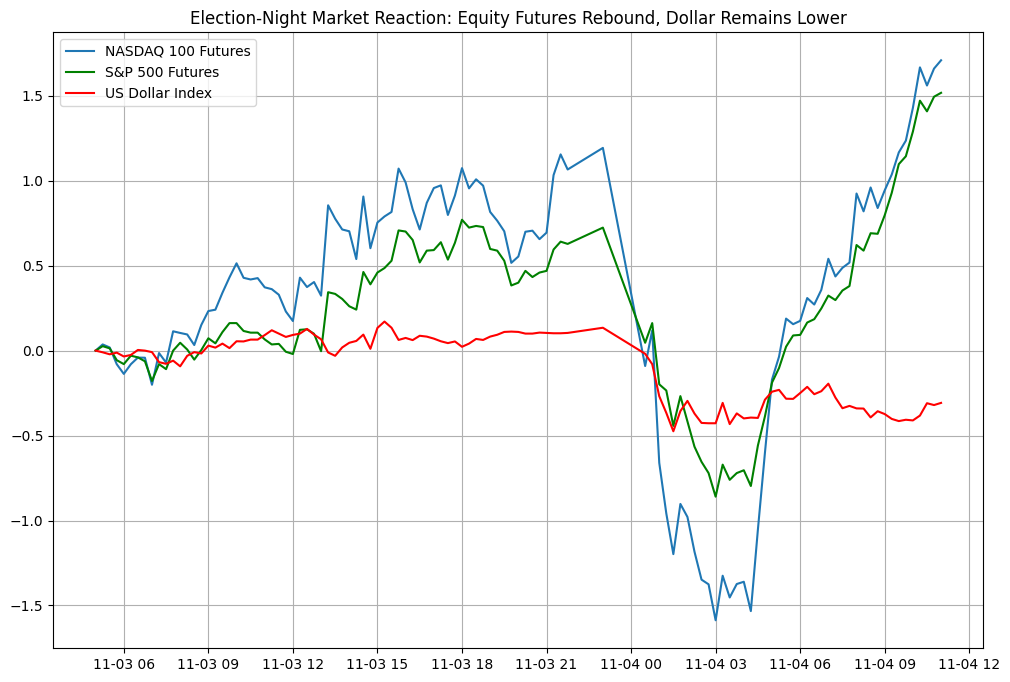
The result will constrain Trump’s ability to pass new tax and spending legislation. That could limit additional fiscal stimulus, reducing one potential source of support for US growth and the dollar.
Concerns about weaker US investment and growth can lead markets to expect fewer Fed rate hikes, weighing on Treasury yields and the dollar. Stocks can fall alongside the currency as investors lower their earnings forecasts.
If the result makes US fiscal policy more predictable and lowers the risk of bigger deficits, it could support the dollar over time.
Still, the election does not determine the Federal Reserve’s interest rate trajectory. Inflation, employment and economic activity continue to influence monetary policy.
Some parts of the market look more exposed than others. Chipmakers and companies that supply data centers could see orders slip if permits take longer or AI spending slows. Banks, drugmakers and large tech firms could face more investigations and tougher questions from congressional committees.
On the other side, lower yields can help companies that borrow a lot, and fewer new spending bills could mean less pressure on interest rates.