ar
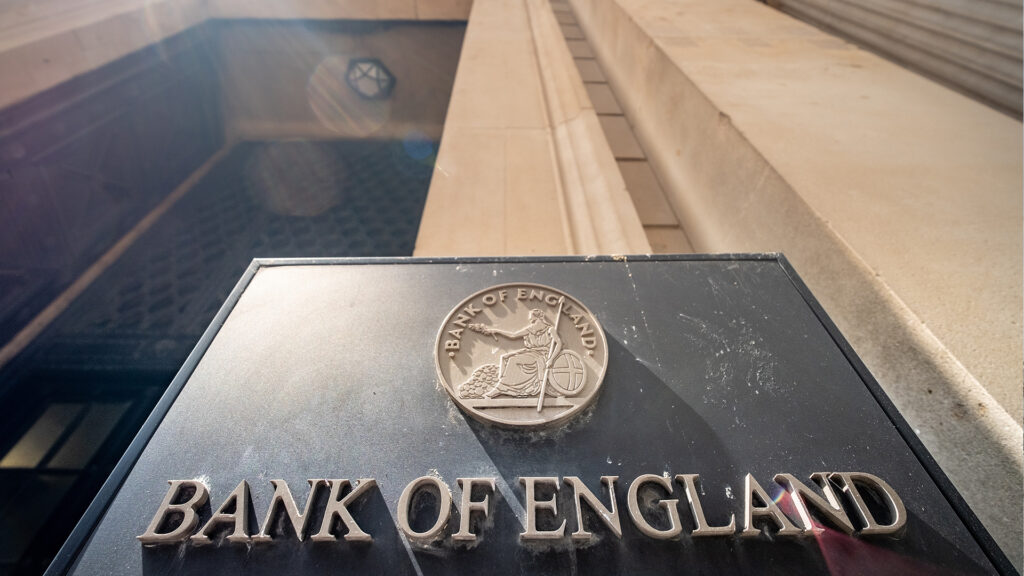
- The BoE is expected to raise rates to 4.00% on November 5, with inflation running above its earlier forecast.
- Markets are pricing rates close to 5% in 2027, while some economists expect a shorter tightening cycle.
The Bank of England is expected to hike interest rates by 25 basis points on Thursday for the first time since August 2023, taking the bank rate to 4.00%, with an anticipated vote of 7-2 in favor of a hike.
The decision might be easy, but the harder job is for Governor Andrew Bailey and what he says next. Markets are betting on several more hikes, and the BoE may not want to promise them.
Inflation Makes Waiting Harder
Inflation in the UK rose to 3.5% in September from August’s 3.1%. Motor fuels made the largest contribution to the rise in the annual inflation rate, while core inflation increased to 2.8% and services inflation climbed to 3.7%. ⁽¹⁾
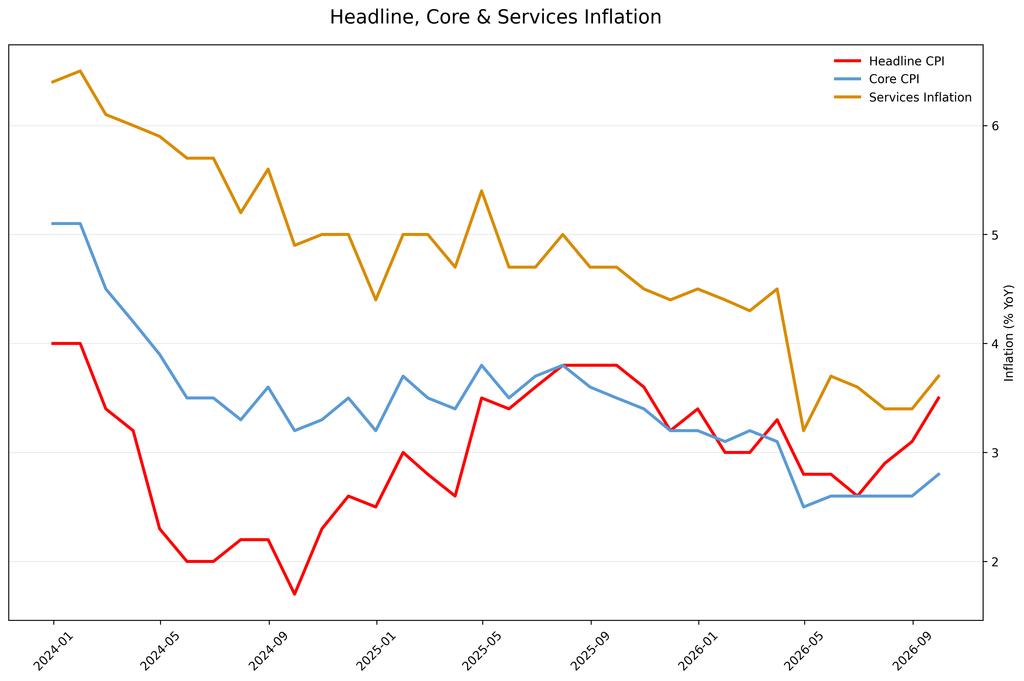
The rise in core and services inflation adds to concerns about persistence, even though it does not establish that energy costs are driving a lasting increase in wages and prices.
In September, the BoE stated that there has been little evidence so far of material second-round effects in price and wage-setting. It nevertheless judged that the risk would increase the longer energy prices remain elevated. ⁽²⁾
A hike could reduce this risk. Waiting for more data could give policymakers more certainty, but also could risk allowing inflation to rise even further without action. Raising rates earlier comes with costs, with further pressure on spending when households are already absorbing higher energy bills.
Growth Offers Room to Act, But Hiring Remains Uncertain
Growth has held up better than expected. GDP rose 0.7% in the three months to August, while monthly output rose just 0.1% in August. A stalling economy would make a hike much harder to defend. ⁽³⁾

The labor market tells a mixed story. The unemployment rate fell to 4.7% in June to August from 4.9% in the previous period, and early figures showed 13,000 more payrolled employees in September. Yet payrolls are still below a year ago, and vacancies slipped to 691,000 in July to September. ⁽⁴⁾
The ONS describes the labor market as “broadly flat in 2026.” Subdued recruitment could restrain wage pressure and reduce the need for a prolonged hiking cycle, although falling unemployment leaves the extent of spare capacity uncertain. ⁽⁵⁾
How Much Tightening is Enough
Markets are pricing in three to four 25 basis points hikes in 2027, which would take the bank rate to between 4.75% and 5.00%. ⁽⁶⁾
Some economists expect a shorter tightening cycle, with one further quarter-point increase in February taking the bank rate to 4.25%, followed by unchanged rates for the rest of 2027. That outlook assumes inflation will peak and growth will slow enough to limit the need for further increases. ⁽⁷⁾
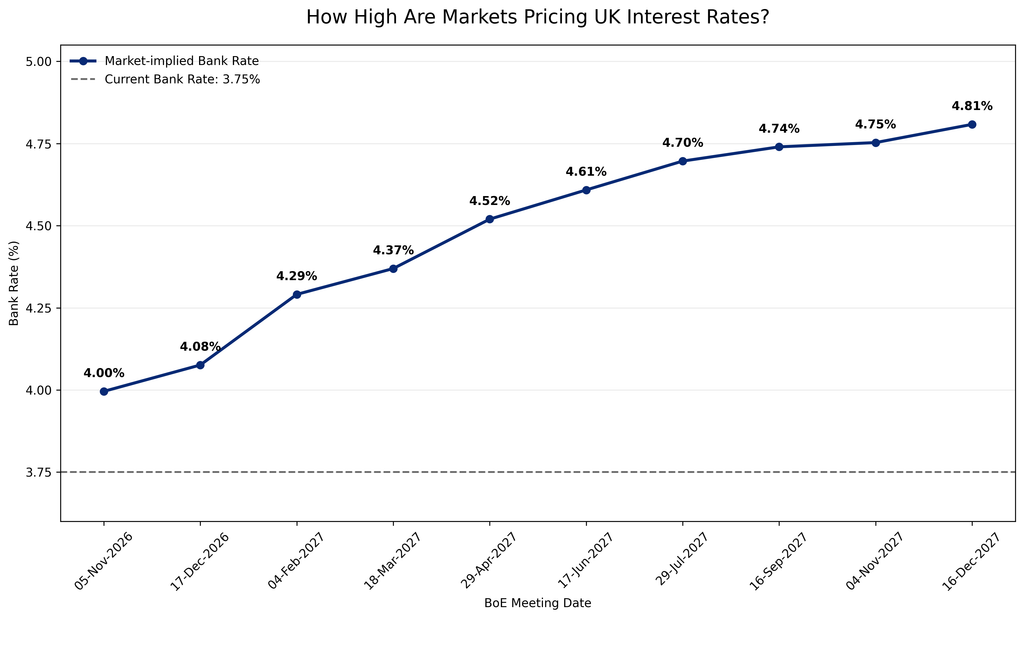
Some of that pricing reflects a risk premium, which is extra compensation for uncertainty. MPC member Catherine Mann has argued that the BoE’s wait-and-see approach after the war began added to that premium. ⁽⁸⁾
Could the Pound Hold Its Momentum?
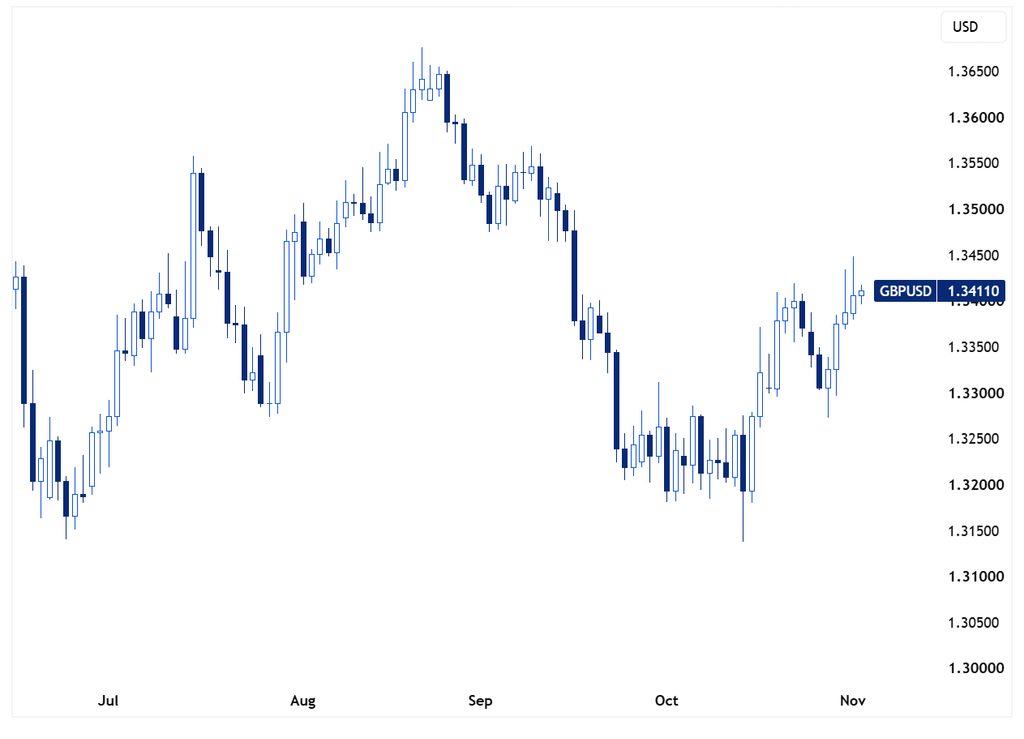
Sterling trades at around 1.3415, up 2% from its October low near 1.315.
Two-year gilt yields are sensitive to the expected bank rate path, so if the BoE raises rates as expected but signals fewer further increases than markets have priced in, those yields and the pound could both fall.
A signal that rates may need to rise beyond current market expectations could have the opposite effect.
The new forecasts will help assess whether the market-implied rate path brings inflation sustainably back to 2%. Bailey’s comments and individual MPC statements should offer clearer clues about whether policymakers consider that much tightening necessary.