ar
ar
- PepsiCo reports on Thursday, with focus on whether North American snack sales are stabilizing after weakness in Lay’s and Doritos.
- Delta reports on Friday, with lower fuel costs expected to support profits, while labor costs and guidance remain the key risks.
Earnings season is heating up, and two major names are drawing investor attention this week: PepsiCo and Delta Air Lines.
Both companies are set to report second-quarter results, and Wall Street is watching closely for signs of how consumers and travelers are holding up under continued economic pressure.
Here is a simple breakdown of what to expect from each.
PepsiCo Faces Pressure on North American Sales
PepsiCo will report its Q2 earnings on Thursday before the opening bell, where the main focus isn’t just on the numbers, but instead on whether PepsiCo’s North American business is finally stabilizing. ⁽¹⁾
PepsiCo Analysts’ Estimates
| Metric | Estimate |
| Earnings per Share Estimate | $2.19 |
| Revenue Estimate | $23.9 billion |
| Prior YoY EPS Comparison | $2.11 |
| Implied Revenue Growth YoY | 5.4% |
| Investor Focus | North American volumes, beverage sales, profit margins, and guidance |
In recent quarters, the company has lost market share in parts of its snacks and beverages business, as shoppers cut back on discretionary spending due to inflation.
The PepsiCo Foods North America segment is expected to post another soft quarter. Weak consumer spending, inflation, and poor weather around Memorial Day likely hurt demand. Core brands such as Lay’s, Doritos, Cheetos, and Ruffles are all expected to show weaker sales growth. ⁽²⁾
The beverage side of the North American business is expected to perform a little better than snacks. This could help offset some of the weaknesses elsewhere and give investors at least some optimism. ⁽³⁾
Wall Street Turns Cautious on PepsiCo
Sentiment has grown more cautious ahead of the report. Barclays cut its price target on PepsiCo stock from $158 to $144. The firm pointed to ongoing weakness in the company’s plain snack category as a factor limiting a stronger turnaround. ⁽⁴⁾
UBS also trimmed its price target, moving it to $172 from $186. JPMorgan lowered its target too, from $178 to $170, though it kept an Overweight rating, citing continued confidence in the long-term picture despite softer near-term expectations. ⁽⁵⁾

PepsiCo has leaned heavily on price increases to offset inflation over the past two years. This report should offer a clearer picture of how consumers are responding to those price hikes, and whether the North American turnaround plan is starting to work.
Delta Air Lines Reports Amid Falling Fuel Costs
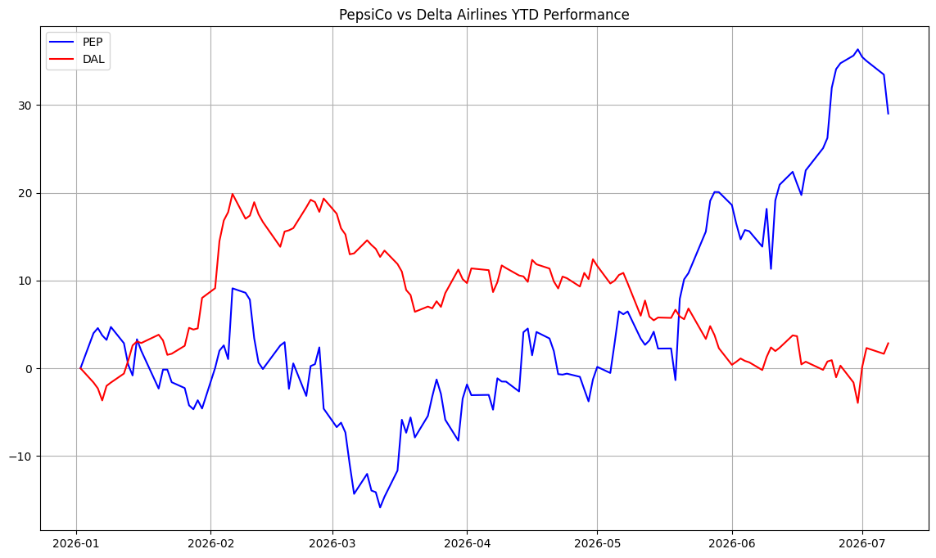
Delta Air Lines will report Q2 earnings on Friday after the market closes. The stock has climbed roughly 35% so far this year, even though fuel prices stayed elevated for much of the quarter.
Delta Airlines Analysts’ Estimates
| Metric | Estimate |
| Earnings per Share Estimate | $1.57 |
| Revenue Estimate | $17.49 billion |
| Prior YoY EPS Comparison | $2.10 |
| Implied Revenue Growth YoY | 5.36% |
| Investor Focus | Fuel costs, pricing power, high-value travelers and card revenue, and guidance |
As with PepsiCo, the headline numbers may matter less than what management tells investors about margins and future guidance. ⁽⁶⁾
Falling Fuel Costs After the US-Iran Deal
A major factor this quarter is the interim peace deal between the US and Iran, which led to a sharp drop in oil prices. Since fuel is one of the biggest costs for airlines, this should help Delta’s earnings.
Even so, oil prices were elevated for a good part of the quarter, and the peace deal has proven extremely fragile, so fuel costs may still have weighed on profits.
On the revenue side, demand has kept strong. Delta pointed to solid consumer and business travel demand, and expects second-quarter revenue to grow in the low teens compared with a year earlier. Premium and business travel in particular have helped support results. ⁽⁷⁾
But labor costs are still a headwind for Delta. Analysts expect non-fuel unit costs, measured by adjusted cost per available seat mile, to rise to about 14.25 cents, up from 13.49 cents a year earlier.
That means investors will want reassurance that Delta’s pricing power and strong bookings can continue to offset higher operating expenses. ⁽⁸⁾