

 ar

- UK CPI showed inflation pressures eased in April, bringing some relief to markets after a prolonged period of persistent price growth.
- However, despite the positive inflation reading, labour market data showed signs of weakness, especially as employers scaled back on hiring.
- Both the inflation and labour market numbers leave the Bank of England in a difficult spot, trying to balance inflation risks against a weak economy and political uncertainty.
The UK’s latest economic data presents a mixed picture for policymakers and politicians, with inflation declining more than expected in April while the labour market weakened.
These updates on the economy come as the UK tries to manage challenges from both high energy prices and political uncertainty, leaving the Bank of England in a difficult position to manage in the months ahead.
Inflation Decline Driven by Energy Price Cap
Inflation for April came in at 2.8% YoY, lower than expected and reflecting the impact of an energy price cap that was placed by the UK’s energy regulator Ofgem. This measure helped push down inflation from March’s 3.3% figure. ⁽¹⁾
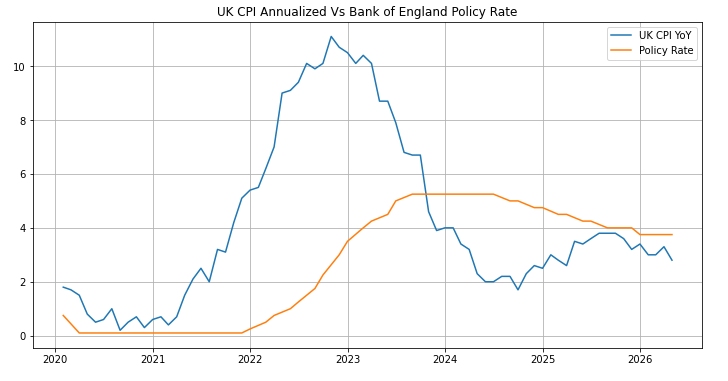
Despite a decline in prices, economists warn this might be temporary, as rising energy costs driven by the Middle East conflict are expected to push prices even higher.
The UK government has faced criticism for mishandling the situation to protect consumers. As an energy importer, the UK remains vulnerable to volatility in energy markets.
Critics also point to untapped oil and gas reserves in the North Sea that could help reduce dependence on foreign energy sources.
In response to these pressures, Chancellor Rachel Reeves is expected to announce major reforms that would give parliament authority to approve critical energy projects, according to statements from the Treasury. ⁽²⁾
Bank of England Faces Difficult Balancing Act
The Bank of England remains cautious about inflation and is monitoring the wider developments, such as workers demanding higher wages and businesses passing higher costs on to consumers. The BOE has signaled that it is ready to counter inflation if necessary.
Financial markets expect the BOE to hike interest rates by 25 basis points in its July meeting. The main headache for the central bank is having to manage this risk against an already weak economy. ⁽³⁾
Labour Market Deterioration Adds to Economic Concerns
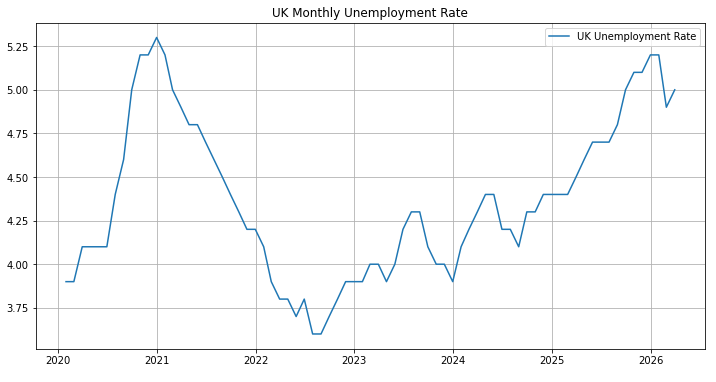
The economic picture becomes worse when factoring in the weak labour market. The unemployment rate ticked higher to 5% in Q1, up from 4.9% from the previous report. ⁽⁴⁾
More concerning, early payroll data from the tax office showed a sharp drop of 100,000 jobs in April compared to March, representing the largest monthly decline since May 2020 at the start of the COVID-19 pandemic. ⁽⁵⁾
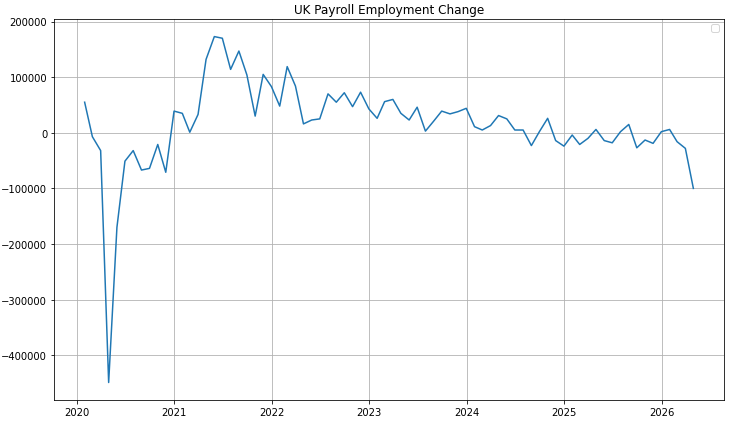
Employers say higher payroll taxes and new labour regulations have made hiring more expensive. ⁽⁶⁾
Wage Growth Slows Significantly
Wage growth has slowed sharply, with average earnings excluding bonuses rising 3.4% year-on-year in Q1, the weakest pace since 2020. ⁽⁷⁾
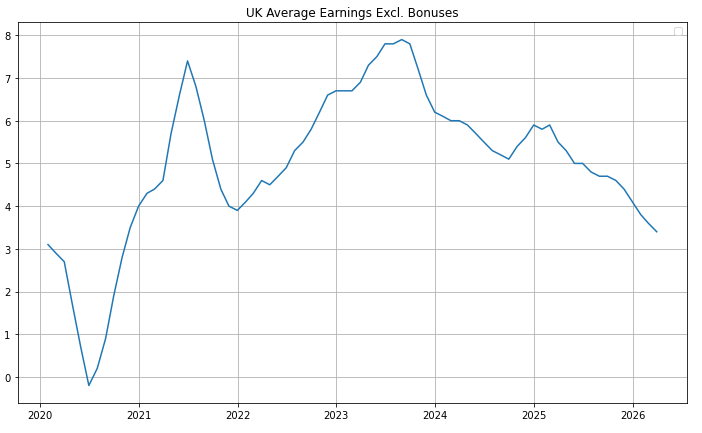
Both slow wage growth and weak employment data have led some economists to rethink their expectations on how much further the BOE could tighten.
Political Uncertainty Compounds Economic Challenges
Soft inflation and a weakening labour market come at a sensitive moment for the British government, as Prime Minister Starmer faces growing pressure over his leadership within the Labour Party following its poor performance in recent local elections.
Britain’s latest political drama has brought another wave of uncertainty for businesses already struggling from the impacts of the Middle East conflict.
As the Bank of England prepares for its June meeting, policymakers will need to carefully weigh the softer inflation print against signs of growing economic weakness.


