

 ar
- Oil prices retreated from $100 per barrel on eased tensions and shifting market sentiment.
- The dollar weakened on faded safe-haven demand and potential fading inflationary pressures.
- Risk-on currencies rallied alongside precious metals, while central banks such as the RBA and MAS signaled more monetary policy tightening.
As geopolitical tensions in the Persian Gulf intersect with shifting market sentiment, investors are closely monitoring developments between Washington and Tehran while assessing the broader implications for energy markets, currencies, and monetary policy.
Oil Falls on Eased Tensions
Oil prices jumped to $100 per barrel yesterday as the US military blockade took effect in the Strait of Hormuz.
However, prices pulled back after President Trump signaled he had been in contact with Iran and wanted to reach a deal. Trump made it clear that he would not accept any agreement that allowed Tehran to develop nuclear weapons. ⁽¹⁾
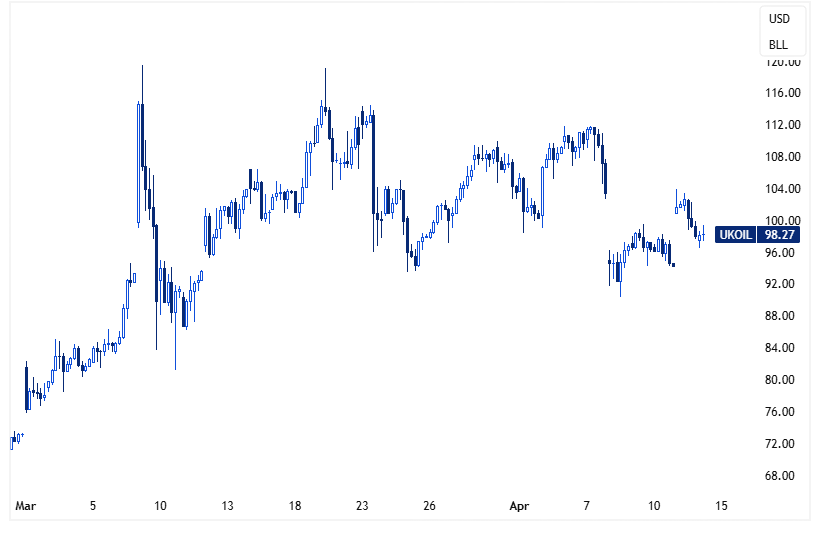
Brent Crude Oil 4H Chart / Source: TradingView
US Energy Secretary Chris Wright said oil prices could reach their peak soon once shipping through the Strait returns to normal.
The IMF, World Bank, and IEA have called on countries not to hoard energy supplies or impose export restrictions. They described the current situation as the most serious shock to global energy markets in history. ⁽²⁾
IEA chief Fatih Birol said Monday that additional releases from strategic oil reserves may not be needed yet, but the agency is ready to act if the situation worsens.
OPEC lowered its global demand forecast for the second quarter by 500,000 barrels per day in its latest monthly report. ⁽³⁾
Dollar Weakens as Riskier Assets Rally
The US dollar fell to six-week lows as markets turned more optimistic about a possible deal between the US and Iran.
Despite failed negotiations over the weekend that led Trump to announce the blockade, he later said Iran had made contact and wanted to return to talks.
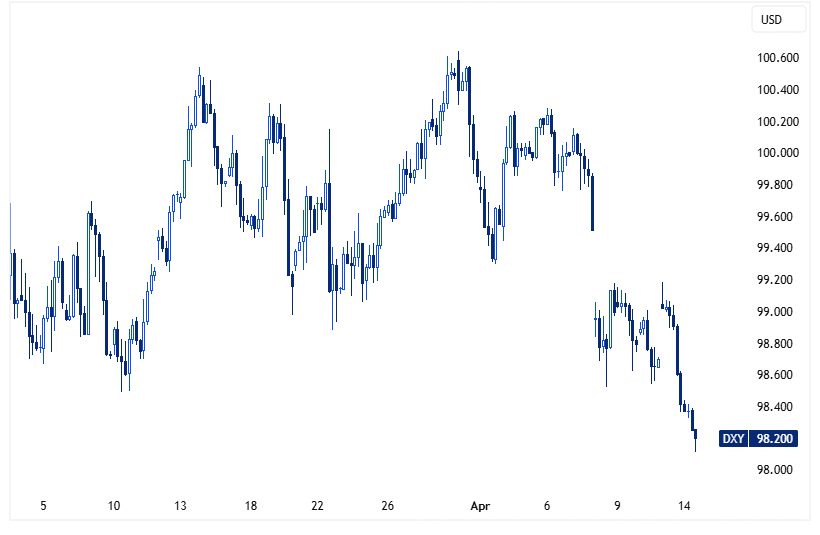
DXY 4H Chart / Source: TradingView
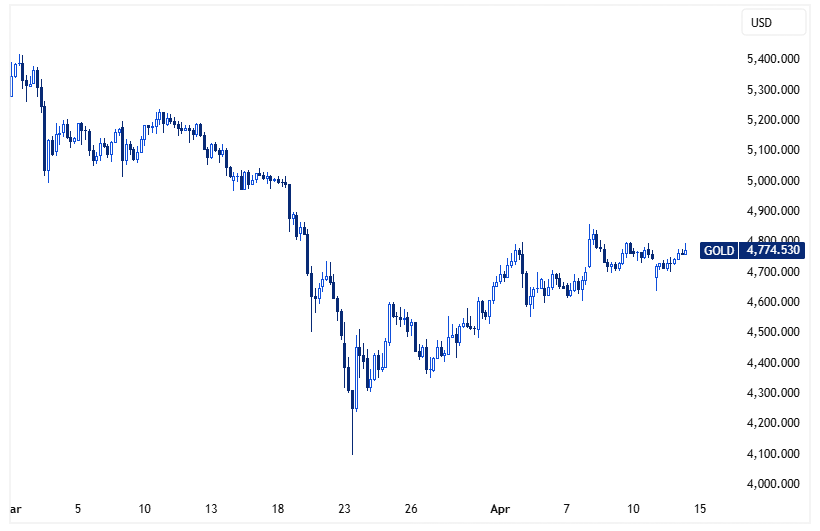
Gold 4H Chart / Source: TradingView
The possibility of a ceasefire and reopening of the Strait of Hormuz caused oil prices to drop, reducing inflation concerns and changing expectations for Federal Reserve policy. Both gold and silver prices rose in response alongside the euro and the pound.
Aussie Dollar Reaches One-Month High as RBA Signals Possible Rate Hike
The Australian dollar climbed to one-month highs earlier today on improved sentiment and the latest remarks from the Reserve Bank of Australia.
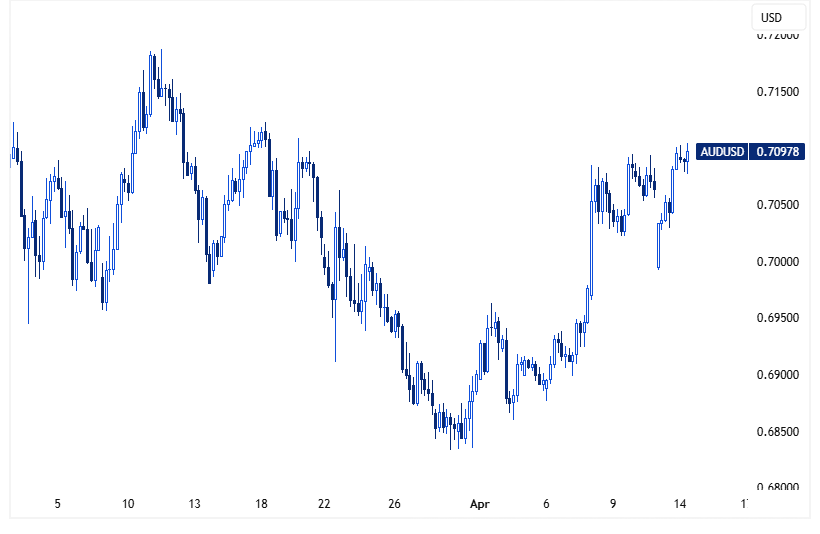
AUD/USD 4H Chart / Source: TradingView
Deputy Governor Andrew Hauser said inflation remains above the 2–3% target, and policymakers are not confident that current interest rates are restrictive enough.
He noted that rates may need to rise further if necessary, especially as the economy deals with higher oil prices from the Middle East conflict. ⁽⁴⁾
Markets raised the odds of a rate hike next month to 72% from 69% after Hauser’s remarks. First-quarter inflation data and key labor market and consumer spending indicators are still due this month, ahead of the decision. ⁽⁵⁾
Canadian Dollar Strengthens on Political Developments
The Canadian dollar rose to a near three-week high against the US dollar on Monday. Concerns eased about the failed US-Iran peace talks, while Canadian special elections moved forward that could give Prime Minister Mark Carney a majority government.
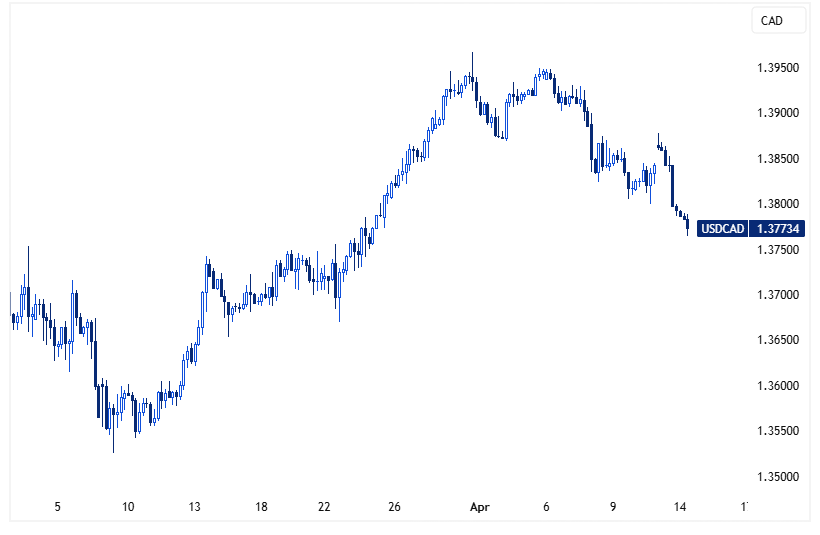
USD/CAD 4H Chart / Source: TradingView
Carney has secured a parliamentary majority for his Liberal government. The victory will help him advance his legislative plans, which he says are needed in an increasingly divided world. ⁽⁶⁾
Singapore Tightens Policy Despite Economic Contraction
The Monetary Authority of Singapore tightened its monetary policy today to 0.8%, citing risks that the Iran conflict could push inflation higher even as the economy contracted in the first quarter.
Singapore’s economy grew 4.6% YoY in Q1, coming in weaker than the expected figure of 5.9%. On a quarterly basis, GDP contracted 0.3% in Q4.
The central bank raised its core and headline inflation forecasts for 2026 to 1.5%–2.5%, from 1.0%–2.0% previously. Core inflation was 1.4% in February before the Middle East conflict began. ⁽⁷⁾
The government announced a support package worth almost 1 billion Singapore dollars, including cash handouts and fuel vouchers, to counter the economic impact of the war. ⁽⁸⁾


