

 ar

- Financial markets remain cautious as shifting macro and geopolitical dynamics reshape risk sentiment.
- The Japanese yen was boosted by the recent elections in Japan, which increased capital inflows into the country alongside possible intervention in the FX markets.
- The US dollar weakened due to fears of de-dollarization, while the Chinese yuan hit 33-month highs due to strong data in China.
- Commodities trade cautiously as markets await US data and monitor US–Iran talks.
Financial markets began the week on a cautious note, with currencies and commodities reacting to shifting macro conditions, election-driven capital flows, and ongoing geopolitical tensions.
From post-election inflows supporting the yen to renewed de-dollarization concerns weighing on the US dollar and key US data ahead, investors are adjusting positions across FX, metals, and energy markets.
Yen Boosted by Election Outcomes and Possible Intervention
The Japanese yen extended gains after a 1% rise in the previous session following Japanese Prime Minister Takaichi’s election victory. Renewed talks of FX intervention supported the yen as markets give Takaichi the benefit of the doubt, trusting that her stimulus plans won’t further strain Japan’s finances.
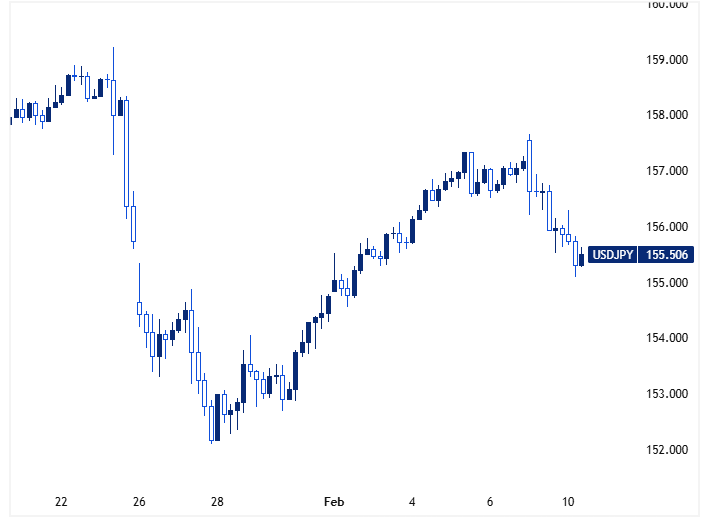
USD/JPY 4H Chart / Source: Tradingview
The yen had initially pulled back slightly after Takaichi’s win on Sunday, with the currency reaching its weakest level in two weeks, but then strengthened as the trading day continued.
The yen also benefited from capital inflows as Japanese equities surged to fresh all-time highs following the election, even as local bonds came under pressure amid concerns over the country’s fiscal outlook. ⁽¹⁾
Dollar Slips as De-Dollarization Fears Grow
The US dollar index extended its losses from the previous session, removing last week’s gains due to risk-on sentiment and fresh concerns that global markets may pivot away from dollar-denominated assets.
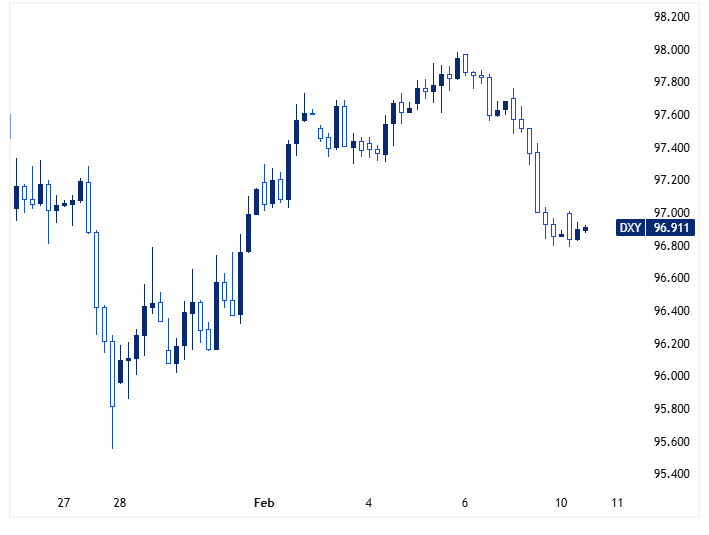
DXY 4H Chart / Source: Tradingview
The decline was driven by China’s push for urging financial institutions to sell some of their holdings in US Treasuries to reduce risk and market volatility from the impacts of uncertain US economic policy. ⁽²⁾
The move echoed a similar tone from other large economies that show greater unease in reducing their exposure to US assets, including European pension funds that trimmed Treasury holdings after the White House’s aggressive rhetoric on Greenland.
The Chinese government asked banks to limit new purchases of US government bonds. Banks with high exposure were instructed to scale back their positions. However, this guidance does not apply to China’s state holdings of US Treasuries. ⁽³⁾
The yuan strengthened to a fresh 33-month high against the US dollar following news of the guidance. The Chinese currency has now gained for 11 consecutive weeks, its longest winning streak since early 2013. ⁽⁴⁾
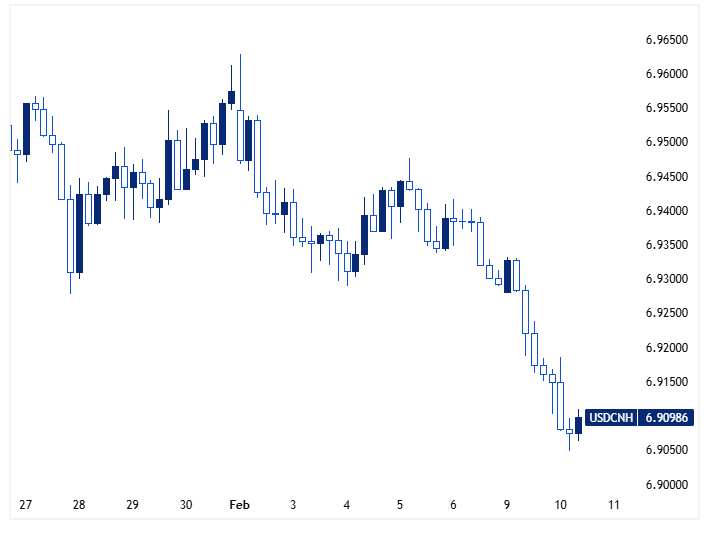
USD/CNH 4H Chart / Source: Tradingview
Several other factors have also supported the yuan’s rise. These include dollar weakness, China’s strong exports, and growing interest in China’s capital markets. Goldman Sachs expects the yuan to continue strengthening to 6.7 per dollar within 12 months. ⁽⁵⁾
Despite these concerns, the US Treasury market is not showing signs of trouble yet. Foreign holdings of US Treasuries reached a record of $9.4 trillion in November, significantly higher than the previous year’s figure of $500 billion.
Treasury Secretary Scott Bessent noted that the Treasury market delivered its best performance since 2020. The bond market also saw record foreign demand at auctions, with volatility falling to a five-year low. ⁽⁶⁾
Precious Metals Hold Steady Ahead of US Data
Gold and silver held steady today as markets turned their focus to key US economic releases this week, particularly the Nonfarm Payrolls report and inflation data, which could provide further guidance on the outlook for monetary policy.
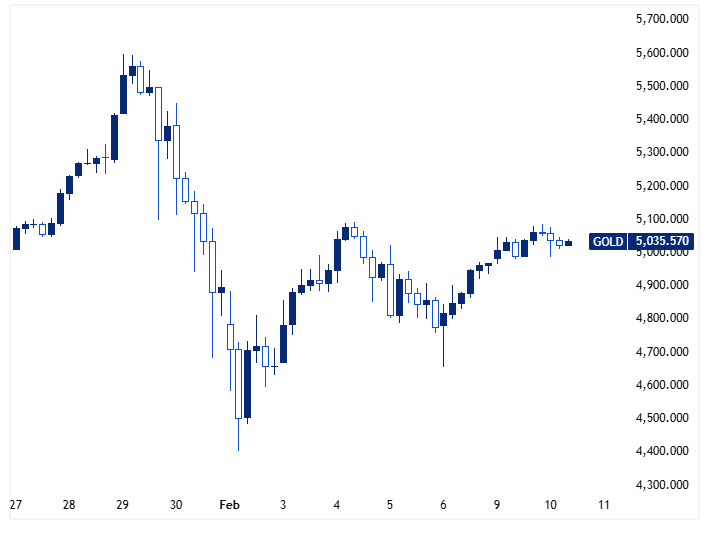
Gold 4H Chart / Source: Tradingview
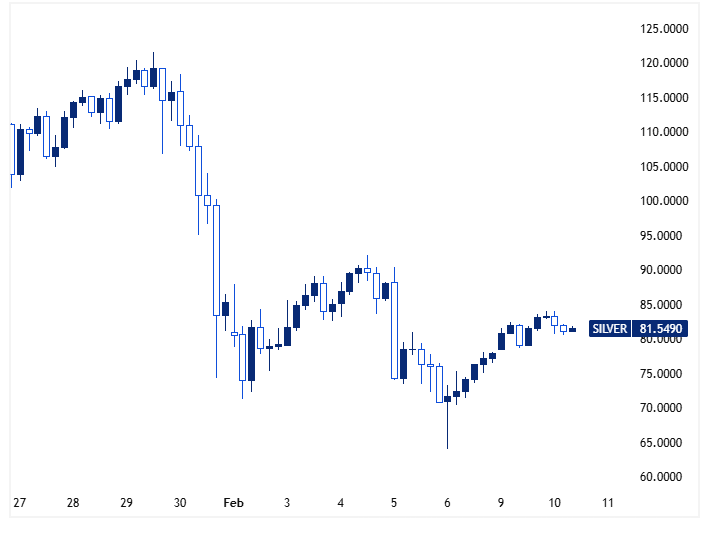
Silver 4H Chart / Source: Tradingview
Markets are currently pricing in at least two 25-basis-point rate cuts this year, keeping expectations for easier monetary policy broadly supportive for precious metals. ⁽⁷⁾
China’s central bank also extended its purchases of gold in January for 15 months straight. Geopolitical tensions also added support for precious metals, where tensions between the US and Iran persist. ⁽⁸⁾
Oil Steadies as US–Iran Tensions Linger Despite Diplomatic Progress
Oil held steady amid the persistent tensions between the US and Iran, despite progress in talks. The US issued a warning on all US vessels to avoid Iranian waters and the Strait of Hormuz.
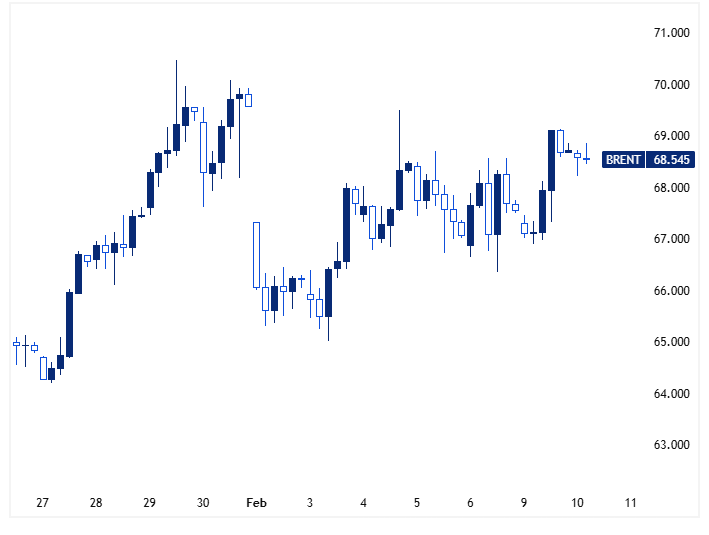
Brent Oil 4H Chart / Source: Tradingview
The warning came even as negotiations between the two nations are set to continue following what both sides described as positive talks in Oman last Friday.
However, uncertainty remains over whether the talks will lead to a breakthrough, as Iran continues to insist on maintaining uranium enrichment. ⁽⁹⁾
Meanwhile, investors are also monitoring developments on India’s purchases of Russian crude, after the latest US trade deal with India was linked to a freeze on Russian oil imports.


