ar
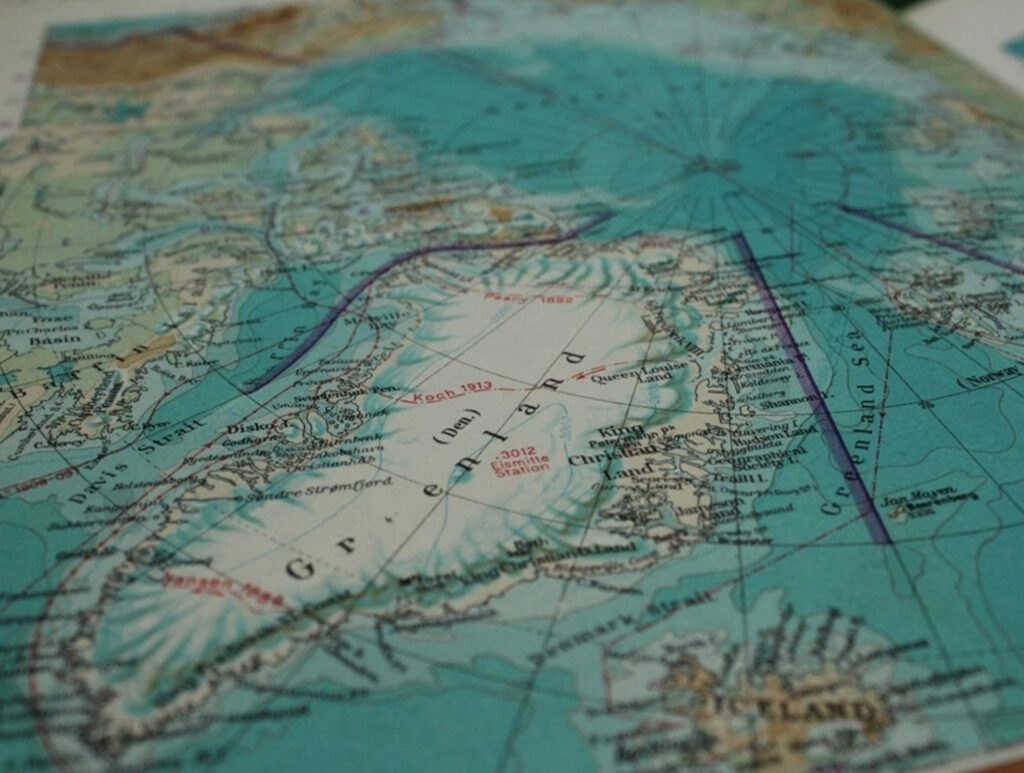
- US President Trump imposed tariffs on eight NATO members over the acquisition of Greenland, targeting major European leaders until Greenland is sold to the US.
- Tensions rose after failed talks between the US, Greenland and Denmark, as Trump is pushing for military action while European NATO troops are stationed in Greenland.
- Markets sharply reacted to the events, with precious metals hitting new record highs while stocks fell. The EU has called for emergency meetings to plan a response to the attack on the alliance.
Tensions between the United States and its European allies escalated sharply after President Donald Trump announced a new round of tariffs targeting eight NATO member countries, linking the move to ongoing disputes surrounding Greenland.
The measures, set to begin in February and potentially increase by mid-year, mark a significant shift from diplomatic pressure to direct economic action. What began as political posturing has now evolved into a broader confrontation with implications for trade, alliance stability and global markets.
As European leaders weigh their response, investors are increasingly focused on the risk of a renewed transatlantic trade conflict. Markets are already reacting, with safe-haven assets gaining and equities coming under pressure as uncertainty rises.
From Diplomatic Talks to Economic Warfare
The Greenland dispute has rapidly evolved from controversial rhetoric to economic action. President Trump has intensified his push to annex Greenland this month, refusing to rule out military force as an option.
Talks between the US, Denmark and Greenland last Wednesday over the future of the world’s largest island ended without any diplomatic breakthrough, setting the stage for Trump’s dramatic next move. ⁽¹⁾
French Finance Minister Roland Lescure was among the first European officials to sound the alarm about potential economic consequences. He warned that economic ties between the US and Europe could suffer severe damage if Trump proceeds with his Greenland ambitions.
When pressed on whether the EU would impose economic sanctions if the US invaded Greenland, the finance minister’s response was: “Obviously, if that happened, we would be in a totally new world for sure, and we would have to adapt accordingly.” ⁽²⁾
Behind Trump’s aggressive posture lies what his administration describes as national security imperatives.
Analysts point to two critical factors: keeping rival powers out of emerging Arctic trade routes and securing access to rare earth minerals essential for defense industries and advanced technologies.
Significant economic pressure through tariffs or sanctions could trigger a dangerous cycle and could rattle markets even more. ⁽³⁾
Trump Targets 8 Nations with Tariffs
On Saturday, Trump dropped his economic bombshell.
Eight NATO members, Denmark, Norway, Sweden, France, Germany, the United Kingdom, the Netherlands and Finland will face escalating tariffs on all goods shipped to the United States until such time as a deal is reached for the purchase of Greenland.
The tariff structure Trump announced is deliberately punitive and designed to increase pressure over time. Starting at 10% on February 1, then it will more than double to 25% by June 1. ⁽⁴⁾
The economic impact would be substantial. These penalties stack on top of existing US tariffs, which already average around 15% on goods from targeted European Union countries and roughly 10% on imports from the United Kingdom. In sensitive sectors like metals and certain automobiles, the combined tariffs could push effective rates well above 30%. ⁽⁵⁾
The implications extend beyond bilateral trade. Because the tariffs target EU member states, they automatically apply to all 27 nations in the bloc under EU trade rules. This threatens to unravel the EU-US trade agreement negotiated just months earlier in August. ⁽⁶⁾
Military Movements Meet Economic Retaliation
Trump’s tariff announcement directly linked the economic measures to recent military movements in Greenland. European troops from the eight targeted nations arrived in Greenland last Thursday. ⁽⁷⁾
The statement reveals Trump’s strategy of conflating standard NATO operations with threats to US interests, providing justification for economic force. A day earlier, speaking at the White House, he explicitly connected his tariff approach on Greenland to his previous use of trade pressure on pharmaceutical pricing.
The details of the tariffs still remain unclear, but his approach appears to mirror his controversial invocation of the International Emergency Economic Powers Act, legislation granting the president sweeping authority during declared emergencies. ⁽⁸⁾
At the same time, the Supreme Court could rule soon on whether to strike down the imposed tariffs, which would weaken Trump’s trade strategy. ⁽⁹⁾
Market Reaction
Markets reacted sharply to the latest events, with precious metals breaking new record highs due to safe-haven demand as gold reached $4,690 per ounce, while silver surged to $94 per ounce. The US dollar declined 0.3% after tariff threats from Europe.
Stocks are set to open lower today, with Dow futures falling 0.72% while S&P 500 futures dropped by 0.84%. European markets also fell today, with the German DAX falling more than 1% while the UK FTSE 100 declined by 0.8%.